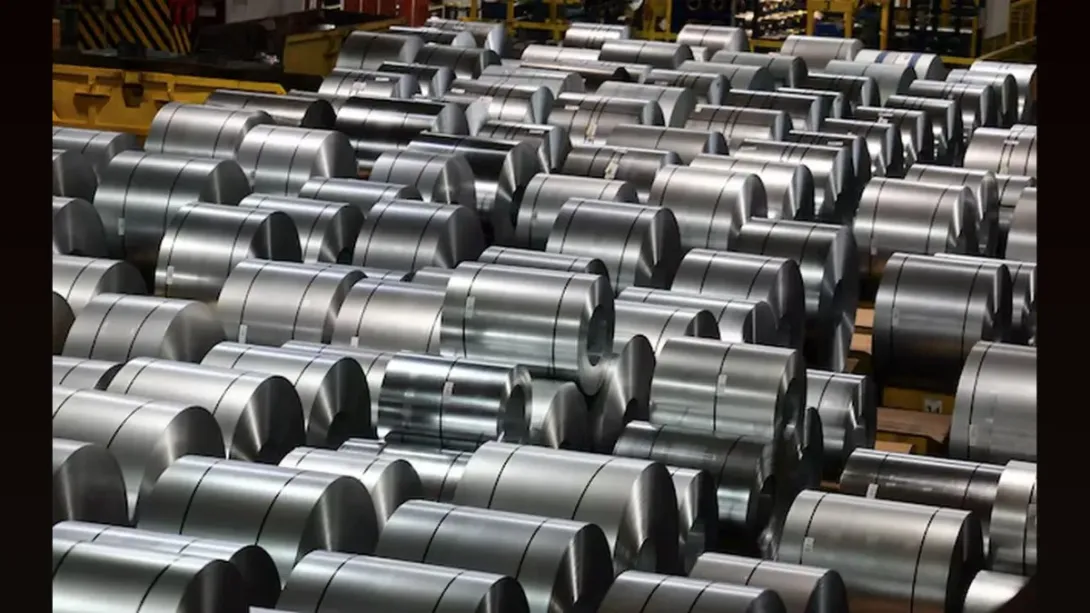
Jindal (India) Ltd has received regulatory approval from the Odisha government to initiate a greenfield steel manufacturing facility with an initial investment of Rs 3,600 crore. This is the first phase of a larger strategic plan involving a total investment of Rs 15,000 crore in Odisha by 2030. The project will focus on producing high-value coated steel products and significantly boost domestic capacity in flat steel production. Beyond import substitution, the initiative is expected to generate substantial employment, deepen industrial linkages in the region, and position Jindal as a key player in India’s expanding steel ecosystem.
Strategic Expansion in Odisha
In a significant boost to Odisha’s industrial growth trajectory, Jindal (India) Ltd has secured a letter of approval from the state’s High-Level Clearance Authority (HLCA) to commence construction of a state-of-the-art steel manufacturing plant. The project marks a critical first step in the company’s Rs 15,000 crore phased investment plan for the state, which is targeted for full implementation by the end of the decade.
The approved greenfield project, valued at Rs 3,600 crore, is scheduled to be operational by 2027. This facility will focus on producing coated steel products catering to high-demand downstream sectors such as automotive, appliances, infrastructure, and construction.
Technology-Driven Production Capacity
The plant’s technological backbone will comprise a Cold Rolling Mill (CRM), a Continuous Galvanizing Line (CGL), and a Colour Coating Line (CCL), collectively designed to deliver a production capacity of 9.6 lakh metric tonnes (MT) per annum. These advanced capabilities will enable the manufacturing of premium-grade coated steel products, offering corrosion resistance, aesthetic quality, and high tensile strength.
Such specialization aligns with India’s broader ambition to reduce dependency on imported high-grade flat steel and expand domestic processing capacity for value-added steel products.
Scaling Up to 30 Lakh MT by 2030
Jindal (India)’s long-term roadmap includes significant scaling up of operations through its wholly owned subsidiary, Jindal India Steel Tech Limited (JISTL). By 2030, the total flat product capacity in Odisha is expected to reach 30 lakh MT annually, representing a threefold increase and positioning the state as a major steel-producing hub.
In addition to the coated steel facility, Jindal (India) also plans to establish a steel pipe manufacturing unit with an estimated annual output of 2 lakh MT. This integrated expansion aims to capture a growing share of the domestic and international pipe markets, especially in water infrastructure, oil and gas, and construction segments.
Economic Impact and Employment Generation
The investment is poised to deliver multi-dimensional benefits to the state economy. Apart from contributing to Odisha’s industrial GDP, the project is expected to create substantial direct and indirect employment. This aligns with the state’s objective of attracting capital-intensive industries that foster skill development, ancillary enterprise formation, and long-term economic stability.
A company spokesperson emphasized that the facility’s establishment will not only augment Jindal’s domestic manufacturing capabilities but also significantly reduce India's reliance on coated steel imports. “The modern manufacturing plant will play a pivotal role in enhancing our self-reliance and supporting national infrastructure development,” the spokesperson noted.
Strengthening Odisha’s Industrial Ecosystem
This initiative further cements Odisha’s standing as a preferred destination for capital-intensive manufacturing. With access to key raw materials, robust logistics infrastructure, and supportive policy frameworks, the state continues to attract marquee investors across sectors. The presence of a high-grade steel production facility by Jindal is expected to stimulate additional investments in downstream manufacturing and supply chain integration.
Moreover, the timing of the project coincides with a national and global uptick in demand for specialty steel products, driven by infrastructure investments, urbanization, and the transition to green energy technologies—all of which rely heavily on high-quality steel.
Conclusion
Jindal (India) Ltd’s approved investment in Odisha represents not just a capacity expansion but a strategic pivot toward high-value, technology-driven steel production. As India pursues ambitious infrastructure and industrialization goals, this greenfield project underlines the critical role of private enterprise in delivering innovation, capacity, and employment. Odisha stands to gain substantially, both in terms of economic uplift and its evolving reputation as a steel powerhouse in Eastern India.
Comments