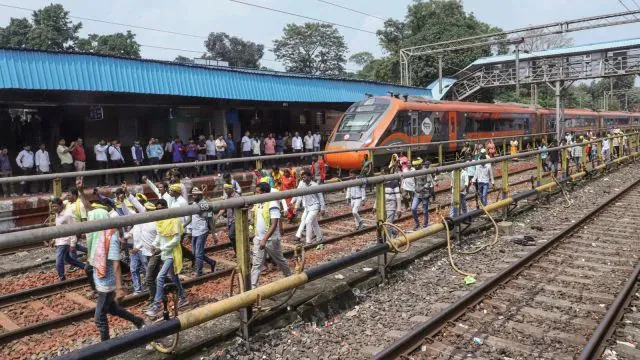
Railway operations were significantly disrupted following protests organized by the Kurmi community, highlighting ongoing socio-political grievances and demands for increased representation and development initiatives. Demonstrators blocked key railway tracks, leading to delays and cancellations of multiple passenger and freight services across affected regions. Authorities swiftly deployed law enforcement and railway personnel to restore normalcy, while engaging with community leaders to address immediate concerns. Analysts note that such disruptions underscore the intersection of social movements and infrastructure management in India, emphasizing the need for proactive dialogue to prevent escalation and safeguard essential transport networks.
Scope and Impact of the Protest
The protests, primarily concentrated along major railway corridors, affected both long-distance and regional train services. Hundreds of passengers faced delays, cancellations, and logistical challenges, while freight transport for essential goods experienced temporary bottlenecks. Railway authorities reported that over 50 trains were impacted within the first 24 hours of the demonstration. Emergency measures, including rerouting and rescheduling of trains, were implemented to mitigate operational and economic consequences.
Demands and Community Concerns
The Kurmi community’s agitation stems from demands for increased political representation, better access to social welfare schemes, and accelerated development projects in their regions. Protest leaders emphasized the need for recognition of historical grievances, equitable resource allocation, and employment opportunities. Analysts highlight that addressing such demands requires structured engagement with stakeholders, balancing immediate protest resolution with long-term policy interventions.
Government and Railway Response
Local administration and railway authorities acted promptly to manage the situation. Law enforcement personnel were deployed to secure railway lines, while negotiation teams engaged with protest leaders to facilitate dialogue. The Ministry of Railways issued advisories to passengers regarding delays and alternative travel arrangements. Authorities emphasized that disruptions would be minimized through a combination of rapid response measures, temporary track management, and continuous communication with affected travelers.
Protests impacting essential infrastructure, such as railways, have broader socio-economic implications, affecting trade, commuter mobility, and regional economic activity. Analysts note that recurring demonstrations reflect underlying structural issues requiring policy attention, including equitable development, inclusive governance, and responsive grievance redressal mechanisms. Ensuring timely communication and mediation is critical to preventing prolonged disruption and mitigating public inconvenience.
Conclusion: Balancing Civic Rights and Infrastructure Integrity
The Kurmi community protests underscore the delicate balance between exercising civic rights and maintaining essential services. While highlighting pressing socio-political demands, these demonstrations also reveal vulnerabilities in infrastructure management. Authorities and community leaders must collaborate proactively to address grievances while ensuring continuity of services, illustrating the importance of dialogue, planning, and strategic responsiveness in managing socio-political movements that intersect with critical national infrastructure.
Comments