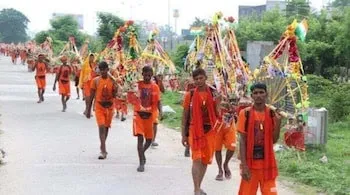
In a decisive move to manage the annual surge of devotees participating in the Kanwar Yatra, Meerut authorities have announced that all schools and colleges within the district will remain closed until July 23. This precautionary measure aims to ease logistical challenges, maintain public order, and safeguard students amid the influx of thousands of pilgrims. While this decision underscores respect for cultural traditions and addresses immediate safety concerns, it also highlights the broader economic ripple effects — from disrupted local commerce to increased municipal costs tied to crowd management and traffic regulation.
---
Administrative Rationale: Prioritizing Safety and Civic Management
The Kanwar Yatra, a major religious pilgrimage attracting lakhs of Shiva devotees who traverse roads carrying holy water from the Ganga, dramatically transforms urban dynamics across western Uttar Pradesh each monsoon. Given the sheer volume of foot traffic and convoy-style processions, authorities in Meerut have opted to suspend educational operations to minimize congestion and avoid compromising student safety.
Officials point out that maintaining normal school schedules amid such extensive movement could strain security forces, complicate emergency response times, and elevate accident risks. By closing educational institutions, law enforcement can redeploy personnel to critical crowd-control zones, ensuring smoother execution of the pilgrimage.
---
Economic Ripples: Balancing Devotion with Local Business Interests
While the closure is positioned primarily as a public safety measure, it also carries significant economic considerations. Retailers and vendors along key routes often see a short-term boom, capitalizing on sales of food, religious items, and essentials for pilgrims. However, parallel disruptions in daily commuting and the temporary halt in educational activities impact ancillary businesses — from transport operators ferrying students to eateries catering to school crowds.
Additionally, local government bodies typically allocate supplementary budgets running into several crores of rupees for sanitation drives, medical camps, and traffic diversions during the yatra. These outlays, while essential for civic management, momentarily redirect funds from other developmental initiatives.
---
Broader Implications for Workforce and Academic Calendars
The academic pause could also ripple into scheduling pressures, necessitating compressed syllabi or weekend compensatory classes to make up for lost instructional days. Meanwhile, parents who rely on daytime schooling as a form of structured childcare may face added domestic or work-related adjustments, subtly impacting productivity in local enterprises.
Human resource consultants frequently highlight how such cultural events, while integral to India’s socio-religious fabric, necessitate adaptable leave policies and flexible scheduling to balance operational efficiency with community participation.
---
Navigating Tradition and Modern Administrative Complexities
Ultimately, Meerut’s decision reflects a delicate calibration between honoring cultural practices and upholding civic responsibility. As urban centers continue to grow and mobility intensifies, managing mass gatherings like the Kanwar Yatra will demand increasingly sophisticated logistical strategies — from predictive crowd analytics to advanced coordination among multiple civic agencies.
This episode also offers a microcosm of how traditional festivals, beyond their spiritual resonance, shape economic activities and compel adaptive governance frameworks. By proactively suspending academic sessions, authorities aim to foster an environment where devotion and public welfare coexist without undue strain on local systems.
Comments