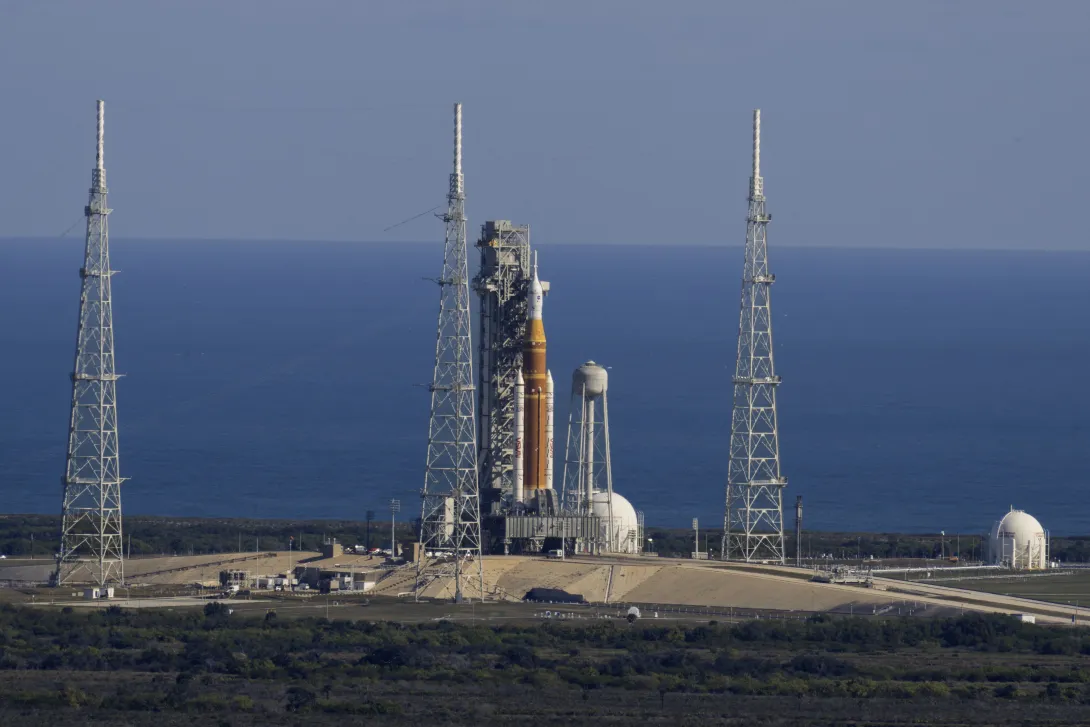
NASA is entering a critical phase in preparations for Artemis II, the first crewed mission of its Artemis program, which aims to return humans to the Moon and establish a sustained lunar presence. The mission will send astronauts on a lunar flyby, testing spacecraft systems and mission operations in deep space for the first time since the Apollo era. As hardware integration, safety reviews, and astronaut training intensify, Artemis II represents a pivotal step in NASA’s long-term exploration strategy. The mission carries strategic importance, shaping future lunar landings and broader ambitions for human exploration of Mars.
Mission Objectives and Strategic Importance
Artemis II is designed as a proving mission, sending a crew aboard NASA’s Space Launch System rocket and Orion spacecraft on a multi-day journey around the Moon. Unlike later missions, Artemis II will not land on the lunar surface. Instead, it will validate life-support systems, navigation, and communication capabilities in deep space.
NASA officials describe the mission as a cornerstone of the agency’s plan to build a sustainable exploration architecture, laying the groundwork for repeated lunar missions and international collaboration.
Spacecraft Readiness and Testing
Preparations for Artemis II involve extensive testing and integration of flight hardware. Engineers are completing final checks on the Orion crew module, propulsion systems, and heat shield, all of which are critical for crew safety during launch, deep-space travel, and high-speed re-entry into Earth’s atmosphere.
Lessons learned from the uncrewed Artemis I mission continue to inform refinements, with a strong emphasis on reliability and redundancy across mission-critical systems.
Astronaut Training and Operations
The Artemis II crew is undergoing rigorous training that includes simulations of launch, lunar flyby operations, and emergency scenarios. Astronauts are also working closely with mission controllers to refine procedures and ensure seamless coordination during the flight.
This human-in-the-loop testing is essential, as Artemis II will mark the first time astronauts travel beyond low-Earth orbit in more than five decades.
Broader Implications for Space Exploration
Beyond its technical objectives, Artemis II carries geopolitical and scientific significance. The mission reinforces U.S. leadership in space exploration while supporting partnerships with international space agencies and commercial providers.
As NASA advances toward a renewed era of human deep-space exploration, Artemis II stands as a critical bridge between ambition and execution—demonstrating that sustained lunar exploration is no longer a distant goal, but an unfolding reality.
Comments