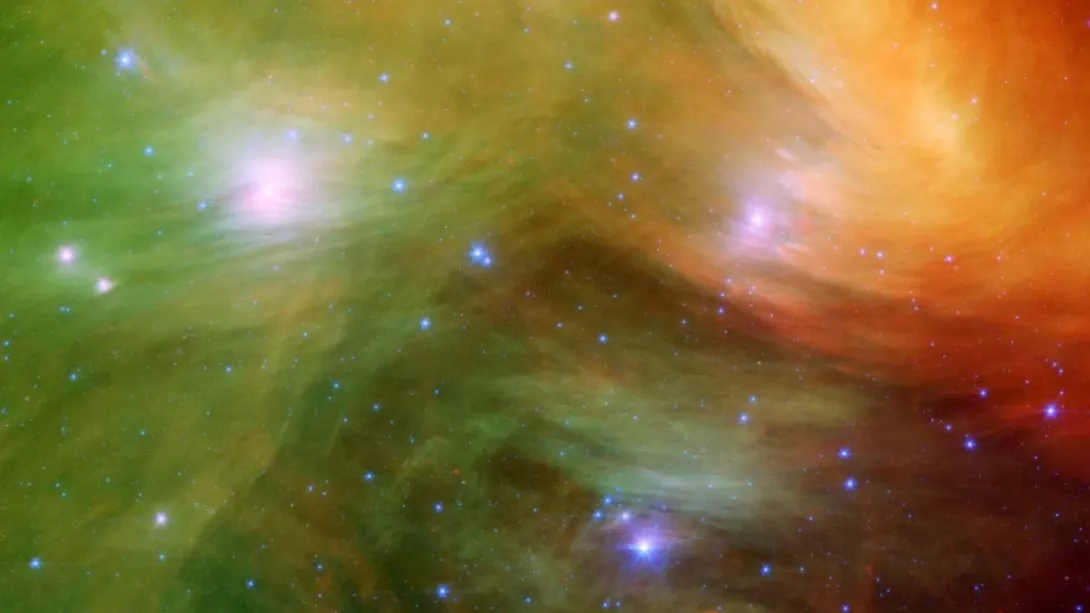
Astronomers have announced a groundbreaking discovery that could reshape our understanding of stellar evolution and galactic architecture: a colossal star-forming region dubbed the “Greater Pleiades Complex.” Hidden behind interstellar dust and long mistaken for background noise, this vast structure contains an estimated 3,000 previously undetected stars. Leveraging next-generation infrared imaging and precision astrometry, researchers have determined that the complex extends far beyond the familiar Pleiades cluster, revealing a sprawling celestial ecosystem. The finding reopens fundamental questions about cluster formation, stellar migration, and the long-term dynamics of the Milky Way.
---
A Discovery That Redefines a Cosmic Icon
For decades, the Pleiades—also known as the Seven Sisters—has captivated astronomers and sky-watchers alike. Considered one of the closest and brightest open clusters, it has been meticulously studied for more than a century. Yet recent high-resolution observations have uncovered a revelation that few anticipated: the well-known cluster is merely the visible core of a vastly larger stellar network.
By mapping stellar motion across multiple wavelengths, researchers detected faint signatures that suggested the presence of hundreds—then thousands—of hidden stars gravitationally linked to the Pleiades. This expanded formation, now termed the “Greater Pleiades Complex,” spans a far larger region than previously charted, indicating that much of its structure has been concealed by cosmic dust.
---
Why These Stars Stayed Hidden
The newly revealed stars differ from their luminous sisters in key ways. Many are low-mass, cooler objects—classified as red dwarfs—whose faint glow becomes nearly impossible to detect through standard optical telescopes. Others sit behind dense molecular clouds, their light scattered or absorbed long before reaching Earth.
Cutting-edge infrared telescopes and machine-learning algorithms capable of distinguishing stellar signatures from background noise played a decisive role in pulling these stars out of obscurity. These technologies identified consistent movement patterns across thousands of candidates, confirming that the stars are not random objects but active members of a significantly larger cluster.
---
A Window Into Stellar Formation and Migration
The magnitude of this discovery carries profound implications for astrophysics. By expanding the cluster’s known population from a few dozen visible stars to approximately 3,000 members, scientists now have a far more representative sample of its stellar demographics. Early models suggest that the original cluster was far more massive than believed, likely forming as a compact stellar nursery before slowly dispersing under gravitational forces.
The finding also challenges older assessments of stellar drift and cluster half-life. A system of this size indicates that the Pleiades has not only persisted longer than theoretical models predicted but also maintained a coherent gravitational structure even as it expanded.
---
Impact on Galactic Mapping and Future Research
The Greater Pleiades Complex offers a valuable benchmark for refining 3D galactic maps. More accurate distances, stellar velocities, and spatial relationships allow astronomers to recalibrate models that track the Milky Way’s long-term evolution.
Scientists are already planning follow-up studies using next-generation observatories capable of even deeper infrared penetration. Future surveys may reveal protoplanetary disks, brown dwarfs, or substellar objects within the complex—each providing insight into early planetary formation.
---
Economic and Technological Ripple Effects
While the discovery is astronomical in nature, its implications extend into the business and technology sectors. Advanced imaging systems, sensor arrays, and AI-based classification tools used in the research are likely to accelerate commercialization of precision optics and autonomous data-analysis platforms. Companies developing space-based instrumentation may see renewed demand for instruments capable of high-resolution deep-sky mapping, potentially leading to new investment cycles in aerospace and computational science.
Moreover, public interest in major celestial breakthroughs often drives funding for space research, benefiting both national observatories and private space enterprises.
---
A New Frontier in the Night Sky
The unveiling of the Greater Pleiades Complex demonstrates that even the most familiar celestial landmarks can hold astonishing secrets. It reinforces a simple yet profound truth: the universe continues to surprise us, often in places we thought we understood best.
As astronomers prepare to probe this immense stellar domain with unprecedented precision, the discovery serves as a reminder of humanity’s enduring quest to decode the cosmos—one hidden star at a time.
Comments