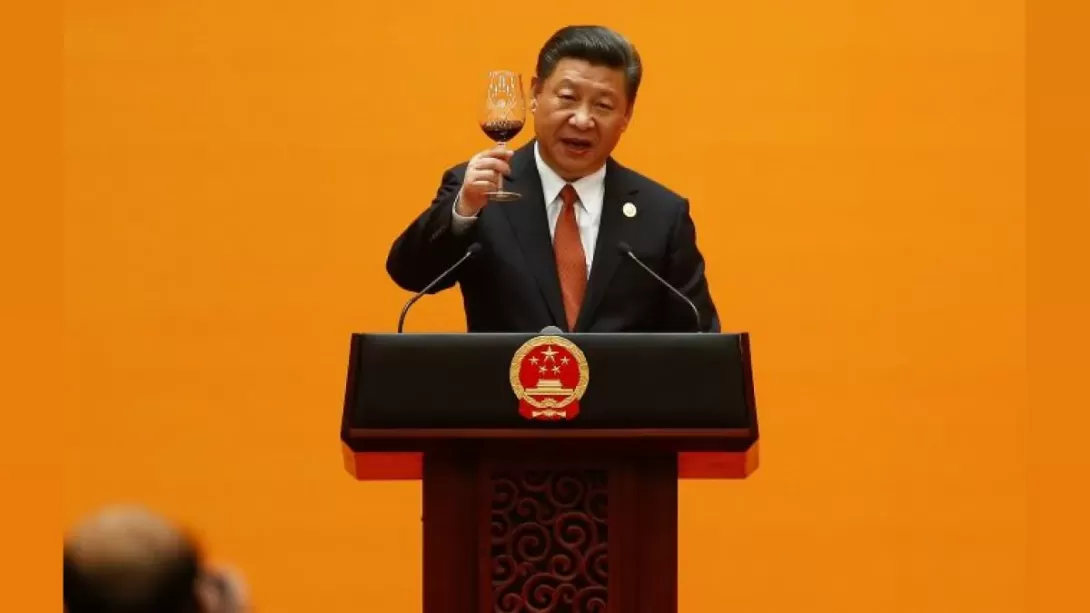
During a rare visit to the New Development Bank (NDB) headquarters in Shanghai, Chinese President Xi Jinping underscored the importance of enhancing the bank’s management, operations, and global reach, particularly focusing on green finance and technology. Xi emphasized the bank’s pivotal role in supporting developing countries and bridging the digital divide while pushing for reforms in the international financial architecture. His comments reflect China’s ongoing commitment to multilateralism and sustainable development as the NDB enters its second decade of high-quality growth. The bank, established by the BRICS nations, aims to foster development across emerging markets.
Xi Jinping's Vision for the Future of the New Development Bank
In a significant visit to the New Development Bank (NDB) in Shanghai, Chinese President Xi Jinping called for a series of reforms aimed at bolstering the bank’s operational efficiency and expanding its focus on technology-driven and environmentally sustainable projects. The NDB, a multilateral development institution founded by the BRICS nations (Brazil, Russia, India, China, and South Africa), has become an increasingly influential player in global finance since its inception in 2014.
Xi’s remarks underscore the bank’s potential to shape the future of global development, especially in the context of emerging economies. The president highlighted the need for the NDB to embrace modern financial management techniques, particularly focusing on advancing green finance initiatives and addressing the digital divide that remains a significant challenge for many developing nations.
Enhancing Technology and Green Finance Initiatives
Xi Jinping specifically pointed out the importance of the NDB adopting more advanced technological solutions to address the financial challenges of the modern world. He emphasized the growing need for green finance—an area of increasing relevance as countries around the world face the urgent task of transitioning to low-carbon economies. The president noted that by promoting green projects, the NDB could play a crucial role in helping developing nations meet their sustainability targets.
This focus on green finance is part of a broader global trend where financial institutions are increasingly integrating environmental, social, and governance (ESG) factors into their operations. For the NDB, which aims to support infrastructure and sustainable development in member countries, this pivot towards sustainability is expected to strengthen its standing as a development bank for the future.
Fostering Multilateralism and Expanding Influence
Xi Jinping also stressed the NDB’s role in amplifying the voice of the Global South in international financial discussions. He reiterated the bank’s mission to safeguard the rights and interests of developing nations, enabling them to modernize and grow in a way that prioritizes equity and long-term sustainability. This vision aligns with China’s broader geopolitical strategy of supporting multilateralism and challenging the dominance of Western-led financial institutions like the World Bank.
The NDB, according to Xi, is a "pioneering initiative for the unity and self-improvement of the Global South," offering an alternative framework for development that is more attuned to the needs and realities of emerging markets. This strategic positioning comes at a time when the BRICS nations are seeking to bolster their economic influence in the face of challenges posed by unilateral actions from other global powers, such as the United States.
The NDB’s Evolution and China’s Strategic Support
Since its inception, the NDB has grown in both scope and influence. Initially funded with an equal contribution of USD 10 billion from each BRICS member, the bank now plays a key role in financing infrastructure projects and sustainable development initiatives across its member countries. Notably, the NDB formally began its operations in July 2015, with its headquarters in Shanghai, marking a significant step in China’s strategic vision for a stronger presence in global development finance.
Xi’s visit underscores China’s continued commitment to the bank’s success. As the host nation, China has pledged ongoing support for the NDB’s operations, particularly in the areas of green, innovative, and sustainable development. This support is crucial as the NDB prepares to embark on its "second golden decade," which Xi described as one focused on high-quality development and expanded global cooperation.
The Expansion of the NDB’s Membership
The NDB has also made significant strides in expanding its membership. In 2021, the bank admitted Bangladesh, Egypt, the United Arab Emirates, and Uruguay as new member countries, marking an important step in diversifying its base of operations. This expansion signals the growing appeal of the NDB’s mission and the recognition of its potential to drive development across the Global South.
Xi’s Broader Geopolitical Context
Xi’s visit and remarks at the NDB headquarters come amid a broader geopolitical landscape where China has increasingly positioned itself as a leader of multilateralism. In addition to the NDB, China has spearheaded the creation of the Asian Infrastructure Investment Bank (AIIB), further solidifying its role as a key player in reshaping global financial systems. China’s push for multilateral financial institutions stands in contrast to the more unilateral policies of the United States, particularly under the previous administration of Donald Trump, which imposed heavy tariffs on China and other nations.
Chinese Foreign Minister Wang Yi echoed these sentiments at a BRICS Foreign Ministers meeting in Rio de Janeiro, where he reaffirmed China’s commitment to multilateralism and adherence to international trade rules. This stance aligns with the broader narrative that Xi has cultivated, positioning China as a staunch advocate for a fairer, more balanced international order.
Conclusion: A New Era for the NDB and Global Development
As the NDB moves into its second decade of operations, President Xi Jinping’s comments provide a clear roadmap for the future of the bank. By focusing on green finance, technology, and the needs of developing countries, the NDB is poised to become a crucial player in global development. Its growing influence, supported by China’s strategic backing, signals a shift toward a more inclusive, multilateral approach to addressing the world’s most pressing challenges, from sustainability to economic inequality.
As the Global South continues to assert itself on the world stage, the NDB’s efforts to reshape global financial architecture will be central to ensuring that development is both equitable and sustainable. With Xi Jinping’s guidance and China’s continued support, the NDB is set to play a pivotal role in the financial future of emerging economies.
Comments