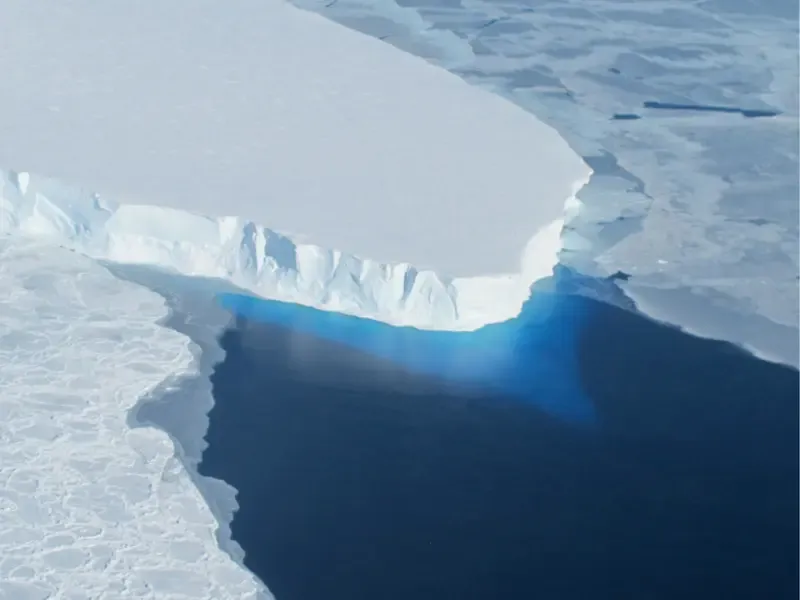
A recent study has revealed that Antarctica’s Thwaites Glacier, often dubbed the “Doomsday Glacier,” is destabilizing at an unprecedented rate, threatening global sea levels and climate systems. Researchers report that ice loss is accelerating due to warming ocean waters, structural fractures, and subglacial melting, raising alarms about potential widespread ice sheet collapse. The findings underscore the urgent need for climate monitoring, predictive modeling, and mitigation strategies. Scientists warn that continued destabilization could contribute significantly to sea level rise, impacting coastal populations worldwide, and emphasize the role of international collaboration in addressing the environmental, economic, and geopolitical implications of glacial retreat.
Glacier Dynamics and Destabilization
Thwaites Glacier, one of the largest in Antarctica, has been exhibiting structural weakening, accelerated ice flow, and basal melting driven by rising ocean temperatures. Satellite imaging and in-situ measurements indicate that ice streams are moving faster toward the sea, increasing calving events and destabilizing the glacier’s grounding line.
Researchers emphasize that the interplay of atmospheric warming and oceanic heat is exacerbating the glacier’s vulnerability, signaling potential tipping points in Antarctic ice stability.
Implications for Sea Level Rise
Thwaites Glacier holds enough ice to raise global sea levels by over three meters if fully destabilized. Even partial melting could significantly impact coastal cities, low-lying islands, and economic hubs.
Climate scientists stress that accurate projections of sea level rise are critical for infrastructure planning, disaster preparedness, and international policy development, as accelerated melting could occur faster than previously anticipated.
Scientific Methods and Monitoring
The study integrates satellite radar, airborne surveys, and oceanographic measurements to track ice thickness, flow velocity, and subglacial conditions. High-resolution modeling allows researchers to predict ice sheet behavior under various climate scenarios, offering insights into potential collapse timelines and regional impacts.
Advanced computational simulations enable scenario planning, helping policymakers and global organizations assess risk and formulate mitigation strategies.
Global Environmental and Economic Significance
The destabilization of Thwaites Glacier is emblematic of broader climate change challenges, linking polar ice dynamics to global environmental and economic systems. Sea level rise threatens urban centers, agriculture, freshwater resources, and trade infrastructure, potentially triggering population displacement and economic losses.
Experts emphasize that mitigating greenhouse gas emissions and investing in climate resilience are essential to managing long-term impacts on human and ecological systems.
Outlook: Urgency of Climate Action
The accelerated destabilization of Thwaites Glacier highlights the pressing need for international climate collaboration, continuous monitoring, and adaptive policy frameworks. Scientists advocate for combining mitigation strategies with predictive modeling to anticipate regional and global consequences.
Comments