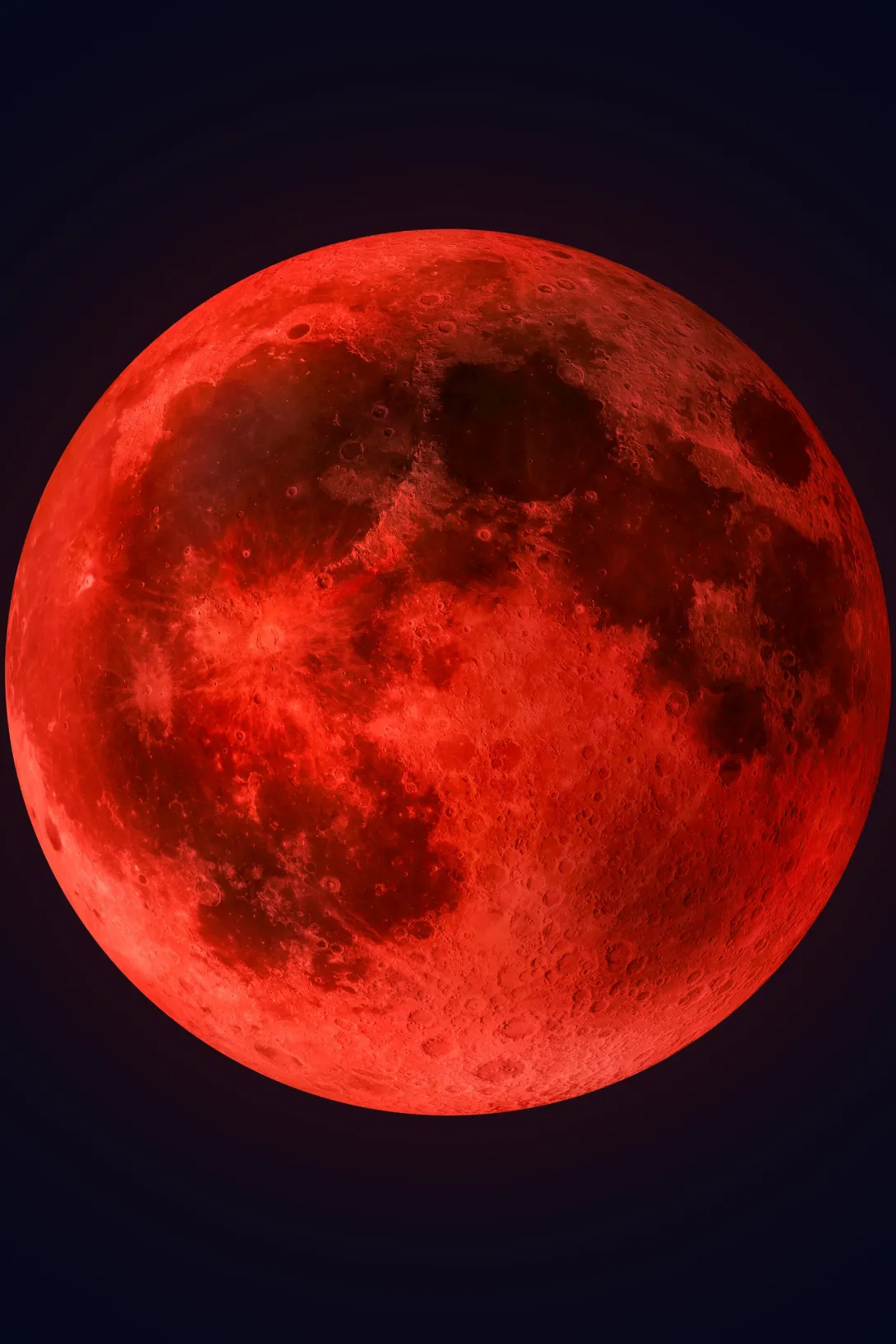
Skywatchers across the United States will witness a total lunar eclipse on March 3, as the Moon passes fully into Earth’s shadow in a striking astronomical display. The phenomenon, visible without specialized equipment, is expected to draw widespread public interest and drive participation in observatory events nationwide. Astronomers say the eclipse will unfold over several hours, culminating in a vivid reddish hue often described as a “blood moon.” Beyond its visual appeal, the event underscores the precision of celestial mechanics and offers educational and commercial opportunities for science institutions, tourism operators and media platforms.
What Is Happening on March 3?
A total lunar eclipse occurs when Earth aligns directly between the Sun and the Moon, casting a full shadow—known as the umbra—across the lunar surface. Unlike solar eclipses, lunar eclipses are safe to observe with the naked eye.
During totality, sunlight refracted through Earth’s atmosphere filters out shorter blue wavelengths, allowing longer red wavelengths to illuminate the Moon. This optical effect produces the copper-red glow that has fascinated civilizations for centuries.
The March 3 event will be visible across most regions of the United States, weather permitting.
Viewing Timeline and Geographic Visibility
Astronomical institutions, including NASA, indicate that the eclipse will progress through distinct stages: penumbral, partial and total phases. The entire sequence is expected to span several hours, giving viewers ample opportunity to observe the transformation.
Peak totality—when the Moon is fully immersed in Earth’s shadow—will last approximately one hour, though precise timing will vary slightly by time zone. Major metropolitan areas from the East Coast to the Pacific Northwest are projected to have favorable viewing conditions, subject to cloud cover.
Local observatories and planetariums are organizing public gatherings to mark the occasion.
Scientific Significance and Educational Impact
While lunar eclipses are predictable, each event offers opportunities for scientific outreach. Researchers use eclipses to study Earth’s atmospheric composition by analyzing how light is refracted and scattered.
Educational institutions are leveraging the March 3 eclipse to promote STEM engagement, hosting live streams and classroom demonstrations. The event provides a practical demonstration of orbital mechanics, reinforcing lessons in physics and astronomy.
The accessibility of the phenomenon—requiring no telescopic aid—makes it an inclusive gateway to scientific curiosity.
Economic Ripple Effects
Celestial events often generate modest but measurable economic activity. Retailers report increased demand for binoculars, telescopes and photography equipment ahead of major eclipses. Tourism operators in regions with historically clear skies anticipate short-term boosts in bookings.
Digital media platforms and streaming services are also preparing special programming to capture public interest. Though the financial scale is limited compared with large sporting events, the cumulative commercial engagement underscores the marketability of astronomical phenomena.
Public Safety and Viewing Advice
Experts emphasize that lunar eclipses pose no direct health risk. Unlike solar eclipses, there is no need for protective eyewear. Observers are encouraged to seek dark locations away from urban light pollution for optimal viewing.
Weather forecasts will play a decisive role in visibility. Cloud cover could obscure the spectacle in certain regions, prompting many viewers to rely on live broadcasts from observatories in clearer skies.
A Shared Celestial Experience
The March 3 total lunar eclipse represents more than a predictable astronomical alignment; it is a unifying moment of collective observation. In an era defined by rapid technological advancement and economic complexity, such events offer a pause—an opportunity to look upward and reflect on humanity’s place within a precisely ordered cosmos.
As millions across the United States prepare to witness the Moon’s transformation, the event serves as both a scientific reminder and a cultural celebration of the rhythms that govern our universe.
Comments