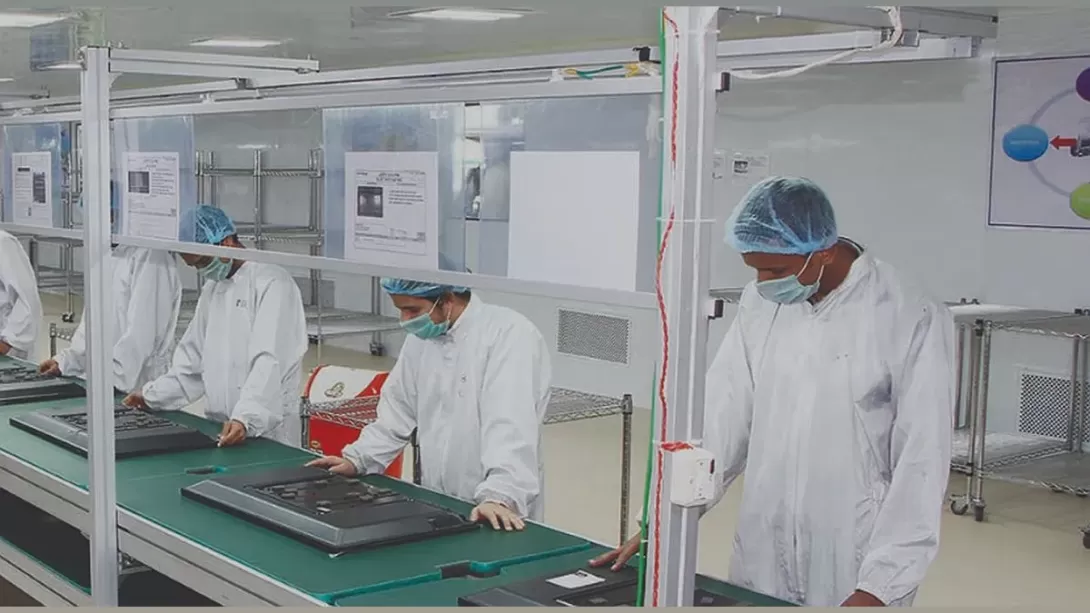
Dixon Technologies, a frontrunner in India’s contract manufacturing landscape, is actively pursuing government approval for a strategic alliance with China’s HKC to establish a display module manufacturing unit in Noida. This collaboration, pending clearance under India’s Press Note 3 of 2020, aims to produce components for smartphones, laptops, and televisions. Concurrently, Dixon is expanding its Industry 4.0 initiatives, partnering with French firm Dassault to digitize and modernize manufacturing processes. With investments exceeding Rs. 1,600 crore across components and display modules, and a joint venture with Vivo targeting a production capacity of 100 million smartphones annually, Dixon is positioning itself at the vanguard of India’s electronics manufacturing ecosystem.
Strategic Foreign Investment Amid Regulatory Landscape
Dixon Technologies is seeking official clearance from the Indian government for a minority investment by China-based HKC in a display module factory, an initiative subject to stringent oversight under Press Note 3 of 2020. This regulation mandates prior approval for investments from countries sharing land borders with India, including China, to ensure strategic autonomy and safeguard domestic industries.
Sunil Vachani, Executive Chairman of Dixon, emphasized the significance of this partnership with HKC, a leading display module manufacturer, to bolster India’s capabilities in producing screens for smartphones, laptops, and televisions. The proposed Noida facility represents a greenfield project with an estimated investment of Rs. 400 crore. This move exemplifies Dixon’s commitment to nurturing a robust local manufacturing ecosystem through selective, high-value foreign collaborations.
Industry 4.0: Digital Transformation and Smart Manufacturing
Parallel to its expansion plans, Dixon Technologies is deeply engaged in advancing Industry 4.0 standards across its operations. Collaborating with French multinational Dassault, Dixon is implementing cutting-edge manufacturing excellence software designed to transform its factories into intelligent production hubs. This initiative involves the integration of Internet of Things (IoT) devices, automation, artificial intelligence, and data analytics to foster interconnected, self-optimizing manufacturing processes.
Vachani highlighted the ambition to achieve “lighthouse factory” status—a globally recognized certification awarded to manufacturing units exemplifying leadership in adopting advanced digital technologies. This endeavor not only enhances operational efficiency and product quality but also positions Dixon and its partners at the forefront of India’s smart manufacturing revolution.
Robust Investment and Expanding Capacity
Dixon’s financial commitment to India’s electronics manufacturing sector is substantial. The company has earmarked over Rs. 1,200 crore under the Production Linked Incentive (PLI) scheme for component manufacturing. Complementing this is the Rs. 400 crore investment planned for the display module factory in Noida.
Additionally, Dixon has established a joint venture with Vivo India, a subsidiary of the Chinese smartphone manufacturer, to develop an original equipment manufacturing (OEM) facility focused on smartphones and related electronics. Holding a 51 percent stake, Dixon’s venture with Vivo is projected to reach an annual production capacity of 60–70 million smartphones, potentially scaling up to 100 million units when combined with other manufacturing lines by next year.
Policy Perspectives and Industry Implications
On the question of further expansion of the PLI scheme, Vachani expressed contentment with the current list of covered components, including high-value items like cameras and displays. He indicated that the industry’s momentum and government policies are well aligned to sustain the growth trajectory, shifting responsibility to manufacturers to execute expansion plans.
This stance reflects a broader confidence in India’s evolving electronics manufacturing sector, propelled by supportive policy frameworks, investment inflows, and technological modernization.
Conclusion: Dixon Technologies as a Catalyst in India’s Electronics Ecosystem
Dixon Technologies’ multifaceted growth strategy—anchored in strategic foreign partnerships, substantial capital investments, and pioneering adoption of Industry 4.0 technologies—underscores its pivotal role in advancing India’s vision for self-reliance in electronics manufacturing. By fostering innovation, embracing digital transformation, and scaling production capacity, Dixon is setting benchmarks for the sector and contributing meaningfully to the country’s ambitions in the global technology supply chain.
Comments