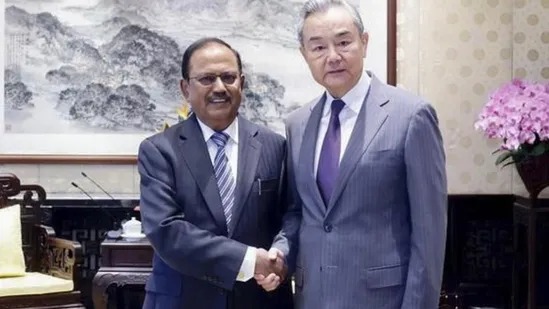
In a strongly worded address at the Shanghai Cooperation Organisation (SCO) security summit in Beijing, India’s National Security Advisor Ajit Doval pressed member nations to abandon selective approaches in combating terrorism. Alluding pointedly to Pakistan’s track record of fostering cross-border terrorism, Doval described such acts as crimes against humanity and called for the prosecution of all entities and individuals listed under UN sanctions, including LeT and JeM. He also met with Chinese Foreign Minister Wang Yi, reiterating India's concerns over terrorism and the importance of repairing strained bilateral ties. His visit follows India’s precision strikes in Pakistan-occupied Kashmir in May.
India's Firm Stand on Global Terrorism
At a pivotal gathering of national security officials under the Shanghai Cooperation Organisation (SCO) in Beijing, Ajit Doval, India’s National Security Advisor, delivered a direct message against selective international counterterrorism practices. Without naming Pakistan explicitly, Doval criticized nations that adopt “double standards” when addressing terrorism, warning that such inconsistencies erode the legitimacy of multilateral efforts.
“Terrorism, in any form, including cross-border terrorism, constitutes a crime against humanity,” he said, emphasizing that tolerance of such behavior jeopardizes regional stability and global peace.
The timing of his remarks is significant, arriving just weeks after India’s retaliatory strikes on terrorist infrastructure across the Line of Control in Pakistan and Pakistan-occupied Kashmir in response to the April 22 terror attack in Pahalgam, which claimed 26 lives.
A Call for Unified, Decisive Action
Doval called upon SCO member states to “take decisive action” against UN-sanctioned terrorist groups such as Lashkar-e-Taiba (LeT) and Jaish-e-Mohammed (JeM) and their network of proxies. He underscored the importance of dismantling terrorist ecosystems and demanded accountability for not only the perpetrators but also the sponsors, financiers, and enablers of terrorism.
This appeal gains added weight against the backdrop of China’s historic protection of Pakistan in global forums, often vetoing or delaying sanctions against known terror operatives aligned with Islamabad.
“The international community must adopt a zero-tolerance policy on terrorism, without exception,” Doval urged, stressing the urgent need for SCO nations to commit to intelligence cooperation and joint counterterrorism efforts.
India-China Engagement: A Parallel Diplomatic Front
In parallel with the SCO summit, Doval held a bilateral meeting with Chinese Foreign Minister Wang Yi, where both sides reviewed developments in India-China relations, which have remained fragile since the 2020 standoff in eastern Ladakh.
The conversation reportedly covered confidence-building measures, regional peace, and the broader trajectory of India-China relations. The Ministry of External Affairs (MEA) noted that both parties “underscored the importance of promoting overall development of ties,” including stronger people-to-people connections.
This diplomatic engagement comes at a sensitive juncture, as both New Delhi and Beijing attempt to reset bilateral relations following prolonged tensions over territorial disputes and growing strategic distrust.
Strategic Context: From Pahalgam to Precision Strikes
Doval’s sharp message at the SCO forum follows India’s bold military action on May 7, when it conducted precision strikes on nine terror camps located in Pakistan and Pakistan-occupied Kashmir. The operation was launched in response to the deadly terror attack in Pahalgam, one of the deadliest in recent years.
India's response, viewed as a recalibration of its counterterrorism strategy, reinforced the government’s commitment to preemptive and punitive military action in defense of its civilians.
Doval’s appeal to SCO partners thus resonates not only as a call for unity but also as a warning against passive complicity, especially within forums that include nations with ambiguous counterterror stances.
Conclusion: Realigning the Global Narrative on Terror
NSA Ajit Doval’s address at the SCO was more than a policy statement—it was a strategic recalibration of India’s role in the global counterterrorism discourse. As geopolitical alignments shift and asymmetric threats grow more complex, India’s message is clear: counterterrorism cannot be compartmentalized by political interests.
For forums like the SCO to remain relevant in ensuring regional security, they must move beyond platitudes and act decisively. Whether member nations—particularly China—respond with sincerity or strategic hedging will determine the SCO’s future credibility and the fate of regional peace.
Comments