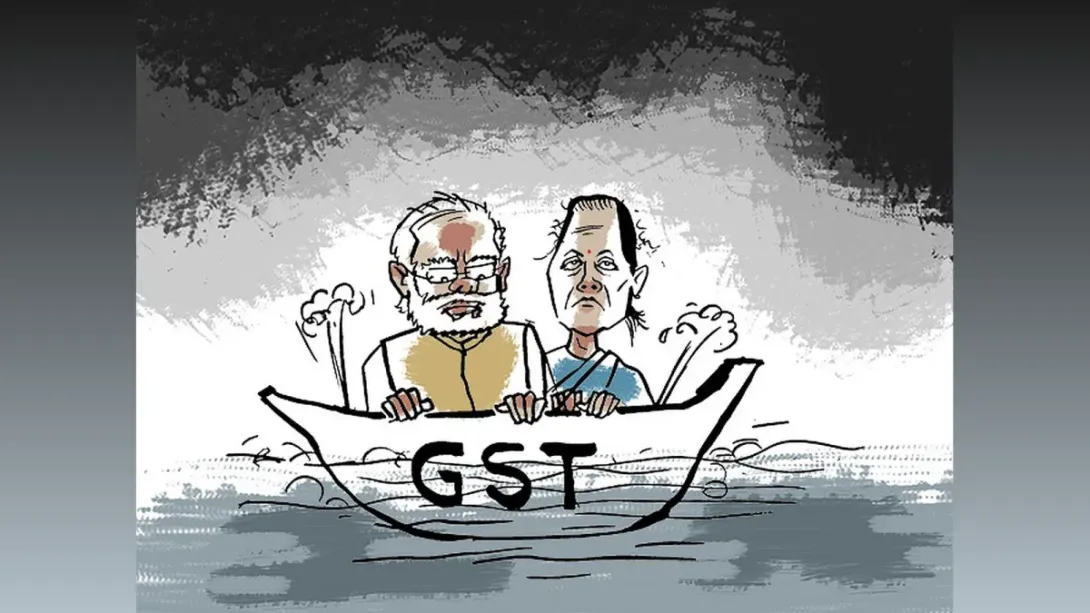
A Group of Ministers (GoM), led by Goa CM Pramod Sawant, convened to scrutinize GST revenue trends and devise strategies to counteract extensive Input Tax Credit (ITC) fraud, estimated to exceed Rs. 2 lakh crore. The GoM reviewed state-level revenue patterns, e-invoicing rollout, IT infrastructure enhancements, and best practices from Gujarat, Telangana, and Rajasthan. Key outcomes include identification of loopholes, cross-jurisdiction coordination, and a future report to the GST Council. Since 2023, over 42,000 fake firms have been detected, prompting ITC blockades of Rs. 3,107 crore and 316 arrests—underscoring the urgency of systemic reforms.
1. GoM Review: Deep Dive into Tax Leakage
The Group of Ministers on GST Revenue Analysis, chaired by Chief Minister Pramod Sawant, held a targeted session to investigate state-wise GST collections and profits. The agenda included:
- Evaluating e-invoicing integration and improvements to the existing IT architecture.
- Probing sector-specific tax loopholes.
- Enhancing central and state tax administration collaboration on GST evasion.
“This meeting aims to identify actionable strategies for improving GST collection,” Sawant affirmed in his announcement. The focus on robust tracing mechanisms and data analytics reflects a shift toward preventative governance.
2. Tackling ITC Fraud: A National Priority
The GoM highlighted ITC fraud amounting to over Rs. 2 lakh crore, a figure corroborated by tax authorities. State-level presentations underscored best practices in fraud detection and revenue augmentation:
- Gujarat, Telangana, and Rajasthan shared successful tactics for pinpointing anomalies in ITC claims and boosting audit efficacy.
These examples illustrate how analytics-driven enforcement and inter-state communication can bolster fraud prevention strategies.
3. Enforcement Data: Fake Firms Exposed
GST enforcement agencies have registered significant progress in curbing fraudulent input credits:
- During 2024–25 alone, 25,009 fake firms were identified, linked to Rs. 61,545 crore in bogus ITC claims.
- Over the two-year period from 2023 to 2025, 42,140 counterfeit entities surfaced, representing more than Rs. 1.01 lakh crore in improper ITC.
- Actions taken include blockades of Rs. 3,107 crore in tax credits and 316 arrests.
These results underscore the government’s intensifying vigilance and growing capacity to respond effectively.
4. Next Steps & Reform Roadmap
The GoM plans to convene again shortly and forward a reform dossier to the GST Council. Anticipated recommendations include:
- Broader deployment of e-invoice systems to cover high-risk sectors.
- Enhanced IT capabilities for real-time transaction verification.
- Improved coordination between states and central authorities.
- Establishing state-specific best-practice models based on successful implementations.
Such reforms align with feedback from national ministries and are expected to reinforce GST’s integrity across the board.
5. Strategic Significance and Policy Implications
Addressing ITC fraud is not merely an enforcement imperative—it is critical to ensuring fiscal health and equity in India’s indirect tax system. Effective resolution of these challenges will:
- Reinforce the credibility of GST as a fair and transparent regime.
- Plug substantial revenue leaks, enabling better funding for developmental priorities.
- Encourage taxpayer compliance by demonstrating resolute regulatory oversight.
The GoM’s proactive stance signals a maturing approach to tax administration, emphasizing data-driven policy frameworks and outcome-based governance models.
Conclusion
The GoM’s concentrated effort marks a pivotal moment in India’s GST journey. By confronting ITC fraud head-on and committing to system-level enhancements, the central and state governments aim to restore trust and maximise revenue potential. As the final report approaches, its recommendations may significantly shape the next phase of GST architecture—enhancing transparency, strengthening compliance, and securing the tax base for future economic growth.
Comments