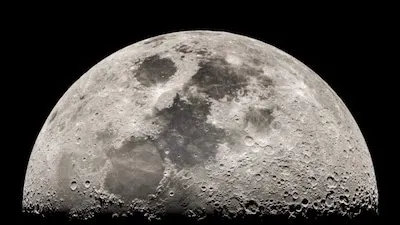
Recent research by Chinese scientists has revealed that moonquakes may be triggering landslides on the lunar surface, offering unprecedented insights into the Moon’s geological activity. Using data from lunar landers and remote sensing instruments, researchers identified correlations between seismic activity and surface slope failures, suggesting that even moderate tremors can destabilize loose regolith and rock formations. These findings challenge previous assumptions about the Moon’s geological dormancy and have significant implications for future lunar exploration, including habitat construction and rover missions. Understanding the dynamics of lunar landslides is critical for ensuring the safety of scientific instruments and potential human activities on the Moon.
---
Understanding Moonquakes
Moonquakes are seismic events on the lunar surface, ranging from minor tremors to moderate shocks, often caused by tidal interactions with Earth or thermal stresses from temperature fluctuations. Unlike Earth, the Moon lacks tectonic plates, making these quakes relatively rare but still impactful. The Chinese research highlights that even moderate quakes can destabilize surface materials, contributing to landslides along steep slopes and crater rims.
---
Methodology and Observations
Scientists utilized seismic data collected from lunar landers alongside high-resolution imaging of slope features to establish a link between moonquakes and landslide occurrences. Analysis revealed temporal and spatial correlations, indicating that seismic events frequently precede observable shifts in regolith and rock layers. Remote sensing allowed researchers to map slope failures and estimate the magnitude of material displacement caused by these lunar tremors.
---
Implications for Lunar Exploration
The discovery has practical implications for future lunar missions, particularly in the selection of landing sites and the design of habitats and rovers. Understanding areas prone to moonquake-induced landslides can mitigate risks to equipment and ensure the safety of astronauts. Additionally, the findings may influence the placement of scientific instruments intended to monitor the Moon’s geological activity over extended periods.
---
Broader Scientific Significance
This research challenges the long-held perception that the Moon is geologically inert. By linking seismic activity to observable surface changes, scientists gain a more nuanced understanding of lunar dynamics and regolith behavior. The study also provides a valuable analog for understanding similar processes on other rocky celestial bodies, informing planetary geology and comparative studies across the solar system.
---
Conclusion
Chinese scientists’ findings on moonquake-triggered landslides mark a significant advancement in lunar science. The study enhances knowledge of the Moon’s geological activity, informs future exploration strategies, and underscores the importance of continued observation and monitoring. By revealing the Moon as a more dynamic and active body than previously thought, this research paves the way for safer and more informed lunar missions.
Comments