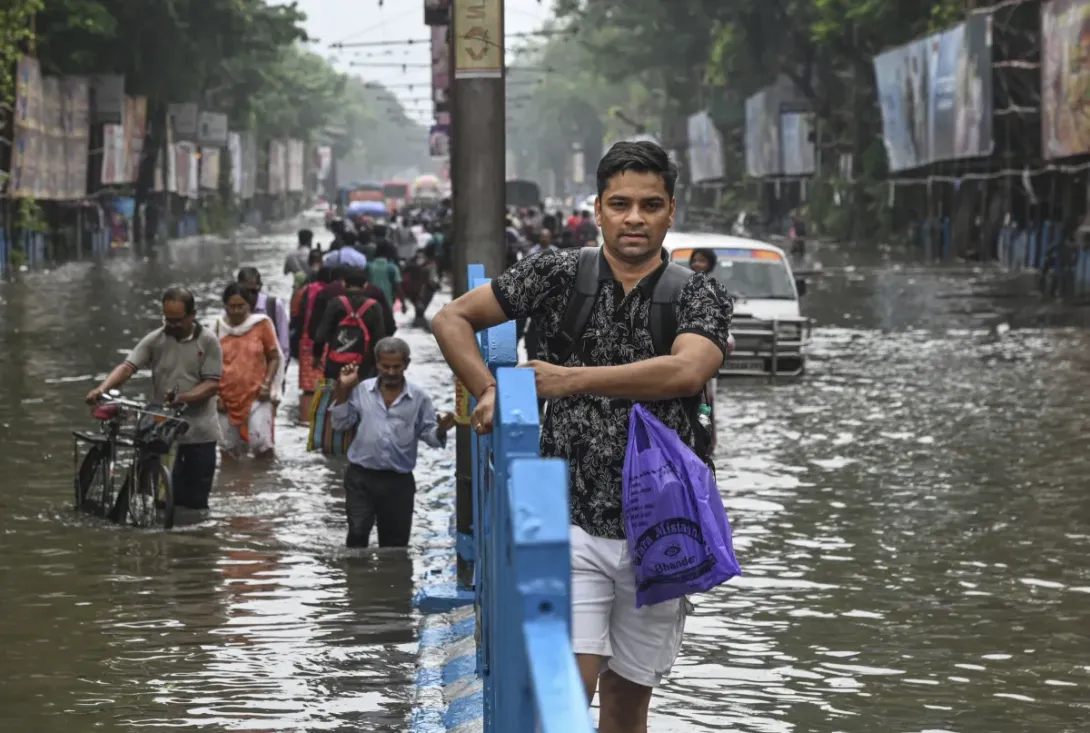
Kolkata, India, is facing significant disruption as unusually heavy monsoon rainfall triggers widespread flooding across the city. Urban drainage systems have struggled to cope with the deluge, inundating streets, residential areas, and commercial hubs. Authorities have issued warnings, deployed emergency services, and arranged temporary shelters for affected residents. The flooding has not only disrupted daily life but also raised concerns about property damage, public health, and economic losses. Meteorologists warn that continued rainfall may exacerbate the situation, emphasizing the urgent need for long-term infrastructure planning and disaster management strategies in the rapidly urbanizing city.
Record Monsoon Rains and Their Impact
The city has experienced intense rainfall over the past several days, overwhelming drainage infrastructure and causing extensive waterlogging. Key thoroughfares and low-lying neighborhoods are submerged, impacting transportation, business operations, and public services. Commuters are facing delays, and local authorities have issued advisories to limit travel unless absolutely necessary.
Emergency Response and Citizen Safety
Kolkata municipal authorities, alongside disaster response teams, have mobilized rescue operations and temporary shelters for residents in severely affected areas. Health officials have raised alarms about the potential for waterborne diseases, including cholera and dengue, which can surge during prolonged flooding. Citizens are being urged to maintain hygiene, avoid contact with floodwater, and follow official advisories.
Economic and Infrastructure Concerns
The floods threaten both short-term and long-term economic stability in Kolkata. Damage to homes, businesses, and urban infrastructure could incur losses running into Rs. hundreds of crores. Additionally, disruptions to commercial activity and public transportation are slowing economic productivity, highlighting vulnerabilities in the city’s drainage and flood management systems.
Looking Ahead: Mitigation and Resilience
Meteorologists predict continued rainfall in the region, which may further aggravate flooding. Urban planners emphasize the importance of sustainable infrastructure, improved drainage systems, and enhanced emergency preparedness to mitigate future risks. Authorities are also exploring long-term flood resilience strategies, including rainwater harvesting, early warning systems, and climate-adaptive urban planning.
Conclusion:
Kolkata’s current flooding crisis underscores the urgent need for robust urban infrastructure and disaster preparedness. While immediate response measures are critical, long-term planning to enhance the city’s resilience to extreme weather events will be essential in safeguarding lives, property, and economic activity in India’s eastern metropolis.
Comments