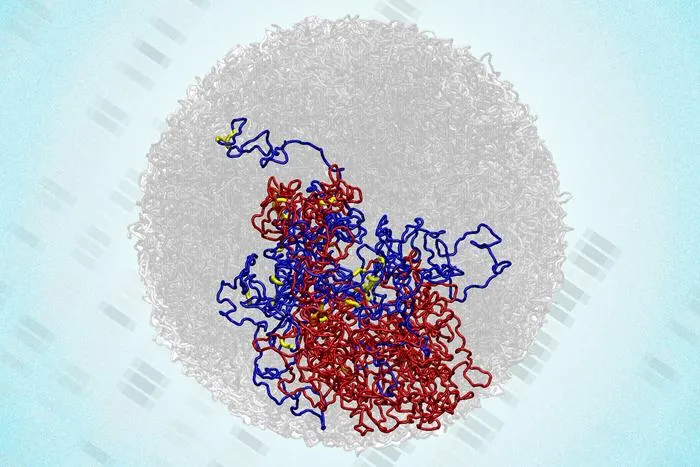
A team of MIT scientists has discovered previously undetected microscopic loops in the genomes of dividing cells, shedding new light on the mechanisms of DNA organization during cell replication. Using advanced imaging and sequencing techniques, researchers observed that these loops play a crucial role in ensuring accurate genetic duplication and stability. The findings have profound implications for biotechnology, medicine, and genetic engineering, potentially informing novel therapies for cancer and hereditary diseases. By revealing the intricate architecture of dividing genomes, this study highlights the intersection of molecular biology and innovation, offering fresh insights into cellular dynamics that underpin both health and disease.
Revealing the Hidden Architecture of the Genome
The MIT study focuses on the structural organization of DNA during mitosis, a critical phase when a cell duplicates its genetic material before division. While chromosomes have long been known to condense during cell division, the discovery of these tiny loops, each only a few nanometers wide, uncovers a previously hidden level of genomic organization.
Lead researcher Dr. Emily Zhang explained that “these loops act as stabilizing anchors, maintaining the integrity of the genome during the high-pressure process of mitosis. Without them, cells are at greater risk of genetic errors that can lead to disease.”
The loops are distributed throughout the genome, linking distant DNA regions and potentially facilitating efficient replication and gene expression control.
Methodology and Technological Innovation
The breakthrough relied on high-resolution imaging combined with novel genome-mapping techniques. Researchers employed super-resolution microscopy, capable of visualizing structures at the nanometer scale, alongside chromosome conformation capture sequencing (Hi-C), which maps spatial DNA interactions.
This dual approach allowed scientists to identify thousands of loop structures forming transiently during cell division. Analysis revealed that loop formation is dynamic, with loops appearing, rearranging, and dissolving in a regulated sequence as the cell progresses through mitosis.
The study highlights the power of integrating imaging and sequencing technologies, offering a blueprint for future research into genomic architecture in both normal and diseased cells.
Implications for Medicine and Biotechnology
The discovery of genomic loops has immediate relevance for cancer research, where improper DNA replication leads to mutations and uncontrolled cell growth. Understanding loop dynamics could enable the development of drugs that stabilize these structures, reducing replication errors and inhibiting tumor progression.
In genetic engineering, the loops provide a potential target for precision editing tools such as CRISPR-Cas systems. By mapping looped DNA regions, scientists may achieve more accurate gene insertion or correction, minimizing off-target effects that have historically limited therapeutic applications.
Additionally, the research could inform biopharmaceutical production, where engineered cells must maintain genetic stability over multiple divisions. Optimizing loop formation might enhance yield and consistency in cell-based manufacturing of vaccines, enzymes, and biologics.
Economic and Industrial Significance
The implications of this discovery extend beyond basic science. Investment in genomic research and biotechnology, already a multi-lakh crore industry, stands to benefit from these insights. Companies developing gene therapies, cancer drugs, and cell-based therapies may leverage this knowledge to improve efficacy, reduce costs, and accelerate regulatory approvals.
According to industry analysts, innovations derived from genomic structural understanding could add Rs. 15,000–20,000 crore in economic value over the next decade by enhancing therapeutic precision and creating new revenue streams in personalized medicine.
Furthermore, this research underscores the growing synergy between academia and the biotech industry, demonstrating how fundamental discoveries in cellular biology can translate into substantial economic and healthcare impact.
Future Research and Global Collaboration
The MIT team emphasizes that this discovery represents only the beginning. Next steps include exploring loop formation in various cell types, including stem cells and cancer cells, to understand differences in replication fidelity and gene regulation.
International collaborations are expected to expand, integrating computational modeling, artificial intelligence, and high-throughput screening to map loop behavior across diverse organisms. Such efforts could eventually inform strategies for preventive medicine, synthetic biology, and large-scale genomic engineering.
Conclusion
The identification of microscopic genomic loops in dividing cells marks a transformative advance in molecular biology, with profound implications for medicine, biotechnology, and industrial applications. By revealing the intricate choreography of DNA during cell division, MIT researchers have unlocked a new layer of cellular organization, offering pathways to precision therapies, stable biomanufacturing, and enhanced understanding of life at its most fundamental level.
This discovery exemplifies how cutting-edge science—when combined with technological innovation—can drive both intellectual and economic progress, bridging the gap between laboratory insights and real-world impact.
Comments