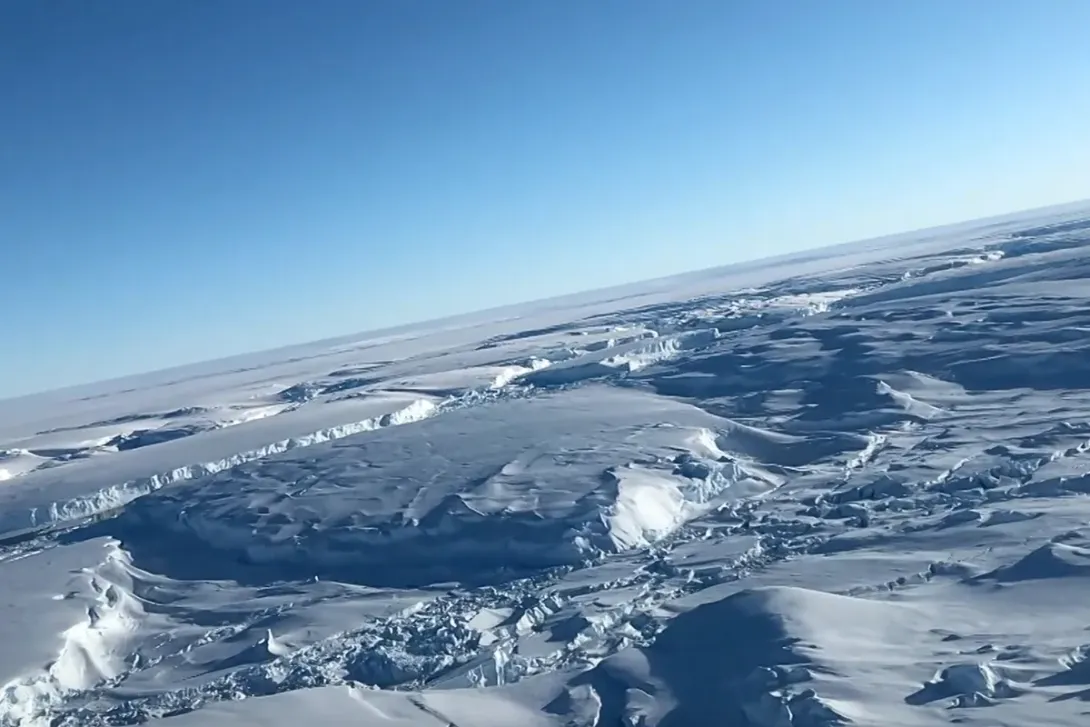
Thwaites Glacier in Antarctica, often dubbed the “Doomsday Glacier,” has drawn intense scientific scrutiny due to its accelerating ice melt and potential contribution to global sea-level rise. Recent studies reveal that warming ocean currents and destabilized ice shelves are increasing the glacier’s flow rate, raising concerns about irreversible ice loss. Researchers warn that even partial collapse could contribute several meters to sea levels, threatening coastal communities worldwide. Scientists are deploying advanced satellite monitoring, autonomous underwater vehicles, and modeling simulations to understand its dynamics. The glacier’s behavior underscores the urgent need for global climate mitigation and coordinated adaptation strategies to manage long-term risks.
Scientific Significance
Thwaites Glacier is one of the largest and most unstable glaciers in West Antarctica, draining a vast portion of the ice sheet into the Amundsen Sea. Its structure and grounding line—the point where ice meets the seabed—make it highly sensitive to ocean warming.
Experts note that its rapid movement and thinning could trigger a chain reaction affecting neighboring glaciers, amplifying potential sea-level rise and environmental consequences.
Climate Change and Environmental Implications
Rising ocean temperatures are accelerating basal melting beneath Thwaites Glacier, weakening ice shelves that stabilize its flow. Studies indicate that if these processes continue unchecked, the glacier could collapse within decades, contributing up to 65 centimeters to global sea levels by 2100 under high-emission scenarios.
Environmental analysts emphasize that such ice loss poses risks to coastal infrastructure, freshwater resources, and global ecosystems, highlighting the interconnected impacts of climate change.
Monitoring and Research Initiatives
International scientific teams are employing satellites, ice-penetrating radar, and autonomous submersibles to map the glacier’s ice thickness, flow rate, and basal conditions. Computational models simulate potential collapse scenarios, informing risk assessments for policymakers and disaster-preparedness planning.
Researchers stress that sustained funding and global collaboration are essential to refine predictions, develop mitigation strategies, and guide coastal adaptation initiatives.
Global Implications and Policy Outlook
The behavior of Thwaites Glacier serves as a critical indicator of Earth’s climate trajectory. Policymakers are urged to integrate glacier monitoring into climate adaptation planning, invest in resilient coastal infrastructure, and advance emissions reduction commitments.
Experts assert that timely action could mitigate some risks, but ongoing research underscores the urgency of understanding ice dynamics, global warming impacts, and their cascading effects on human and ecological systems.
Conclusion
Thwaites Glacier represents both a scientific frontier and a stark warning. Its evolving instability highlights the tangible consequences of climate change, emphasizing the imperative for global cooperation, innovative research, and proactive climate policy to safeguard vulnerable regions and future generations.
Comments