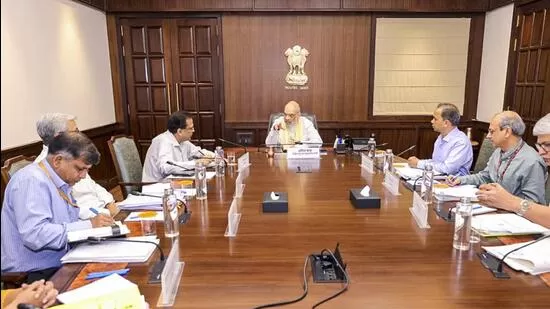
India is set to undertake its long-delayed population census, beginning in October 2026 in selected northern territories, and nationwide from March 2027. This exercise will be historic—not only because it marks the first census in 16 years—but also due to the government’s inclusion of caste data, a politically and socially significant development. For the first time, citizens will have the opportunity to self-enumerate through digital platforms. Conducted in two phases, the census will record both household data and detailed demographic, socio-economic, and cultural information, including caste and religion, offering a granular understanding of India’s evolving societal fabric.
Census Timeline and Scope
The Government of India has formally announced that the decennial census will commence on October 1, 2026, starting with the union territories of Ladakh, Jammu and Kashmir, and the Himalayan states of Himachal Pradesh and Uttarakhand. The rest of the country will begin its count on March 1, 2027, marking India’s first full-scale population enumeration since 2011. The originally scheduled 2021 census was postponed due to the COVID-19 pandemic, making this the first such exercise in 16 years.
This next census will also be India’s first digital population count, introducing a self-enumeration option to enhance data accuracy and logistical efficiency.
Structure: Two-Phase Enumeration Process
The upcoming census will be conducted in two distinct phases:
- House Listing Operation (HLO):
This phase will gather information on the condition of residences and the availability of household assets and civic amenities, such as electricity, sanitation, drinking water, and internet access. - Population Enumeration (PE):
The second phase will delve into individual-level data, including demographic, socio-economic, and cultural attributes. Notably, this phase will also record caste and religion, which is a significant addition to India’s data-gathering architecture.
This dual-stage process is aimed at compiling a comprehensive dataset to guide policymaking at both the central and state levels.
Caste Enumeration: A Politically Charged Addition
Perhaps the most striking feature of the 2027 Census will be the inclusion of caste data, a move long demanded by opposition parties and civil society advocates. The government confirmed on April 30, 2025, that enumeration will cover castes and sub-castes, along with the population count of each category.
Caste has historically been excluded from national censuses since 1931, with only Scheduled Castes (SCs) and Scheduled Tribes (STs) recorded in recent decades. The inclusion of Other Backward Classes (OBCs) now adds a new layer of social insight, particularly important in states like Bihar, where over 63% of the population belongs to backward or extremely backward categories.
Government sources have clarified that the census will record caste, not class, given the absence of a universal OBC list. While SCs and STs have standard classifications, OBC categorizations vary across states and differ from the National Commission for Backward Classes list used for central policies such as job and education quotas.
Digital Enumeration: A Technological Leap
In a first for the Indian Census, individuals will be given the opportunity to self-enumerate using a digital portal, ushering in a new era of technology-driven governance. This is expected to reduce errors, improve accessibility, and speed up data processing. The digital initiative reflects India’s larger push toward e-governance and citizen-centric data collection mechanisms.
The use of technology will also enable faster dissemination of preliminary findings, which is vital for adaptive policymaking and better allocation of resources.
Socio-Political and Economic Significance
The delay of the 2021 census left a critical gap in India’s socio-economic data, complicating planning across key sectors such as healthcare, education, urban development, and employment generation. With a population exceeding 1.4 billion, granular and updated data is essential to design evidence-based public policy.
The 2027 Census will likely play a pivotal role in determining resource allocation, subsidy targeting, and political representation, particularly if the data is used to reassess reservation policies or shape welfare schemes.
Furthermore, the addition of caste data could influence national debates on affirmative action, income inequality, and social mobility, especially as India navigates its demographic dividend and economic transformation.
Conclusion
The upcoming census is more than a statistical exercise; it is a landmark in India’s democratic and developmental journey. Combining traditional data-gathering with technological innovation and expanded social insight, the 2027 count will offer policymakers an unprecedented tool to decode the complexities of a rapidly evolving society. The inclusion of caste data—while politically sensitive—signals a bold move towards transparency, equity, and targeted governance in the world’s largest democracy.
Comments