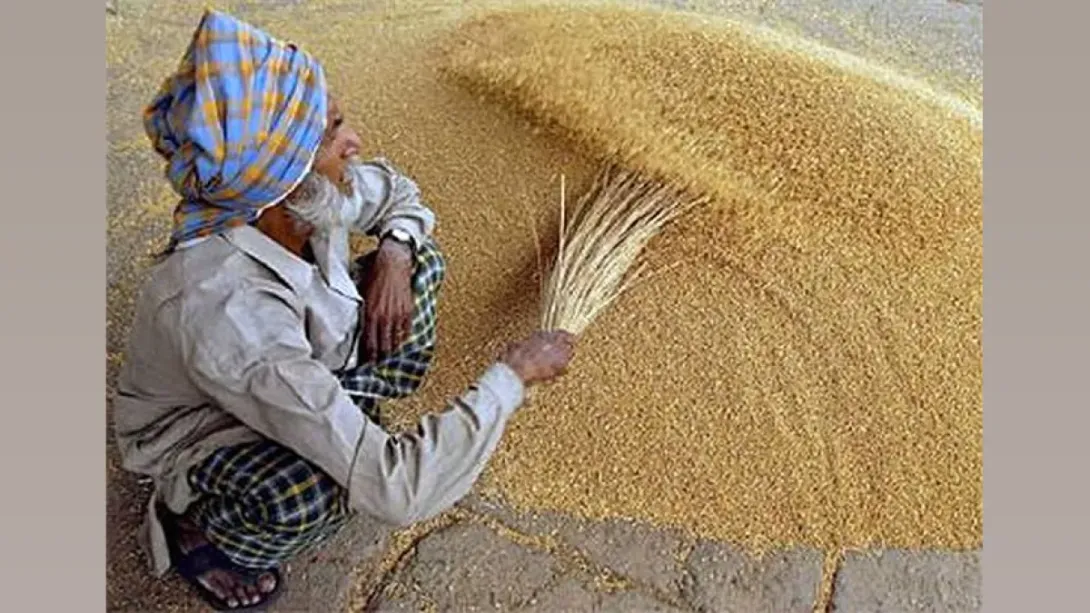
India’s wheat reserves remain sufficiently robust to meet domestic demand, eliminating the necessity for government intervention through open market sales at this stage. According to senior officials, the current stockpile is well above buffer norms, providing the government with confidence in maintaining price stability without offloading surplus grain. This assessment follows careful monitoring of procurement trends, market prices, and public distribution requirements. With a favorable monsoon and resilient procurement from key producing states, authorities have opted to prioritize targeted distribution over market intervention, signaling confidence in the nation’s food security management.
---
Strong Wheat Reserves Back Government’s Non-Intervention Stance
India’s central food authorities have confirmed that wheat stocks held in government storage are comfortably above the prescribed buffer norms, providing a cushion against inflationary pressures and seasonal supply disruptions. The Food Corporation of India (FCI) and related agencies have reportedly maintained reserve levels adequate to support the Public Distribution System (PDS), welfare schemes, and any emergent local shortages without tapping into open market channels.
As of July, the wheat buffer exceeds the minimum threshold required for this period of the year, which typically stands at 275 lakh metric tonnes. Officials emphasized that this strategic stock position enables them to take a calibrated approach rather than resort to market-based grain disposal, which may otherwise lead to unintended price distortions.
---
Procurement Trends Signal Resilience
The wheat procurement cycle for the 2024–25 rabi marketing season witnessed a recovery in volumes across key producing states, including Punjab, Haryana, and Madhya Pradesh. With favorable climatic conditions and policy incentives offered to farmers, the government successfully procured over 266 lakh metric tonnes, marginally below last year's figures but within acceptable variance.
Notably, market arrivals from private farmers were robust during peak harvesting months, keeping wholesale prices relatively stable. This suggests that the domestic supply chain, though occasionally stressed by logistics and weather disruptions, has remained resilient enough to balance production with demand.
---
No Immediate Need for OMSS to Stabilize Prices
In previous years, the government has relied on the Open Market Sale Scheme (OMSS) to release surplus grains into the market in order to curb inflation and support consumer affordability. However, the current scenario does not necessitate such an intervention. Wholesale and retail wheat prices have remained within a controllable range, with no sharp spikes indicating urgent policy action.
The Ministry of Consumer Affairs, Food & Public Distribution is reportedly keeping a close eye on price volatility. However, given the healthy inventory levels and subdued inflationary signals, the government has chosen to adopt a wait-and-watch approach, prioritizing welfare disbursals and maintaining grain reserves for contingency planning.
---
Domestic Demand Well Under Control
Consumer demand, both from household and institutional buyers, has been steady but not overwhelming, according to market analysts. The absence of any panic buying or abrupt retail hoarding has further strengthened the government’s confidence in not needing to engage in open market sales. With sufficient buffer stocks allocated to the National Food Security Act (NFSA) and other targeted subsidy programs, food supply across states remains uninterrupted.
This strategic stock management also leaves room for India to maneuver diplomatically should international supply chain concerns rise—particularly as global wheat prices remain susceptible to geopolitical disruptions in Eastern Europe and climate events elsewhere.
---
A Measured Policy Approach in a Globalized Grain Market
India’s decision to hold off on OMSS deployment reflects not only domestic stability but also a broader, more strategic policy outlook. By retaining control over surplus grain, the government retains leverage in case of future domestic price volatility or external demand surges. This becomes especially relevant in a year where climate uncertainty and export restrictions from key global suppliers could exert upward pressure on international food prices.
Officials maintain that should conditions change—whether through unexpected supply shortfalls, unseasonal rains, or global market dislocation—they are equipped to respond promptly with calibrated releases from the central pool.
Comments