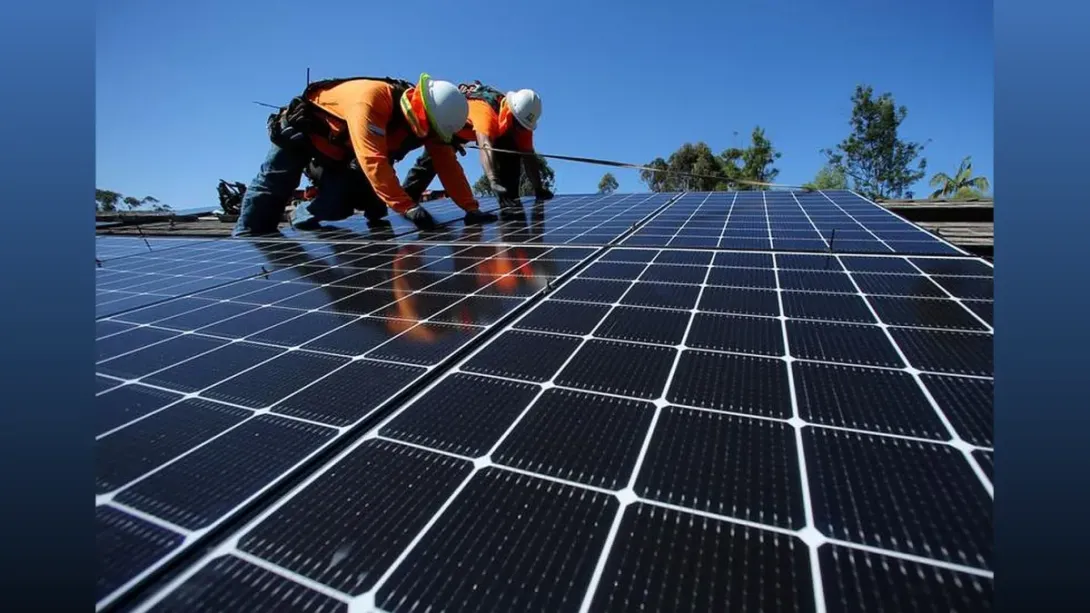
India is on the verge of achieving a major milestone in its renewable energy journey, with non-fossil fuel-based power generation capacity approaching 260 gigawatts (GW). This accomplishment underscores the nation’s accelerating transition toward clean and sustainable energy sources in alignment with its net-zero emissions target by 2070. Driven by strong policy support, investment inflows, and technological advancements, India is steadily transforming its energy mix. The rapid expansion in solar, wind, hydro, and nuclear capacities positions the country as a global leader in green energy, while reinforcing its commitment to sustainable development and climate resilience.
India’s Renewable Energy Momentum
India’s non-fossil fuel energy capacity—comprising solar, wind, hydro, nuclear, and bioenergy—has witnessed exponential growth over the past decade. As of 2025, this capacity is nearing 260 GW, accounting for roughly 45% of the nation’s total installed power generation capacity. This marks a significant leap toward the government’s interim target of achieving 50% cumulative power capacity from non-fossil sources by 2030.
Solar and wind energy remain the backbone of this transformation. Solar power alone contributes more than 180 GW, reflecting India’s massive expansion in both grid-connected and rooftop solar installations. Meanwhile, wind energy capacity stands at around 46 GW, bolstered by projects across states such as Tamil Nadu, Gujarat, and Maharashtra.
Government Policies and Investment Drivers
The rapid scale-up in non-fossil fuel capacity has been underpinned by a series of progressive government initiatives and policy frameworks. Programs such as the National Solar Mission, Green Energy Corridor, and Production Linked Incentive (PLI) schemes for solar manufacturing have significantly accelerated domestic capacity creation.
Additionally, India’s emphasis on renewable energy parks, hybrid power projects, and storage integration has enhanced system reliability and cost efficiency. The government has also facilitated the participation of private players through transparent bidding processes and incentives for foreign investment, making India one of the top five global destinations for renewable energy investment.
Between 2014 and 2024, India attracted over USD 100 billion in renewable energy investments, reflecting investor confidence in its policy stability and long-term energy vision.
The Role of Solar and Wind in the Energy Mix
Solar and wind power together form the cornerstone of India’s clean energy expansion. Large-scale solar parks—such as those in Pavagada (Karnataka), Bhadla (Rajasthan), and Rewa (Madhya Pradesh)—have become benchmarks for low-cost, high-efficiency renewable generation.
Hybrid projects that integrate solar and wind capacities are also gaining traction, offering grid stability and improved utilization rates. Several state governments have initiated policies encouraging hybrid and round-the-clock (RTC) renewable projects, which are vital for meeting continuous power demand and reducing reliance on fossil-based baseload sources.
Moreover, the integration of battery energy storage systems (BESS) is expected to be a game changer. The government’s plans to add 50 GW of renewable capacity annually till 2030, with storage-backed projects, will enable India to manage peak demand efficiently while maintaining grid reliability.
Decarbonization and the Road to Net Zero
India’s growing non-fossil fuel capacity plays a crucial role in achieving its Nationally Determined Contributions (NDCs) under the Paris Agreement. With the nation targeting 500 GW of non-fossil energy capacity by 2030, the current achievement of 260 GW represents substantial progress toward that goal.
This clean energy expansion not only curbs greenhouse gas emissions but also enhances energy security by reducing dependence on imported coal and oil. The transition supports India’s broader ambition of achieving net-zero emissions by 2070, while simultaneously driving economic growth through green job creation and domestic manufacturing.
According to energy analysts, every 10 GW of renewable capacity generates over 50,000 direct and indirect jobs, indicating the sector’s immense potential for employment generation and economic diversification.
Challenges and Future Outlook
Despite remarkable progress, several challenges persist—ranging from land acquisition and transmission constraints to the need for efficient storage technologies and grid modernization. Financing remains another key concern, especially for small and medium-sized developers who face hurdles in accessing low-cost capital.
However, with continued policy support, innovative financing instruments like green bonds, and the entry of global players, the sector is poised for sustained growth. The push for hydrogen-based fuels, particularly green hydrogen, further expands India’s clean energy horizon, offering opportunities for export-led economic growth.
Experts suggest that with strategic investments and improved regulatory mechanisms, India could surpass its 2030 renewable target ahead of schedule, establishing itself as a model for developing economies navigating the energy transition.
Conclusion
India’s approach to clean energy is both ambitious and pragmatic, balancing environmental goals with economic realities. The near-achievement of 260 GW in non-fossil fuel capacity signals a pivotal moment in the country’s journey toward sustainability. By leveraging innovation, investment, and inclusive policy design, India is not only redefining its own energy landscape but also shaping the global discourse on equitable energy transition.
Comments