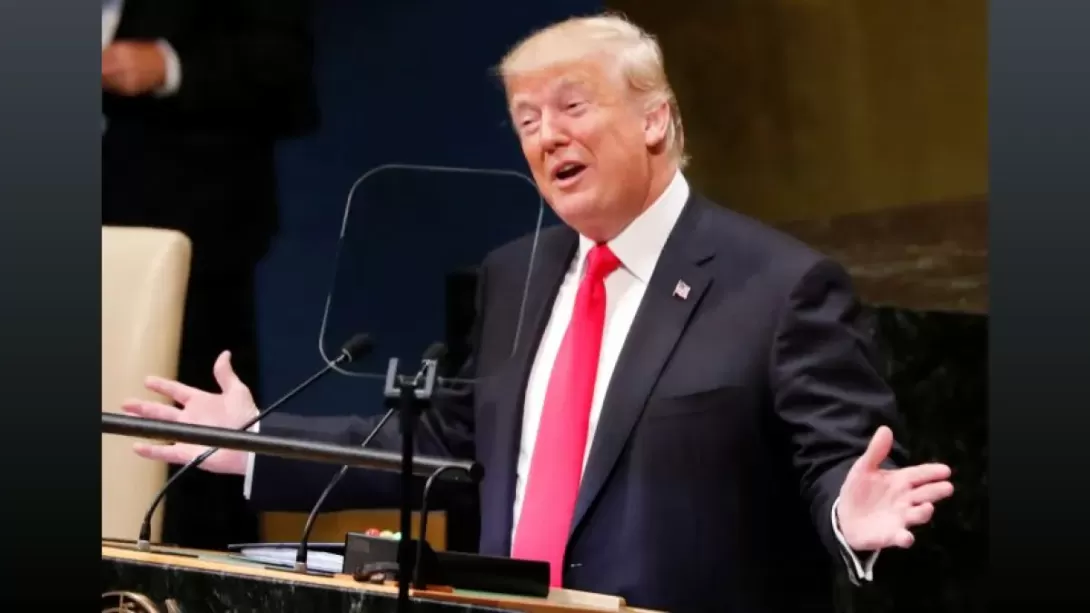
India and the United States appear to be on the cusp of a significant trade agreement, rekindling hopes of enhanced bilateral economic ties. U.S. President Donald Trump has once again asserted that New Delhi is prepared to eliminate tariffs on American goods—claims met with cautious diplomacy in India. While both nations acknowledge ongoing negotiations, India has emphasized that any deal must be mutually beneficial. As high-level officials convene in Washington, the contours of the agreement remain under construction, shaped by the political calculus, sectoral interests, and the broader imperative of strengthening economic interdependence.
A Cautious Convergence of Economic Interests
The longstanding pursuit of a bilateral trade pact between India and the United States has recently gained renewed momentum. In a recent media interaction, U.S. President Donald Trump stated that India is ready to slash tariffs by 100 percent on American exports—a move that would mark a dramatic shift in one of the world's most protectionist trade regimes.
However, Indian officials have been more circumspect in their tone. External Affairs Minister S. Jaishankar underscored the importance of a "mutually beneficial" agreement, cautioning that "nothing is decided until everything is decided." This remark reflects India’s calibrated approach, balancing strategic diplomacy with national economic priorities.
Strategic Stakes and Negotiation Dynamics
Trump’s characterization of India as “one of the highest tariff nations in the world” underscores Washington’s longstanding frustration with trade barriers in emerging markets. He claimed that India is now willing to dismantle these barriers entirely, at least for the U.S.—a claim that, while diplomatically bold, has yet to be corroborated with formal policy changes.
Speaking on a potential timeline for the agreement, Trump maintained a posture of strategic patience. “That’ll come soon. I’m in no rush,” he remarked, positioning the U.S. as the sought-after partner in a global landscape crowded with prospective suitors for trade deals.
This statement reflects Trump’s broader negotiating style—asserting leverage while controlling the narrative around urgency.
Ground Realities: Deliberate Progress in Washington
In the background of these high-profile statements, Indian Commerce Minister Piyush Goyal is in Washington for a critical round of talks. His agenda includes discussions with U.S. Commerce Secretary Howard Lutnick and U.S. Trade Representative Jamieson Greer, aimed at firming up the scope and structure of the proposed agreement.
The negotiations have proven complex, with both sides aiming to extract tangible concessions. India is lobbying for reduced tariffs on several labor-intensive export sectors, including textiles, leather goods, gems and jewellery, plastics, shrimp, and agricultural commodities such as grapes and bananas. These sectors are not only vital to India's economy but are also politically sensitive due to their employment intensity.
In contrast, the U.S. is pressing for greater access in areas such as industrial goods, electric vehicles, petrochemicals, wines, dairy, and high-value agricultural products like apples and tree nuts. American negotiators are particularly focused on achieving a level playing field for these sectors, which face steep barriers in Indian markets.
A Deal in the Making—But Not Yet Done
Despite the visible progress and strategic will on both sides, the complexity of aligning divergent economic interests ensures that a final agreement remains a work in progress. India's insistence on reciprocal benefits highlights a shift from earlier eras of asymmetric concessions, signaling New Delhi’s evolution into a more assertive global trade player.
What emerges from the current diplomatic dance is not just a trade pact, but a reflection of changing geopolitical equations. For India, deeper trade ties with the U.S. may act as a counterbalance to its strategic competition with China. For the U.S., fostering ties with India strengthens its foothold in the Indo-Pacific region and reinforces supply chain resilience.
Conclusion: High Stakes, Higher Expectations
As negotiations continue behind closed doors, stakeholders across both nations watch with a mix of anticipation and caution. Whether or not India ultimately agrees to the elimination of tariffs on American goods remains to be seen. But one thing is clear: the outcome of this trade agreement will shape the contours of Indo-U.S. economic engagement for years to come.
If executed wisely, it could unlock significant economic potential while cementing a partnership grounded in shared strategic and commercial interests.
Comments