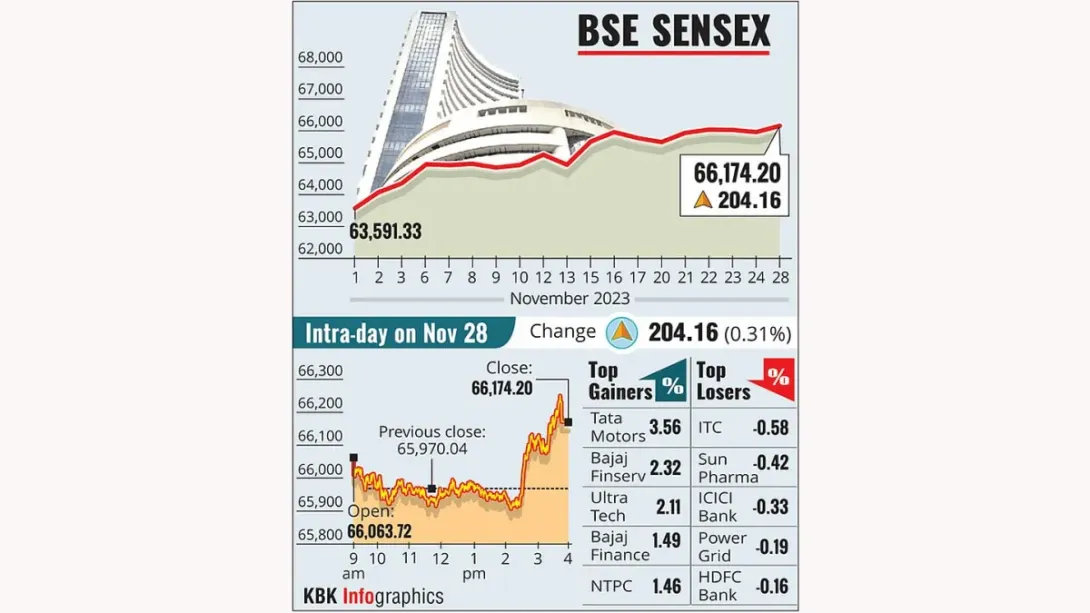
Indian stock markets closed on a subdued note as sustained foreign fund outflows pressured benchmark indices. The Sensex and the Nifty ended lower, reflecting cautious investor sentiment amid global uncertainties and shifting capital flows. While domestic investors provided selective support, selling by overseas institutions dominated trading activity. Market participants attributed the weakness to concerns over global interest rates, currency movements, and risk aversion toward emerging markets. Analysts noted that the decline was driven more by external factors than domestic fundamentals, which remain relatively stable. The session underscored the sensitivity of Indian equities to global liquidity trends.
Benchmarks Retreat on Selling Pressure
The Sensex and the Nifty finished the trading session in negative territory as foreign institutional investors continued to reduce exposure to Indian equities. Early stability gave way to steady selling in heavyweight stocks, pulling the benchmarks lower by the close.
Large-cap names in banking, information technology, and metals accounted for much of the decline, reflecting the sectors’ higher sensitivity to global risk sentiment and capital flow dynamics.
Foreign Outflows Drive Market Direction
Foreign fund outflows remained the dominant influence on market movement. Higher yields in developed markets and a stronger U.S. dollar have prompted overseas investors to rebalance portfolios, reducing allocations to emerging markets.
Analysts said such moves are largely tactical, driven by global monetary conditions rather than a reassessment of India’s growth story. However, in the short term, these outflows tend to exert disproportionate pressure on benchmark indices.
Domestic Investors Provide Partial Cushion
Domestic institutional investors and retail participants offered some support by selectively accumulating stocks at lower levels. Continued inflows into mutual funds and systematic investment plans have helped moderate volatility.
Sectors linked to domestic consumption and infrastructure showed relative resilience, supported by expectations of stable earnings and government-led spending. Even so, domestic buying was insufficient to fully offset the scale of foreign selling during the session.
Outlook Remains Cautiously Constructive
Market strategists expect near-term volatility to persist as global cues continue to shape investor behavior. Key factors to watch include movements in global bond yields, currency trends, and upcoming economic data from major economies.
Despite short-term weakness, analysts maintain a cautiously constructive view on Indian equities, citing strong macro fundamentals and long-term growth prospects. Periods of foreign-led selling, they argue, may offer selective opportunities for long-term investors.
Comments