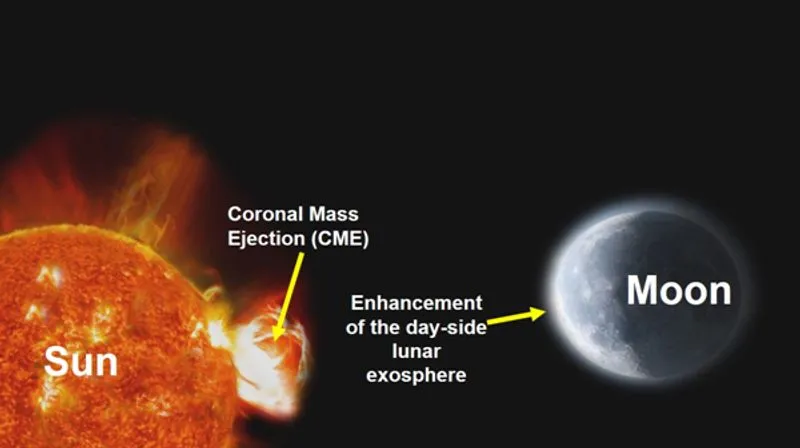
India’s lunar exploration program has achieved a groundbreaking milestone, with its spacecraft successfully recording the effects of solar flares on the Moon’s surface for the first time. This observation provides unprecedented insights into how charged particles from the Sun interact with the lunar environment, influencing surface composition, radiation levels, and potential future human exploration. Scientists highlight that understanding these solar-moon interactions is critical for both robotic missions and astronaut safety in long-duration lunar stays. The achievement positions India as a leader in planetary science research while contributing valuable data to global efforts studying space weather and its impact on celestial bodies.
---
Historic Observations by the Lunar Spacecraft
India’s lunar spacecraft, equipped with advanced sensors and radiation detectors, captured real-time interactions of solar flare emissions with the Moon’s surface. The data reveal variations in particle flux, surface ionization, and transient radiation spikes, offering a clearer picture of the Moon’s response to high-energy solar events.
Researchers note that these observations are vital in understanding how solar activity influences the lunar regolith and the thin exosphere, particularly in regions exposed to prolonged sunlight. This is the first instance of a spacecraft directly measuring such interactions on the Moon, marking a milestone in lunar science.
---
Scientific Significance
Solar flares emit bursts of charged particles that can significantly affect planetary bodies without protective atmospheres or magnetic fields. By documenting their impact on the Moon, scientists can model radiation exposure risks, surface charging effects, and potential hazards for future astronauts.
The findings also contribute to broader astrophysical studies, helping predict space weather impacts on Earth-orbiting satellites, deep space missions, and other celestial bodies lacking protective magnetospheres. This enhances the ability of space agencies to plan safer exploratory missions across the solar system.
---
Implications for Future Lunar Missions
Understanding how solar flares interact with the lunar surface is essential for planning sustainable human settlements, establishing lunar habitats, and deploying long-term scientific instruments. The data collected by India’s mission will inform shielding requirements, power system designs, and operational protocols for future astronauts and robotic explorers.
The achievement also reinforces India’s growing capabilities in space science and exploration, positioning the country as a significant contributor to global lunar research. Collaborative studies using these insights can accelerate advancements in planetary safety, mission planning, and space weather forecasting.
---
Global Scientific Impact
International space agencies and researchers have welcomed the findings, noting that the data fill a critical knowledge gap about lunar radiation dynamics. By documenting how solar activity influences an airless celestial body, India’s mission provides a benchmark for comparative studies with other moons and asteroids.
The success underscores the importance of continued investment in space science, cutting-edge instrumentation, and interdisciplinary research, reaffirming India’s commitment to pushing the frontiers of lunar exploration and contributing meaningfully to humanity’s understanding of the solar system.
Comments