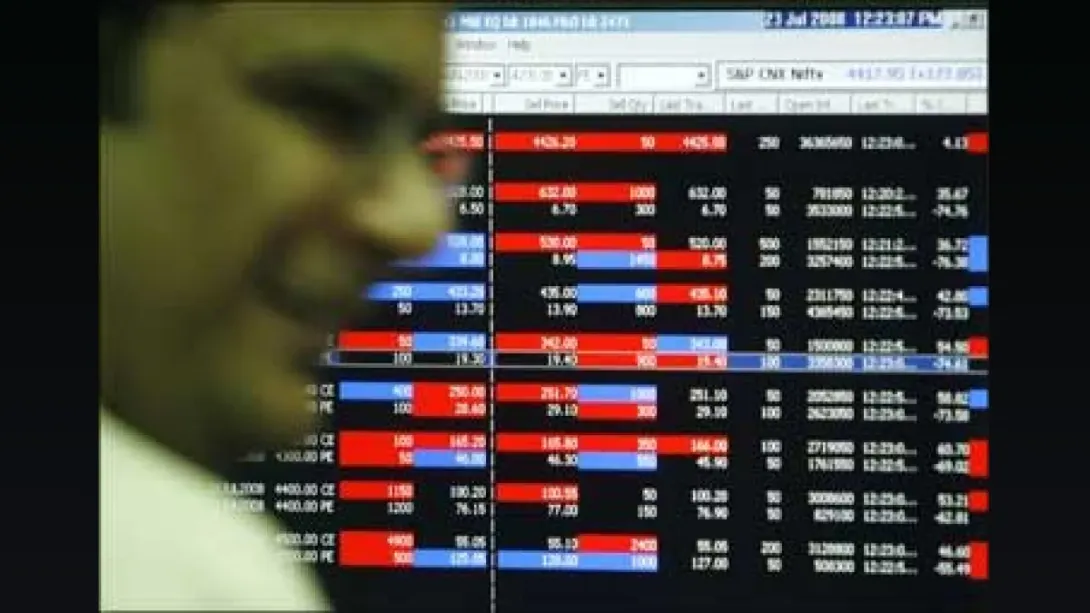
Indian equity benchmarks ended a turbulent trading session in negative territory as persistent selling in services and consumer-focused stocks weighed heavily on investor sentiment. After an initially stable opening, markets turned sharply volatile amid global uncertainty, valuation concerns and sector-specific headwinds. IT services firms and fast-moving consumer goods companies faced notable pressure, reflecting cautious earnings expectations and shifting capital allocation strategies. Institutional flows remained mixed, further amplifying intraday swings. Analysts suggest the heightened volatility may continue in the near term as investors reassess macroeconomic indicators, corporate earnings visibility and global liquidity trends.
Volatility Dominates Trading Sentiment
Indian stock markets experienced pronounced intraday fluctuations, with benchmark indices oscillating between gains and losses before settling lower. The session underscored fragile investor confidence, as traders reacted to a confluence of domestic and global uncertainties.
Market breadth remained weak throughout the day, signaling broader selling pressure rather than isolated stock corrections. Dealers attributed the volatility to profit booking in recently outperforming sectors, compounded by cautious global cues and lingering inflationary concerns.
The day’s movement reflected a tactical repositioning by institutional investors, rather than a structural shift in market fundamentals.
Services Sector Bears the Brunt
Services-oriented companies, particularly within information technology and financial services, emerged as primary laggards. Investors trimmed exposure to export-driven IT firms amid concerns over slowing global technology spending and currency fluctuations.
Shares of Tata Consultancy Services and Infosys traded under pressure, reflecting subdued demand visibility in key overseas markets.
Financial services stocks also encountered headwinds as investors evaluated credit growth sustainability and net interest margin trajectories in a shifting interest rate environment.
Consumer Stocks Lose Defensive Appeal
Traditionally regarded as defensive plays during uncertain cycles, consumer goods companies failed to provide stability. Elevated valuations and concerns over rural consumption trends prompted profit booking across the segment.
Major counters including Hindustan Unilever and Nestle India declined, mirroring investor caution toward near-term earnings expansion.
Analysts observed that as inflationary pressures affect input costs and pricing strategies, even resilient consumer franchises face margin sensitivity.
Global Signals Add to Uncertainty
International developments added complexity to the domestic trading environment. Investors remained watchful of evolving interest rate expectations in developed markets, alongside commodity price movements that could influence imported inflation.
Currency volatility further weighed on sentiment, particularly for export-dependent sectors. With crude oil prices showing intermittent spikes, margin outlooks for both industrial and consumer companies remain under scrutiny.
The interplay between global liquidity conditions and domestic macro indicators is likely to determine near-term market direction.
Institutional Flows and Market Dynamics
Foreign institutional investors (FIIs) displayed cautious positioning, while domestic institutional investors (DIIs) provided selective support in infrastructure and capital goods stocks.
However, algorithmic trading and short-term speculative activity contributed to sharp intraday swings. Market strategists suggest that such volatility is symptomatic of transitional phases, where valuation adjustments occur amid evolving macro narratives.
Liquidity remains structurally supportive, yet sentiment-driven fluctuations have intensified price discovery processes.
Outlook: Consolidation Before Clarity
Market analysts anticipate continued choppiness in the near term as participants await corporate earnings data and fresh macroeconomic signals. While India’s structural growth story remains intact — supported by infrastructure investment and digital expansion — stretched valuations in certain defensive sectors may necessitate consolidation.
Investors are advised to maintain disciplined portfolio allocation strategies, prioritizing earnings resilience, balance sheet strength and sectoral diversification.
Comments