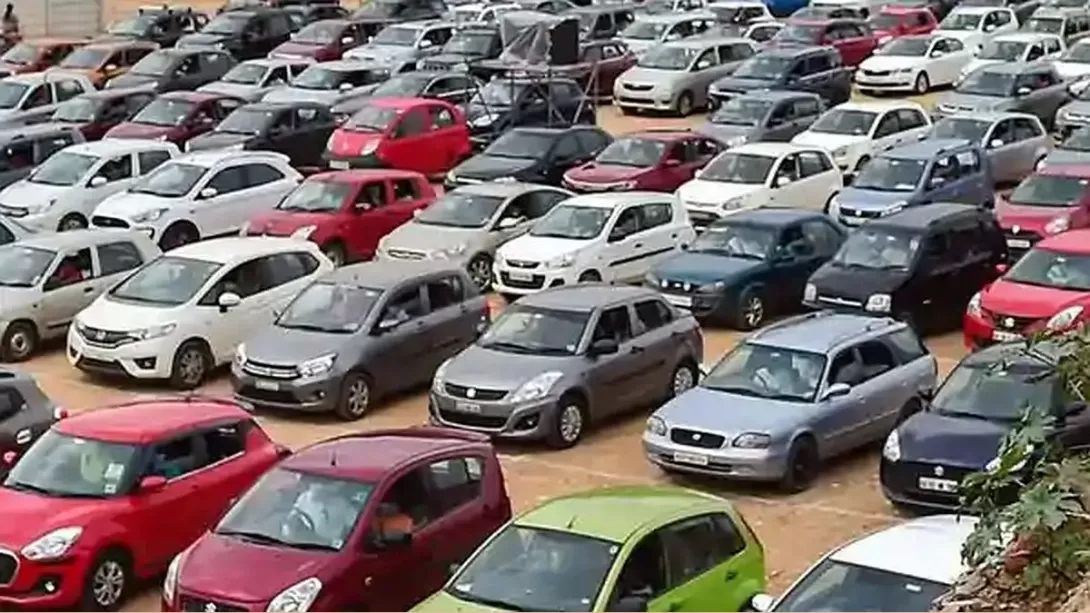
India's automobile sector recorded a stellar performance on the global stage in FY2024–25, with exports surging 19% year-on-year to over 53.63 lakh units. This export-led momentum was primarily driven by robust international demand for passenger vehicles, two-wheelers, and commercial vehicles. According to data from the Society of Indian Automobile Manufacturers (SIAM), India’s rising manufacturing quality, the global appeal of India-made utility vehicles, and an improving macroeconomic environment in Africa and Latin America played pivotal roles. With this, the Indian auto industry continues to strengthen its global presence, reinforcing its position as a key manufacturing and export hub.
India’s Auto Export Engine Roars Ahead
India’s automotive exports reached a new high in FY25, with 53,63,089 units shipped internationally—up from 45,00,494 units in FY24. This double-digit growth not only marks a significant recovery from pandemic-era slowdowns but also underscores India's growing stature in the global automotive value chain.
Export momentum was led by strong overseas interest in passenger vehicles and two-wheelers, while other segments like commercial and three-wheeled vehicles also posted positive, albeit moderate, gains. Improved manufacturing standards, enhanced product portfolios, and favorable trade conditions in key regions all contributed to this uptrend.
Passenger Vehicles: A Historic Performance
Passenger vehicle (PV) exports rose by 15%, reaching 7,70,364 units in FY25, compared to 6,72,105 units in FY24. This marks the segment’s best-ever export performance to date.
Within this category, utility vehicles (UVs) were the standout performers, recording a 54% growth year-on-year with 3,62,160 units shipped, up from 2,34,720 units in the previous fiscal. This leap reflects increasing global appetite for sport utility and crossover models manufactured in India.
The growing success of global models produced domestically by Indian automakers, as well as improved production efficiency and export compliance, have been central to this performance. Companies have also begun tapping into developed markets, signaling a strategic pivot beyond traditional emerging market destinations.
Two-Wheelers Lead the Volume Game
The two-wheeler segment remained the largest contributor to India’s auto exports, with 41,98,403 units shipped in FY25—a 21% increase from 34,58,416 units the prior year.
This surge is credited to the introduction of new models, penetration into new international markets, and stronger economic conditions in traditional buyer regions such as Africa and Latin America. India's cost-competitive two-wheeler industry continues to dominate in these geographies, providing reliable mobility solutions at attractive price points.
Commercial Vehicles Ride the Recovery Wave
Exports of commercial vehicles (CVs) rose by 23% to 80,986 units, compared to 65,818 units in FY24. This growth signals a broader post-pandemic recovery in infrastructure investment and industrial activity across key global markets.
Improved international sentiment and increased focus on utility transport in emerging economies have helped revive demand for light and heavy commercial vehicles from India. As local manufacturers ramp up production with better emission compliance and durability, India-made commercial vehicles are increasingly seen as viable alternatives to higher-cost Western offerings.
Three-Wheelers: Modest But Stable Growth
The three-wheeler segment recorded 3.1 lakh units in exports during FY25, reflecting a 2% year-on-year growth. While more modest compared to other segments, this growth is still noteworthy given the slow recovery in last-mile transport demand globally.
Three-wheelers continue to serve as a cost-effective transport solution in Southeast Asia and parts of Africa, where urban and semi-urban mobility infrastructure remains underdeveloped. Indian manufacturers benefit from their deep understanding of these markets and their longstanding export relationships.
Strategic Implications and Outlook
India's automotive export success in FY25 reflects more than just cyclical recovery—it indicates structural competitiveness. SIAM President Shailesh Chandra noted that “good recovery is seen across all segments,” particularly in PVs and two-wheelers, thanks to improved global demand and India’s growing cost and quality competitiveness.
Looking ahead, geopolitical stability, logistical resilience, and sustained innovation will be key to maintaining momentum. Automakers must continue investing in R&D, supply chain efficiencies, and green mobility technologies to remain competitive in a rapidly evolving global landscape.
Emerging opportunities in electric mobility, coupled with expanding trade alliances in Africa, ASEAN, and Latin America, present fertile ground for the next chapter of India’s export story.
Conclusion: India’s Automotive Industry Steps Up Globally
The FY25 export performance reflects a pivotal shift in India’s role in the global auto ecosystem—from a low-cost manufacturing base to a preferred export destination for technologically advanced and globally compliant vehicles. With continuous improvements in quality, engineering, and product design, Indian manufacturers are not just meeting but exceeding international expectations. In a world where supply chain resilience and product adaptability are increasingly prized, India's auto sector appears well-positioned to consolidate and expand its global footprint in the years to come.
Comments