India’s economy, supported by strong domestic reforms and a focus on infrastructure development, is poised for resilient growth despite ongoing global challenges. According to the latest finance ministry report, factors such as macroeconomic stability, improving employment prospects, and high consumption expenditure are expected to drive long-term growth. However, geopolitical uncertainties and global trade tensions present potential risks. The report emphasizes the importance of private capital formation, strategic trade negotiations, and fiscal discipline to sustain growth. With a focus on agriculture, manufacturing, and services, India is well-positioned to capitalize on emerging opportunities while managing risks.
Macroeconomic Stability and Key Drivers of Growth
India’s economy continues to show resilience, bolstered by several macroeconomic factors that suggest sustained growth despite global uncertainties. The March edition of the Monthly Economic Review, published by the Department of Economic Affairs, outlines how the country’s long-term growth prospects are anchored in a stable macroeconomic environment.
Key drivers of growth include a declining fiscal deficit, easing inflation, improving employment prospects, and robust consumption expenditure. These elements create a favorable climate for continued economic expansion. However, the report also underscores the importance of private capital formation, which is seen as essential for the sustainability of this positive economic trajectory. Public policy and regulatory measures are pivotal in facilitating private sector investments, thereby nurturing a cycle of investment, income growth, and capacity creation.
Geopolitical Uncertainties and Strategic Opportunities
While geopolitical tensions represent a significant risk for India’s growth outlook, the report suggests that these challenges also present opportunities. India can leverage its comparative advantages in select goods and services to strengthen its position in global trade and manufacturing.
India’s approach to mitigating geopolitical risks focuses on strategic trade negotiations and investments in manufacturing. By diversifying its trade partnerships and pursuing domestic reforms, India can reduce its vulnerability to global uncertainties and capitalize on emerging opportunities. However, the report highlights that prolonged geopolitical instability could lead to delayed private sector investments. As such, swift and decisive action is needed from both the private sector and policymakers to prevent uncertainty from stalling growth prospects.
Fiscal Consolidation and Domestic Investment
India’s fiscal consolidation efforts are creating a stronger foundation for economic growth, with a focus on reducing public debt to GDP. This reduction is expected to generate additional domestic resources that can be directed toward private sector investments. Furthermore, states are also working on decreasing their debt burdens, which will free up more resources for productive investments.
The report highlights that the availability of domestic savings to finance private sector projects has improved, contributing to a more conducive environment for capital formation. Fiscal discipline, combined with the government’s commitment to infrastructure development, is expected to further enhance the momentum of India’s economic expansion.
Sectoral Performance: Agriculture, Manufacturing, and Services
India’s agricultural sector is expected to maintain its positive outlook, supported by healthy reservoir levels and robust crop production. The country’s services sector continues to show resilience, which is crucial in driving both rural and urban consumption. On the demand side, the report forecasts strong consumption growth, particularly in rural areas, supported by favorable agricultural prospects. Urban demand is also on the rise, bolstered by increasing discretionary spending.
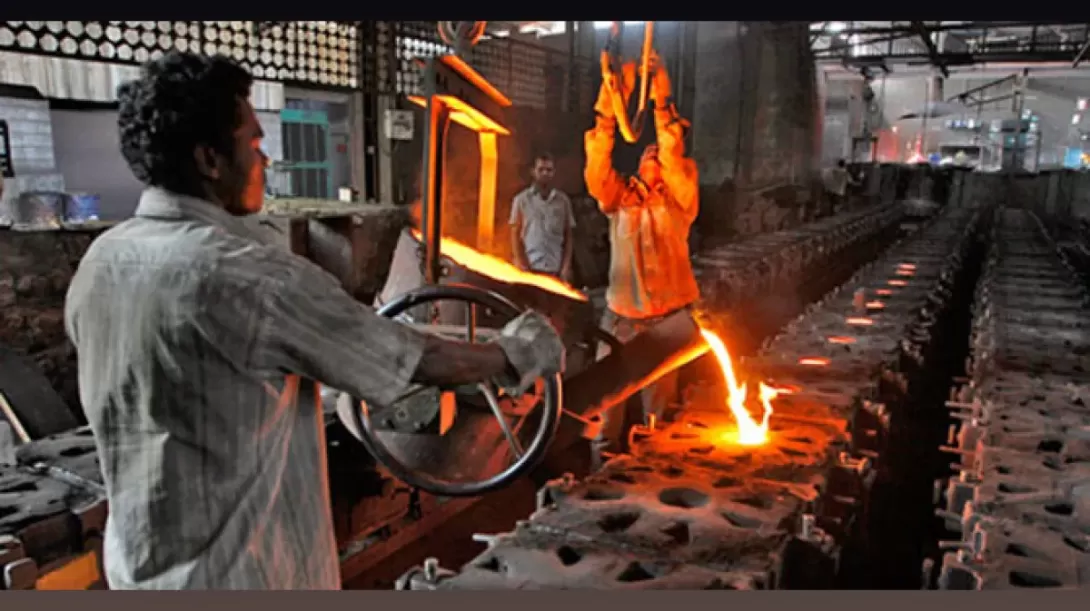
Manufacturing activity, while initially subdued, is now showing signs of revival. The government’s emphasis on infrastructure development, combined with healthy corporate balance sheets, has provided the necessary conditions for a manufacturing resurgence. Business expectations remain strong, and capacity utilization is rising, signaling a potential boost in production and employment.
Investment and Export Activity: Navigating Global Disruptions
Investment activity has gained momentum, and the report expects this trend to continue, driven by sustained capacity utilization and favorable financial conditions. The government’s infrastructure initiatives and improved banking sector health are further contributing to the positive investment climate.
However, global uncertainties, particularly trade disruptions, pose a potential challenge to India’s export performance. While merchandise exports may face pressure due to these challenges, the services sector is expected to remain resilient. India’s strong services export sector, particularly in IT and software, continues to perform well amid global market fluctuations.
The report also emphasizes the need for the private sector to focus on product differentiation and quality to stay competitive in a world where easy gains are increasingly scarce. With global markets becoming more competitive, India’s private sector must adapt and innovate to capitalize on new growth avenues.
Inflation and Food Price Outlook
The outlook for inflation is largely favorable, with food prices expected to soften. The disinflationary trend is supported by strong kharif crop arrivals and favorable rabi crop outcomes, particularly in wheat and pulses. With inflation expectations falling, the outlook for consumer spending remains positive. Additionally, falling crude oil prices have contributed to a more benign inflationary environment, which bodes well for consumer purchasing power.
However, the report also cautions that global uncertainties, including potential disruptions in trade and geopolitical tensions, could cause supply chains to be affected, leading to price volatility. Therefore, while the immediate inflation outlook appears favorable, risks remain on the horizon.
Conclusion: A Time for Action and Strategic Investments
The latest finance ministry report paints a cautiously optimistic picture for India’s economic future. Despite the challenges posed by global geopolitical risks and trade disruptions, India has the opportunity to harness its internal strengths, such as a large domestic market, fiscal discipline, and a resilient private sector, to fuel sustained growth.
Private capital formation, supported by strategic public policy and regulatory measures, will be crucial in maintaining the momentum. Additionally, India’s ability to navigate global uncertainties, particularly through trade diversification and infrastructure investment, will be key to capitalizing on emerging opportunities.
This is a critical moment for both the government and the private sector to act decisively, as the right policies and investments can propel India into a new phase of growth. With a strategic focus on agriculture, manufacturing, and services, India is well-positioned to weather global challenges and continue its march toward becoming a leading global economy.
Comments