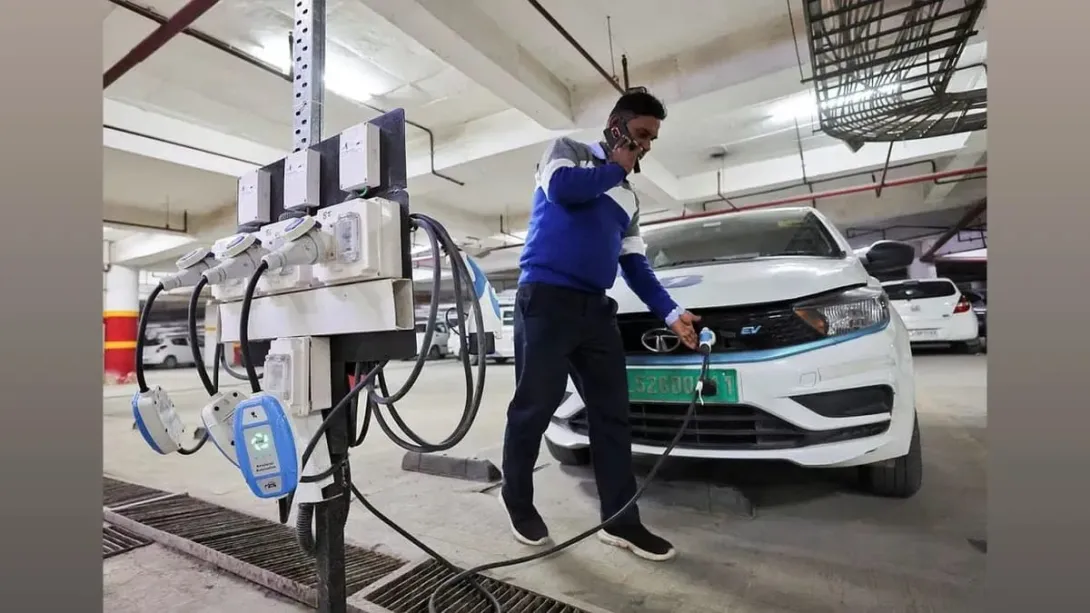
India’s electric vehicle (EV) market recorded a striking 28.6% year-on-year growth in June, underscoring the sector’s rising importance within the broader automotive landscape. Total EV registrations climbed to approximately 1.64 lakh units, reflecting strong consumer adoption driven by improving charging infrastructure, supportive government incentives, and evolving buyer sentiment. Two-wheelers and passenger cars led the surge, while commercial segments also showed encouraging traction. As India pursues ambitious climate goals and aims to reduce its oil import dependence, this sustained growth trajectory suggests EVs are steadily transitioning from an emerging alternative to a mainstream mobility choice.
A Steep Climb: June’s Numbers at a Glance
In June, EV sales across India reached nearly 1,64,000 units, marking a robust 28.6% increase compared to the same month last year. This steady double-digit rise is reflective of a market that is not only maturing but also gaining depth across vehicle categories.
Two-wheelers comprised the bulk of volumes, a trend consistent with India’s overall vehicle ownership patterns, while passenger vehicles—though smaller in absolute numbers—registered impressive growth, highlighting shifting consumer preferences toward cleaner, technologically advanced options.
Underlying Catalysts Driving Growth
Several structural and cyclical factors continue to propel India’s EV market forward. Central and state government subsidies, reduced goods and services tax (GST) rates on EVs, and exemption from road taxes in many regions have made electric vehicles financially attractive.
Moreover, automakers have ramped up their model portfolios, offering a wider range of products with improved battery technologies and longer ranges, easing concerns over vehicle performance and charging convenience. Simultaneously, investments in public charging infrastructure—by both public-sector entities and private operators—are beginning to close critical gaps that once hindered large-scale adoption.
Segment-wise Momentum: Two-Wheelers Dominate
Electric two-wheelers continued to dominate June’s sales chart, supported by their relatively lower upfront costs and suitability for short urban commutes. This category accounted for over 75% of total EV registrations, reflecting how quickly India’s vast two-wheeler market is embracing electrification.
Passenger EVs, including compact hatchbacks and new SUV entrants, also experienced notable traction. With improving battery economics and expanding dealership networks, middle-class families are increasingly viewing EVs as practical alternatives to conventional internal combustion vehicles.
Commercial EVs: A Quiet Revolution
Beyond personal mobility, the commercial EV segment—spanning three-wheelers, freight vehicles, and electric buses—also registered healthy growth. Fleet operators, e-commerce logistics companies, and municipal corporations are progressively integrating EVs into their operations to cut operating costs and meet sustainability benchmarks.
This transition is vital, as commercial vehicles contribute disproportionately to urban pollution. The surge in electric three-wheelers for last-mile deliveries underscores how clean mobility is steadily reshaping India’s logistics backbone.
Challenges on the Horizon
Despite this momentum, the path ahead is not without hurdles. Inconsistent state-level policies, limited localized manufacturing of key components such as battery cells, and concerns over resale value continue to temper enthusiasm. Furthermore, the need for a robust, interoperable charging ecosystem remains pressing, especially to support long-distance travel for passenger and freight vehicles alike.
A Broader Climate and Economic Narrative
The sharp rise in EV sales fits squarely within India’s larger strategic goals: lowering its Rs. 16 lakh crore annual crude oil import bill and achieving its 2070 net-zero emissions target. By fostering an indigenous EV ecosystem—from assembly lines to battery recycling—India also stands to generate significant employment opportunities and technological spillovers across allied sectors.
Looking Ahead: A Market Poised for Expansion
If current trends persist, India’s EV market could breach the 2 million annual unit milestone sooner than many forecasts anticipate. Continued policy stability, coupled with technological breakthroughs in battery efficiency and domestic cell production, will be key to sustaining this growth curve.
As manufacturers, policymakers, and consumers align around the promise of electrification, June’s figures are more than just a statistical highlight—they represent a transformative shift in how India is preparing to power its mobility future.
Comments