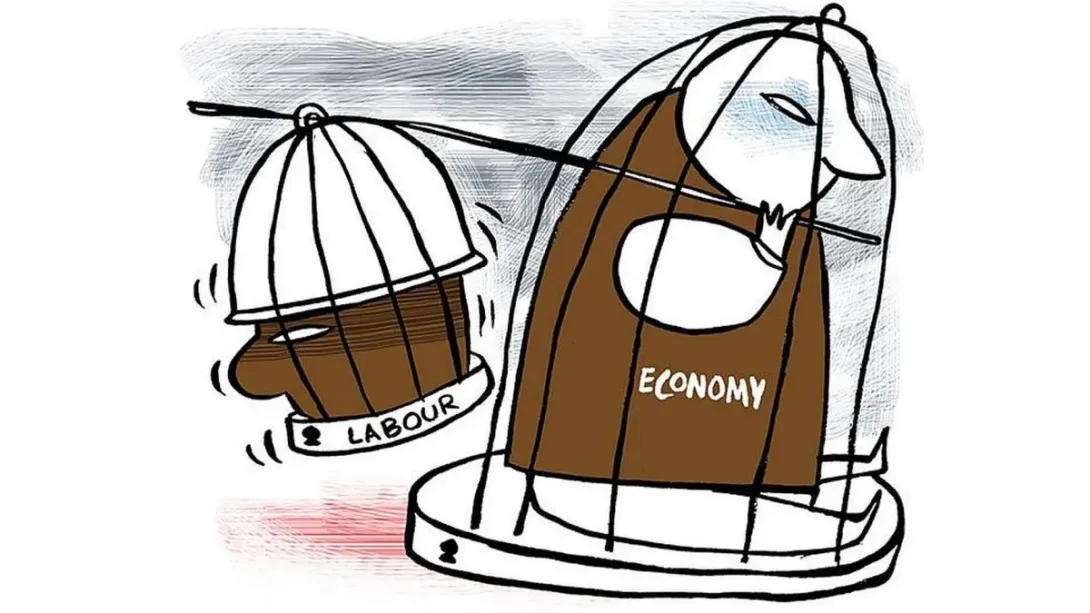
India is poised to implement one of its most ambitious labour market reforms as the four consolidated labour codes are scheduled to become operational in 2026. Designed to replace a fragmented web of legacy statutes, the reforms aim to modernize employment regulations, improve compliance and balance worker protection with business flexibility. The shift is expected to reshape industrial relations, formalize employment and enhance social security coverage across sectors. For employers, workers and investors, the rollout marks a decisive step toward creating a more transparent, efficient and growth-oriented labour ecosystem in one of the world’s fastest-expanding economies.
From Fragmentation to a Unified Framework
For decades, India’s labour laws evolved through piecemeal amendments, resulting in more than two dozen central statutes with overlapping and sometimes contradictory provisions. The new labour architecture consolidates these into four comprehensive codes covering wages, industrial relations, social security and occupational safety. The objective is not deregulation, but simplification—creating a coherent legal framework that is easier to understand, administer and enforce.
Policy architects argue that clarity and consistency will reduce compliance costs for businesses while strengthening legal safeguards for workers. The codes are expected to standardize definitions, streamline registration and reporting, and eliminate regulatory redundancies that have long plagued employers, particularly small and medium enterprises.
Expanding Social Security and Formal Employment
A cornerstone of the reform agenda is the expansion of social security coverage. The new framework extends statutory benefits to a broader segment of the workforce, including contract labor, gig workers and platform-based employees. This marks a significant shift in a country where informal employment dominates large sections of the economy.
By mandating employer contributions and enabling portable benefits, the codes aim to build a more inclusive safety net. Economists note that improved social security could enhance workforce stability and productivity while encouraging the transition from informal to formal employment—a critical goal for sustainable economic growth.
Flexibility for Employers, Protection for Workers
The labour codes seek to recalibrate the balance between enterprise flexibility and worker rights. Provisions related to hiring, retrenchment and dispute resolution have been redesigned to reduce procedural delays while maintaining due process. Faster grievance redressal mechanisms and clearer thresholds for regulatory approvals are expected to improve industrial relations.
From a business perspective, predictable rules around workforce management could support investment and capacity expansion. At the same time, safeguards on wages, working conditions and occupational safety aim to ensure that flexibility does not come at the expense of worker welfare.
Implementation Challenges and State Readiness
While the legislative framework is largely in place, successful implementation will depend heavily on state-level readiness. Labour is a concurrent subject, requiring states to align rules and administrative systems with the central codes. Differences in preparedness could lead to uneven rollout across regions, at least in the initial phase.
Experts caution that capacity building, digital infrastructure and stakeholder communication will be critical to avoiding confusion during the transition. Businesses, particularly those operating across multiple states, will need to recalibrate compliance strategies and human resource policies well ahead of the 2026 deadline.
A Structural Reform with Long-Term Impact
The operationalization of the labour codes represents a structural reform rather than a cosmetic policy change. By simplifying laws, expanding social security and improving regulatory certainty, India is attempting to create a labour market that supports both competitiveness and equity.
If executed effectively, the reforms could strengthen India’s appeal as a manufacturing and investment destination while delivering tangible improvements in job quality. As 2026 approaches, the focus will shift from legislative intent to execution—a test that will ultimately determine whether India’s labour law reset delivers on its ambitious promise.
Comments