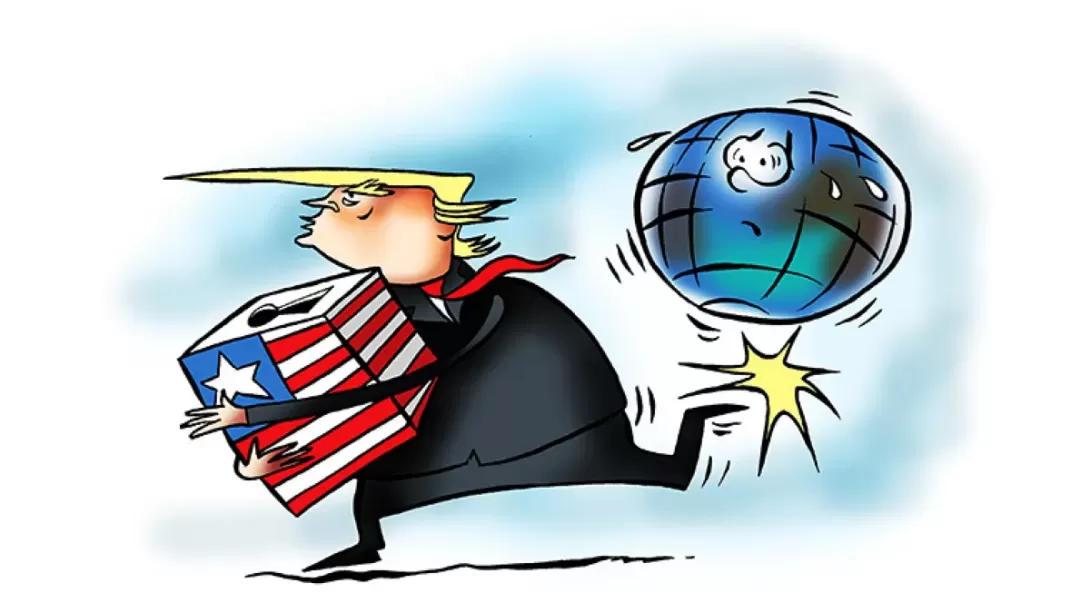
As global geopolitical shifts reshape the future of international trade, India’s automotive industry—particularly its luxury segment—stands at a pivotal juncture. While largely insulated from direct effects of ongoing global tariff wars, especially those led by major economies like the United States, India is nonetheless experiencing secondary impacts such as currency volatility and supply chain disruption. According to industry leaders, these challenges may be offset by long-term gains if global trade liberalizes and India leverages its position as a stable, scalable manufacturing and export hub. Mercedes-Benz India, a bellwether for the luxury auto market, continues to express cautious optimism.
Global Trade Frictions and India’s Emerging Role
The current global trade climate, marked by protectionist posturing and tariff escalations—especially from major players like the U.S.—has fueled uncertainty across industries. While India is not a direct participant in these trade disputes, its economic environment is nonetheless influenced by the ripple effects.
In particular, discussions around lowering trade barriers and pursuing bilateral trade liberalization offer a promising outlook for India. This could eventually create more open channels for the movement of goods and services, supporting not only the auto sector but also broader industrial growth.
Mercedes-Benz India’s Managing Director and CEO, Santosh Iyer, highlighted that such shifts could position India as a long-term beneficiary. As other global supply chains face volatility, India’s relative stability and manufacturing ecosystem may attract new investments and trade flows.
Luxury Automotive Segment: Navigating Challenges with Resilience
India’s luxury automobile sector has so far shown resilience in the face of global trade tension and domestic economic uncertainty. While the industry hasn't faced direct tariff hikes, it is not entirely insulated.
The indirect consequences—chief among them currency depreciation and supply chain constraints—have required manufacturers to adapt. A weaker rupee increases import costs for components and finished vehicles, prompting automakers to recalibrate pricing strategies. For the luxury segment, where brand positioning and price sensitivity matter greatly, these dynamics require careful navigation.
Still, industry sentiment remains cautiously optimistic. Iyer noted that despite macro-level disruptions, consumer confidence within the luxury space has not significantly eroded. This is especially true for affluent demographics involved in export-oriented businesses, who continue to show buying interest, as observed in regional hubs like Agra.
Flat Growth Amid Cautious Optimism
The luxury auto segment in India has demonstrated a stable but subdued performance in early FY25. Data suggests that sales have remained flat in Q1, reflecting hesitancy driven by global uncertainties. However, there is no indication of a steep decline—indicative of underlying strength in demand fundamentals.
Looking ahead, if geopolitical tensions ease and bilateral trade agreements are finalized, the second half of the fiscal year could see a rebound in momentum. In such a scenario, pent-up demand and improved macroeconomic clarity could drive a renewed upswing in luxury car sales.
For FY25, the industry projects a modest increase in total luxury car volumes, targeting over 51,500 units, compared to approximately 49,800 units in FY24. While this growth may appear incremental, it demonstrates the segment’s ability to hold ground in a turbulent global economy.
Positioning for the Long Term
India’s luxury automotive industry is playing the long game. As the country enhances its industrial base, supply chain capabilities, and trade diplomacy, companies like Mercedes-Benz are preparing to capitalize on the next phase of growth. The resilience of premium buyers, combined with India's improving manufacturing competitiveness, could make it a vital export hub and consumption market for luxury vehicles.
While short-term volatility—driven by currency shifts and external shocks—may temper the pace of expansion, the structural drivers of luxury consumption remain intact. Urbanization, wealth creation, and aspirational purchasing are all long-term trends expected to support steady market development.
Conclusion: A Market in Strategic Pause
The Indian luxury automobile sector, though momentarily tempered by global uncertainties, appears poised for sustained progress. As international trade dynamics evolve, India may emerge not as a casualty, but as a strategic beneficiary. With continued investment, policy support, and consumer enthusiasm, the segment could well transform short-term volatility into long-term opportunity.
In the words of Iyer, “There may be shocks in the short term, but in the long run, better trade and lower barriers are always beneficial.” For India’s luxury auto space, that future might be closer than it seems.
Comments