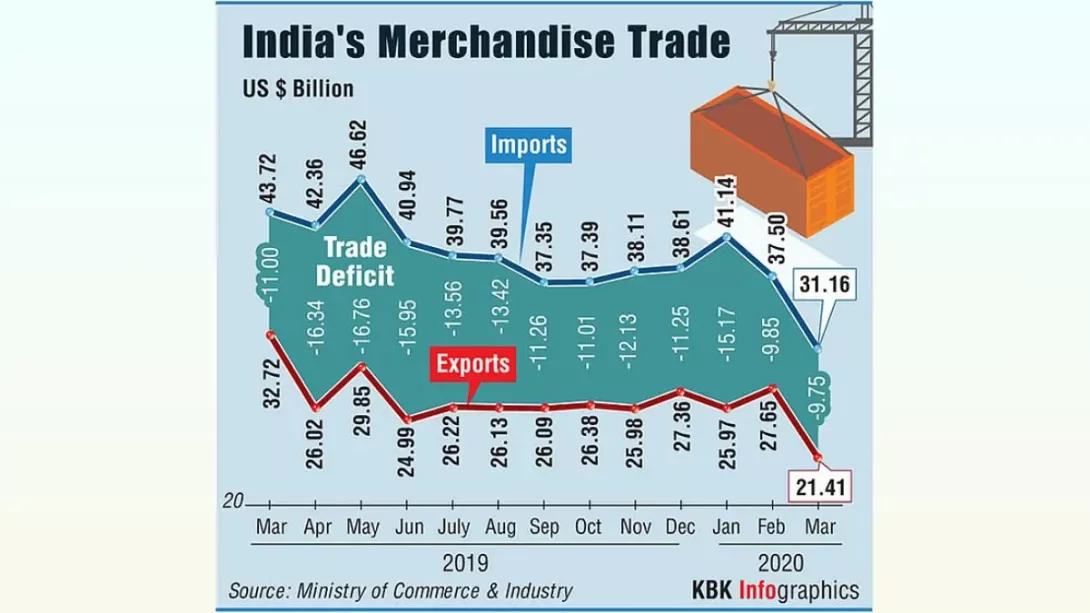
India's export performance in March showed a marginal improvement, with a 0.7% increase in exports to USD 41.97 billion, according to the latest government data. However, this positive growth was offset by a significant rise in imports, which surged by 11.3% year-on-year, reaching USD 63.51 billion. As a result, the trade deficit for March widened to USD 21.54 billion. Despite this, the overall exports for the fiscal year 2024-25 showed slight growth, though imports increased at a faster pace, resulting in a higher trade imbalance. This article breaks down the trade figures and the implications for India’s economy.
Export Performance: A Minor Gain Amidst Global Challenges
India's exports in March saw a modest 0.7% increase, reaching USD 41.97 billion. This growth, while small, reflects the resilience of key sectors despite challenges in global demand. Major export categories such as petroleum products, gems and jewelry, and textiles saw slight upticks. However, the increase is relatively modest given the global trade environment, marked by economic slowdowns and disruptions in supply chains.
For the 2024-25 fiscal year (April-March), India’s total export value stood at USD 437.42 billion, representing a marginal increase of 0.08%. This modest growth is reflective of global economic challenges, where demand for Indian goods has been impacted by geopolitical tensions, inflationary pressures, and slowed consumer spending in key markets like the U.S. and Europe.
Rising Imports and Expanding Trade Deficit
On the flip side, India's imports grew substantially by 11.3% year-on-year in March, reaching USD 63.51 billion. This rise was largely driven by higher imports of crude oil, gold, and electronic components, which have been essential to meet domestic demand. As India continues to be a major importer of oil and gas, fluctuations in global energy prices have a direct impact on the trade balance.
Consequently, the trade deficit for March ballooned to USD 21.54 billion, reflecting the widening gap between what India imports and exports. Over the course of the fiscal year 2024-25, imports increased by 6.62%, amounting to USD 720.24 billion. The growing trade deficit is a key concern, as it puts pressure on India's external finances and may impact its currency stability if the trend persists.
Broader Economic Indicators: Goods and Services Exports Show Growth
While the trade deficit remains a pressing concern, India’s overall exports of goods and services during the fiscal year saw a 5.5% increase, totaling USD 820.93 billion. This positive figure includes growth in services exports, such as information technology (IT), business process outsourcing (BPO), and software services, which have remained resilient despite global headwinds.
India’s services sector has been a key growth driver, contributing significantly to export earnings. The IT sector, in particular, has experienced robust demand due to the increasing global reliance on digital solutions, cloud computing, and cybersecurity services. This sector’s continued performance is a silver lining in the broader trade balance.
The Trade Deficit's Impact on the Indian Economy
The widening trade deficit poses potential risks to India’s economic stability. A large trade deficit implies that India is importing more than it is exporting, which could lead to a depletion of foreign exchange reserves. This imbalance could also put downward pressure on the Indian Rupee, as demand for foreign currencies rises to pay for imports.
In addition, a persistent trade deficit could raise concerns among investors, potentially affecting India’s credit ratings and inflows of foreign direct investment (FDI). However, the country’s strong services sector, remittance inflows, and growing foreign exchange reserves offer a buffer against some of these pressures.
Market Reactions and Investor Sentiment
India's trade data has a mixed impact on investor sentiment. While the slight growth in exports and the resilience of services exports provide some positive news, the widening trade deficit and rising imports could be cause for concern. As India continues to rely on imports for energy and raw materials, any volatility in global prices could further strain its trade balance.
The stock market may react cautiously, especially in sectors directly impacted by global trade dynamics, such as energy, commodities, and electronics. Investors will closely monitor any shifts in policy to address the trade imbalance, including potential steps to boost exports and curb unnecessary imports. Additionally, fluctuations in the Indian Rupee, which often moves in tandem with changes in the trade deficit, could influence investor behavior in the short term.
Conclusion: A Balancing Act for India’s Trade Future
India’s trade data for March and the fiscal year 2024-25 highlights both the opportunities and challenges facing the country’s economy. While the slight uptick in exports, particularly in services, is encouraging, the rising import bill and the widening trade deficit present ongoing concerns. To maintain economic stability and mitigate risks to currency and inflation, India will need to strike a delicate balance between boosting exports and managing import growth.
For investors, the key takeaway is the importance of closely monitoring the broader economic indicators, including global commodity prices, exchange rates, and government policies, as they will significantly impact market performance. Moving forward, India's focus on innovation, digital services, and reducing reliance on imports will be critical in ensuring that the trade imbalance does not undermine the country’s long-term economic trajectory.
Stock Market Implications
India’s trade performance could have mixed effects on market sentiment, especially in sectors exposed to global commodity prices and the exchange rate. Companies reliant on imports for production or those in energy-intensive industries may face headwinds. However, firms in the IT and services sectors could see upside due to the robust growth in services exports. Investors should remain cautious of potential currency fluctuations and trade policy shifts that may affect India's external accounts in the near future.
Comments