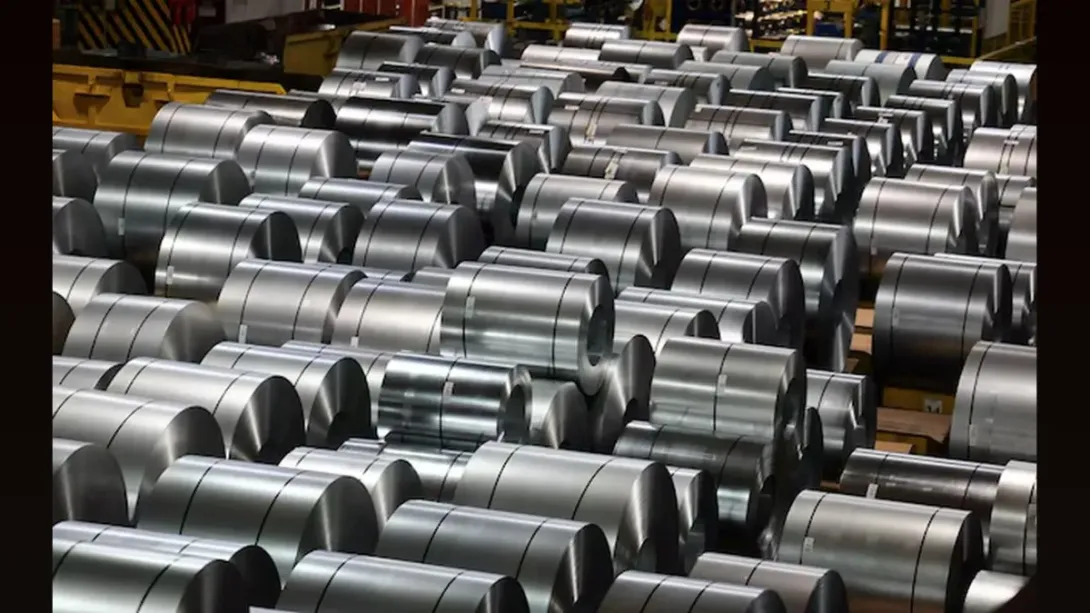
Amid mounting global trade barriers, India’s steel industry is shifting focus from bulk commodity exports to higher-value, processed steel products to maintain market access and profitability. Facing steep duties from major markets such as the United States and potential curbs from the European Union, Indian producers are accelerating the export of value-added and finished steel goods that attract lower tariff rates. This strategic realignment not only safeguards the industry’s export potential but also strengthens India’s position as a manufacturing hub for specialized steel products catering to sectors like infrastructure, engineering, and automobiles.
Global Tariffs Force a Strategic Rethink
The international steel trade has entered a protectionist phase, with several countries tightening import controls to defend domestic industries. The U.S. has imposed tariffs as high as 50% on certain steel imports, while the European Union is reviewing its safeguard mechanisms, creating uncertainty for emerging exporters. For India, the world’s second-largest steel producer, these measures pose a significant challenge to maintaining its export momentum.
In response, Indian steelmakers are recalibrating their strategies. Instead of shipping primary steel or semi-finished materials, companies are emphasizing exports of value-added steel—such as coated sheets, cold-rolled products, tubes, and high-grade alloys. These products are more likely to bypass punitive tariffs while fetching better margins due to their advanced processing and higher end-use applications.
The Rise of Value-Added Steel
India’s steel industry has been investing heavily in technological upgrades to transition toward high-value manufacturing. Firms are expanding their capacities for galvanised, colour-coated, and precision-engineered steel products. These materials serve critical roles in construction, automotive manufacturing, consumer durables, and renewable energy equipment.
By focusing on finished and semi-finished components, Indian producers can integrate deeper into global supply chains. This evolution aligns with the government’s “Make in India” and “Atmanirbhar Bharat” initiatives, which aim to position India as a global manufacturing base for advanced industrial products.
Industry experts note that this shift also offers resilience against commodity price volatility. Value-added steel products command higher margins and are less susceptible to cyclical downturns compared to primary steel exports.
Balancing Export Growth with Domestic Priorities
India produced approximately 149 million tonnes of crude steel in 2024, with exports accounting for a meaningful portion of total output. However, the government and industry bodies are now emphasizing a balanced approach — ensuring sufficient domestic supply for infrastructure projects while enhancing the export mix.
The focus on processed steel helps maintain competitiveness in international markets without disrupting local consumption needs. Additionally, Indian exporters are exploring newer markets in Latin America, Africa, and Southeast Asia to diversify trade exposure and reduce reliance on the U.S. and EU.
Policy Support and Industry Implications
The shift toward value-added steel exports has gained policy backing. The Ministry of Commerce is exploring export incentives and technology upgradation schemes to support product diversification. Moreover, the government is engaging with global trade partners to negotiate favourable tariff conditions under bilateral agreements.
For the industry, this transformation is not merely a defensive tactic but an opportunity to evolve. Moving up the value chain enhances India’s global competitiveness, strengthens brand reputation, and increases the potential for long-term foreign collaborations and investments in steel-intensive sectors such as automobiles and green energy.
Conclusion
India’s pivot toward value-added steel exports represents a pragmatic response to shifting global trade dynamics. By moving away from volume-driven strategies toward technologically advanced, high-margin products, Indian steelmakers are positioning themselves to thrive despite protectionist barriers. This transition, supported by innovation and policy alignment, not only secures export resilience but also marks a pivotal step in India’s emergence as a producer of sophisticated, globally competitive steel solutions.
Comments