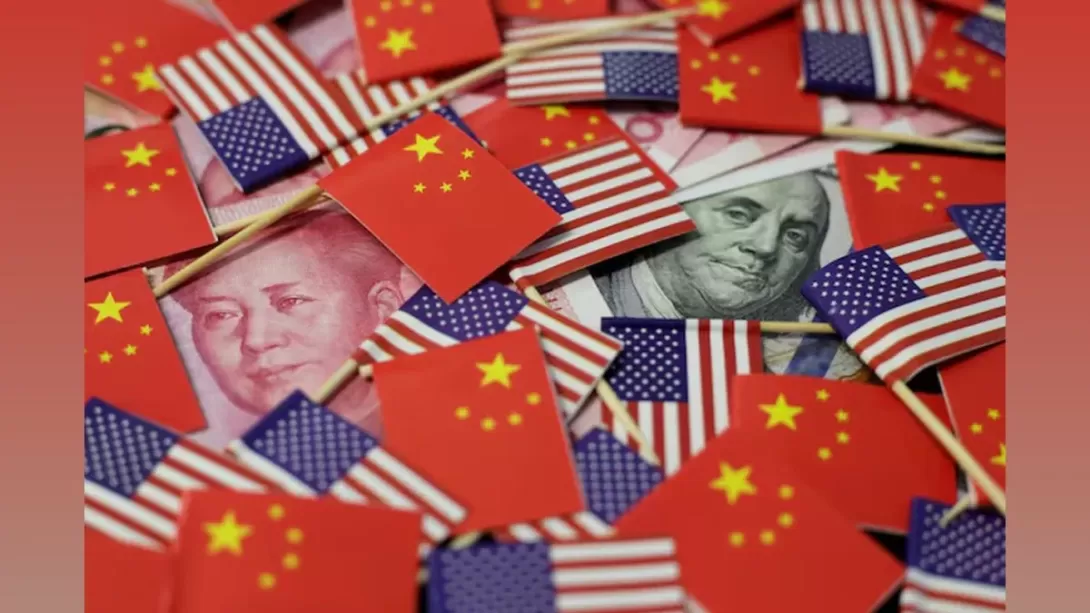
The ongoing US-China trade conflict, particularly the imposition of a steep 145% tariff on Chinese toy imports by the United States, has opened a promising window for India’s toy manufacturing sector. With China previously accounting for nearly 77% of US toy imports, the sudden shift in trade dynamics presents Indian manufacturers with a strategic chance to capture market share. As India's domestic toy industry undergoes rapid transformation—from an import-reliant sector to a global player—industry leaders are calling for enhanced government support, regulatory vigilance, and regional development initiatives to seize this golden moment and elevate India as a global toy export powerhouse.
A Shift in the Global Toy Trade Landscape
The global toy trade, long dominated by China, is experiencing a seismic shift. Washington’s decision to levy a 145% tariff on Chinese toy imports has not only disrupted the existing supply chain, but also compelled US importers to search for alternative sourcing partners. This upheaval offers India a once-in-a-generation opportunity to position itself as a credible, large-scale supplier to the world's second-largest toy market, valued at approximately $41.7 billion.
Historically, China's overwhelming market share—delivering nearly three-fourths of toys imported by the US—has made it the industry's unchallenged leader. However, geopolitical tensions, rising input costs, and now, punitive tariffs, have started eroding this dominance. In this evolving context, India is emerging as a serious contender.
India’s Export Potential and Policy Momentum
India’s toy export figures reflect a compelling growth narrative. From just $40 million in 2014-15, exports have risen to an estimated $152 million in FY24, signaling a steady shift from domestic dependence to global ambition. Much of this growth can be attributed to government-backed initiatives aimed at local sourcing, quality standardization, and reduced import reliance.
Simultaneously, imports of Chinese toys into India have plummeted—from $235 million in FY20 to $41 million in FY24—largely due to tighter import regulations and safety certification requirements by the Bureau of Indian Standards (BIS). These developments have bolstered confidence among Indian manufacturers, enabling them to scale operations and explore overseas markets with renewed vigor.
Challenges: Grey Imports and Competitive Pressure
Despite the optimistic trajectory, the industry is not without its hurdles. One of the pressing concerns voiced by Akshay Binjrajka, President of the Toy Association of India, is the persistent influx of unregulated Chinese toys into the Indian market. These low-cost imports, often evading safety standards and tax obligations, undercut domestic producers and pose a risk to consumer safety.
Binjrajka emphasized the need for stricter port-level inspections and more robust enforcement of quality norms through the BIS. He warned that if loopholes in the import system persist, the Indian toy industry’s progress could be undermined by a shadow market thriving on non-compliance and price undercutting.
The Call for Regional Empowerment: Spotlight on West Bengal
For India to become a truly competitive global player, the toy manufacturing ecosystem must extend beyond traditional industrial belts. In this regard, Binjrajka made a pointed appeal to West Bengal’s state government to invest in a dedicated toy manufacturing cluster. With its strategic location, maritime access, abundant labor, and logistical capabilities, West Bengal is uniquely placed to host such a hub.
However, despite having all the fundamental ingredients, the state has yet to fully capitalize on its potential. Local industry stakeholders believe that targeted incentives, infrastructure investments, and policy support could ignite a regional renaissance—turning Bengal into the "Detroit of Toys" for India.
The Broader Economic and Employment Implications
The Indian toy industry, deeply rooted in the MSME (Micro, Small, and Medium Enterprises) segment, is not just about exports—it’s also about jobs, innovation, and rural development. By scaling manufacturing and integrating with global supply chains, the sector could become a major employment generator, particularly in underdeveloped regions.
Moreover, enhanced exports would contribute to India's foreign exchange reserves, improve its trade balance, and support the government’s “Make in India” and “Vocal for Local” initiatives—making the toy sector a strategic lever for economic growth.
Conclusion: From Playthings to Powerhouse
The world of toys may seem whimsical on the surface, but behind it lies a serious game of economics, trade policy, and industrial strategy. With the tectonic plates of global commerce shifting due to the US-China tariff war, India finds itself on the cusp of a breakthrough.
Whether this moment becomes a fleeting opportunity or a long-term success story depends on decisive action, smart policy, and collaborative leadership across both central and state governments. If played right, India could not only rewrite its own manufacturing narrative but also reshape the future of the global toy industry.
And that, in today’s volatile world, is no child’s play.
Comments