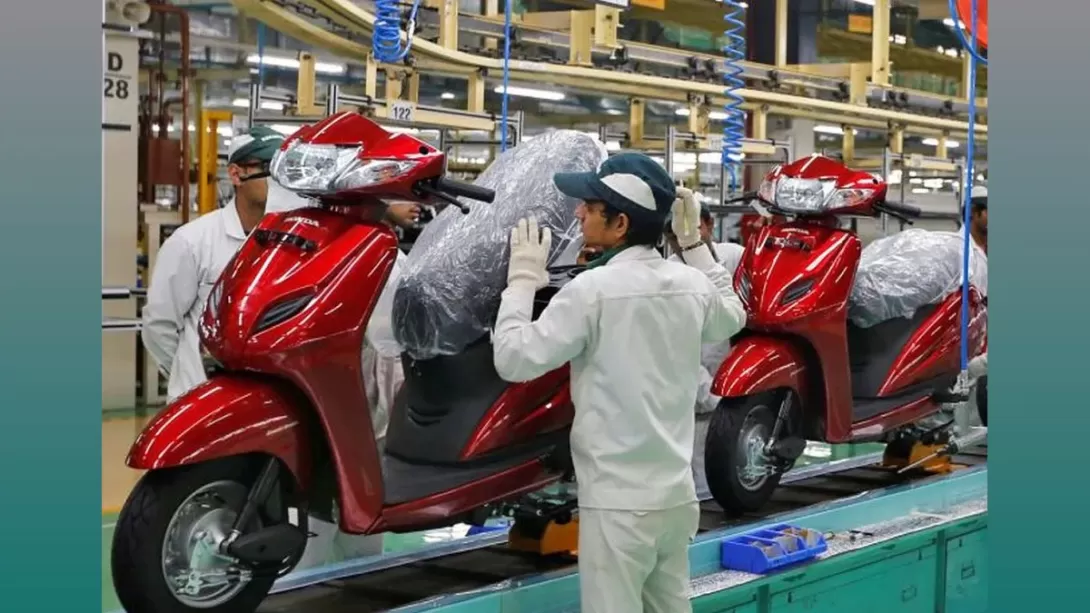
India’s domestic two-wheeler market is poised for an 8-9 per cent growth in FY26, surpassing pre-pandemic figures, according to a report by CareEdge Ratings. Key growth drivers include strong export demand, the rising adoption of electric two-wheelers (E2Ws), easing inflation, and improved rural sentiment buoyed by a favorable monsoon outlook. CareEdge also highlights the minimal impact of the OBD-II Phase-B norms on market momentum, while a cumulative 100 basis points rate cut by the Reserve Bank of India is expected to further support demand. Exports are projected to expand by 12-14 per cent in FY26, reinforcing a strong overall industry trajectory.
Steady Domestic Growth and Export Revival
The domestic two-wheeler sector has demonstrated a steady upward trajectory in the past three fiscal years. Volumes grew by 8 per cent in FY23, 10 per cent in FY24, and 11 per cent in FY25, underscoring the sector’s resilience and adaptability. The report credits a robust recovery in exports, with a substantial 21 per cent increase in FY25, as a significant contributor to this growth. Stabilisation in key overseas markets, which had previously faced inflationary pressures and high interest rates, played a pivotal role in this rebound.
On the domestic front, two-wheeler volumes have been bolstered by an uptick in rural demand and sustained urban interest. This dual support has created a solid foundation for continued expansion in the coming year.
Outlook for FY26: Resilience Amid Challenges
Looking ahead, CareEdge Ratings projects a volume growth of 8-9 per cent in FY26. This positive outlook comes despite a modest 1-2 per cent price adjustment tied to the adoption of OBD-II Phase-B emission norms. “Two-wheeler sales are set to maintain strong momentum in FY26, building on a robust FY25 performance,” CareEdge stated.
Madhusudhan Goswami, Assistant Director at CareEdge Ratings, noted that export volumes are expected to surge by 12-14 per cent, while domestic volumes should see a steady rise of 6-8 per cent. He attributes this resilience to the easing of inflationary pressures, an anticipated favorable monsoon, and the continued adoption of electric vehicles.
Monetary Policy and Market Dynamics
In addition to market-specific factors, recent monetary policy moves are set to provide further support. The Reserve Bank of India has implemented a cumulative 100 basis points rate cut since February 2025, including a 50 bps reduction announced last week. These rate cuts are expected to improve affordability, driving demand across the two-wheeler segment.
Arti Roy, Associate Director at CareEdge Ratings, highlighted that despite a slightly higher base in domestic sales, strong export momentum and the growth of electric vehicle adoption will underpin overall industry growth in FY26. She also noted that the executive and premium motorcycle segments are likely to maintain strong traction in the upcoming fiscal year.
Electric Two-Wheelers: Sustaining Momentum
Electric two-wheelers (E2Ws) have emerged as a vital component of the sector’s growth. According to CareEdge Ratings, E2W sales reached approximately 0.78 million units in FY23, accounting for 4.38 per cent of total two-wheeler sales—a substantial increase from 1.78 per cent the previous year. This reflects a remarkable year-on-year growth of 180 per cent, albeit from a relatively low base.
This momentum continued with E2W sales climbing 29 per cent in FY24 and 19 per cent in FY25, ultimately reaching 1.20 million units in the latest fiscal year. The sustained rise in electric vehicle adoption highlights a pivotal shift in consumer preferences and underscores the sector’s adaptability to evolving market trends.
Conclusion: A Promising Path Forward
India’s two-wheeler industry stands poised for another year of healthy growth, driven by a confluence of factors including strong export demand, favorable rural sentiment, supportive monetary policy, and the continuing adoption of electric two-wheelers. As CareEdge Ratings’ projections suggest, the sector is not merely recovering but accelerating past pre-pandemic levels, laying the groundwork for a resilient and dynamic future in FY26.
Comments