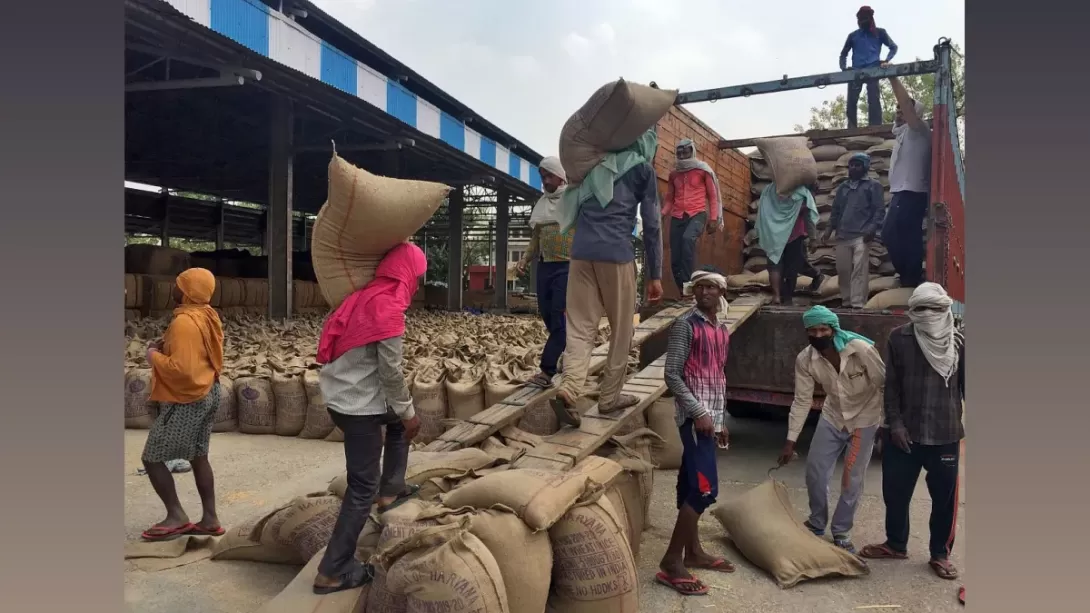
India's wheat procurement for the 2025-26 marketing season has started on a solid note, with the government purchasing around 6 million tonnes of wheat as of early April. Despite a forecast of record production for the 2024-25 crop year, the procurement target has been set at 31 million tonnes—lower than previous years. The target procurement will predominantly come from states like Punjab, Haryana, Uttar Pradesh, and Madhya Pradesh. With favorable crop yields, the procurement goal is expected to be met, ensuring food security and supporting the Public Distribution System.
Government’s Procurement Strategy and Goals
The Indian government has already procured 6 million tonnes of wheat in the early stages of the 2025-26 marketing season, which began on April 1. Despite expectations of a record wheat harvest of 115 million tonnes in the 2024-25 crop year, the government's procurement target for the current season has been set at 31 million tonnes. This target is lower compared to previous years, as the agriculture ministry continues to focus on balancing procurement volumes with the actual yield and market conditions.
Notably, the target procurement levels are expected to come primarily from Punjab and Haryana, two of the largest wheat-producing states, with around 20 million tonnes anticipated from these areas. The remaining quantity will be sourced from other wheat-producing regions across India, such as Madhya Pradesh, Uttar Pradesh, and Rajasthan. These procurement efforts are crucial in ensuring that India's food security remains stable, especially with wheat being a staple in the Indian diet.
Challenges and Context Behind Lower Procurement Target
The procurement target has been set lower despite the agriculture ministry's forecast of an all-time high wheat production. This reduction in procurement target is largely a result of market dynamics rather than an indication of lower crop yields. The government's food ministry official emphasized that while Madhya Pradesh and Uttar Pradesh have contributed significantly to early procurement, Punjab and Haryana—which traditionally lead wheat production—are expected to ramp up their supply in the coming weeks.
This adjustment in procurement targets also reflects an ongoing challenge of aligning government stockpiles with actual production figures. The wheat procurement process serves as a critical component of India's food security strategy and supports the Public Distribution System (PDS), which ensures subsidized food grains reach the nation's underprivileged populations. The Food Corporation of India (FCI) and state agencies play a pivotal role in facilitating these operations, ensuring that prices remain stable for both consumers and farmers.
Harvest Outlook and Regional Contributions
As of now, around 38% of the estimated 32 million hectares planted with wheat have been harvested, according to the latest data from the agriculture ministry. Early reports indicate that harvesting conditions are favorable in the states of Uttar Pradesh, Madhya Pradesh, Punjab, Haryana, Rajasthan, and Bihar, which are among the primary wheat-producing regions.
The agriculture ministry has also noted that the overall crop yields this season are expected to be good, supporting the government's confidence that the procurement target of 31 million tonnes will be met. This is crucial, as wheat plays a significant role in India's agriculture sector and food security. The robust procurement operation ensures that buffer stocks for the Public Distribution System are maintained, allowing the government to manage price volatility and address food shortages in critical periods.
Conclusion: Securing Food Security and Farmer Support
Wheat procurement remains a cornerstone of India's food security and agricultural policy. While the 2025-26 marketing season has started strong, the overall procurement target has been adjusted downward in line with market realities and crop expectations. The government’s focus on procuring from key producing states like Punjab, Haryana, and Uttar Pradesh, combined with good crop yields, indicates that the procurement goal will likely be met by the end of the season.
India, being the second-largest wheat producer globally, continues to face challenges in managing procurement levels while ensuring food security for its population. The ongoing procurement operations are vital for maintaining a stable supply of wheat for domestic consumption and for protecting farmer incomes through guaranteed minimum prices. As India remains a central player in global wheat markets, these efforts will also have significant implications for food policy both within and outside the country.
Comments