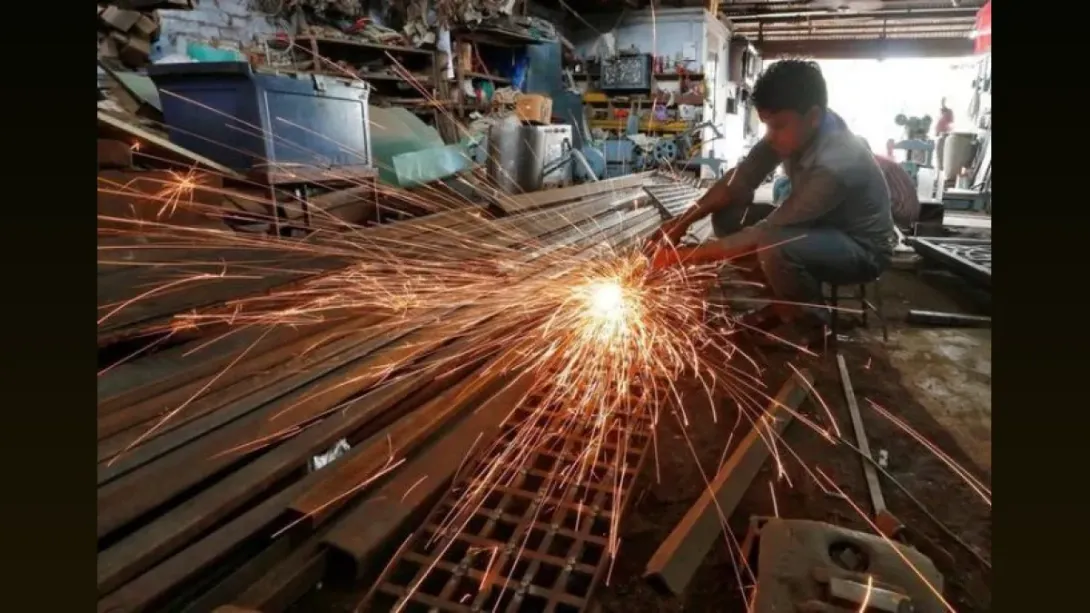
India’s industrial output grew 4% in September 2025, indicating continued resilience in the country’s manufacturing and infrastructure sectors amid a complex global economic environment. Data from the Index of Industrial Production (IIP) highlighted consistent growth across core industries, supported by strong energy generation, robust capital goods demand, and improved consumer durables output. Economists view the latest figures as a sign of underlying stability in domestic production and investment activity, though they caution that external headwinds such as export slowdown and elevated input costs may temper growth in the coming quarters.
Manufacturing Drives Moderate Recovery
India’s manufacturing sector remained the primary contributor to industrial expansion, supported by steady domestic demand and increased public investment in infrastructure. The IIP data reflected sustained growth in sectors like machinery, auto components, pharmaceuticals, and chemicals, all of which benefited from stronger order books and improved capacity utilization.
Government-led capital expenditure and private sector investment in core infrastructure—particularly roads, power, and construction materials—provided the necessary thrust to industrial output. Analysts noted that consistent policy support under the Production Linked Incentive (PLI) scheme continues to strengthen India’s manufacturing competitiveness.
Energy and Mining Support Broader Industrial Growth
The electricity and mining sectors also contributed significantly to September’s output expansion. Higher demand for power from industrial and commercial users pushed electricity generation up by over 5%, while mining activity grew amid increased coal and mineral extraction to meet energy needs.
These sectors, often considered bellwethers of economic activity, reflect growing momentum in industrial utilization and construction demand. The government’s continued focus on domestic energy security and import substitution has further strengthened production levels in these segments.
Consumer Goods Demand Stabilizes
The production of consumer durables and non-durables showed signs of stabilization after months of uneven growth. With festive season demand beginning to pick up, industries such as electronics, white goods, and packaged foods experienced modest output improvements.
While high borrowing costs and inflationary pressures had previously dampened discretionary spending, improving consumer sentiment and rural market recovery are now supporting retail and manufacturing activity. Market analysts expect a stronger rebound in consumer goods output in the October-December quarter, coinciding with festive and year-end sales.
Core Sector Momentum Reflects Economic Resilience
The latest IIP data aligns with earlier indicators showing sustained growth in the core infrastructure sector, which expanded by nearly 6% in September. Cement, steel, and refinery products—all essential inputs for construction and manufacturing—recorded positive year-on-year growth.
Economists attribute this resilience to India’s ongoing infrastructure push and the government’s emphasis on public investment. Large-scale projects under the National Infrastructure Pipeline (NIP) and the Gati Shakti initiative continue to stimulate demand for industrial materials, machinery, and transportation services.
Caution Amid Global and Domestic Challenges
Despite the positive momentum, several economists remain cautious about the sustainability of industrial growth in the medium term. Global trade uncertainties, fluctuating commodity prices, and a slow recovery in exports could weigh on industrial performance.
Domestically, high interest rates, persistent inflation in input costs, and uneven rural demand remain potential constraints. Nevertheless, most analysts expect industrial output to maintain a growth range of 4%–5% over the coming months, supported by fiscal spending and private capital formation.
Policy Outlook: Balancing Growth and Stability
The government’s industrial policy and fiscal strategies continue to prioritize long-term capacity building. With the Union Budget 2026 on the horizon, expectations are high for continued emphasis on manufacturing incentives, energy diversification, and logistics modernization.
Policymakers are also expected to focus on enhancing the ease of doing business, encouraging technology adoption in small and medium enterprises (SMEs), and deepening value-chain linkages across sectors. These efforts, combined with favorable demographics and domestic demand, could help sustain India’s industrial growth trajectory over the next decade.
Conclusion
India’s 4% industrial output growth in September 2025 reinforces the economy’s steady recovery path amid global uncertainty. Strong manufacturing activity, rising infrastructure spending, and a revival in consumer sentiment point toward structural resilience in the country’s industrial base.
Comments