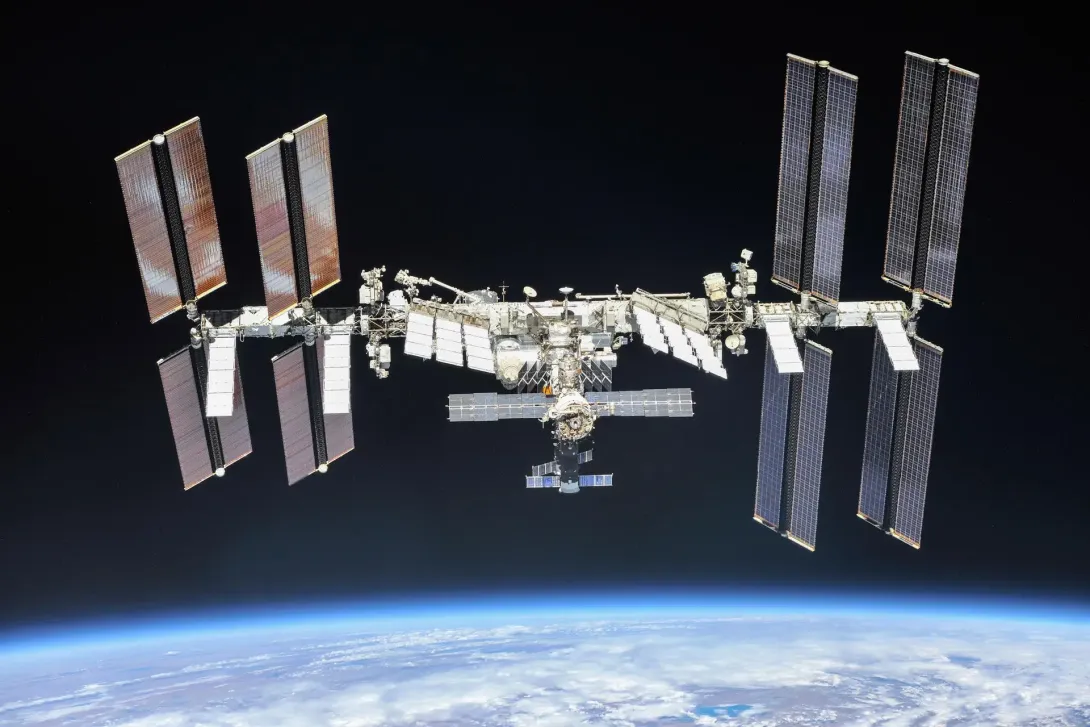
As the International Space Station (ISS) approaches three decades of continuous operation, the global space community is evaluating its legacy and future. Orbiting approximately 408 km above Earth, the ISS has been a cornerstone for scientific research, international collaboration, and technological innovation. With plans from NASA, Roscosmos, and private entities, the focus is shifting toward sustaining human presence in low Earth orbit, transitioning to commercial platforms, and preparing for deeper space missions, including lunar and Martian exploration. The ISS’s future will shape global space strategy, investment priorities, and humanity’s broader ambitions in space.
Historical Significance and Achievements
Since its first module launch in 1998, the ISS has:
- Advanced Scientific Research: Enabled experiments in microgravity, human physiology, and material sciences that are impossible on Earth.
- Facilitated International Collaboration: A joint effort among NASA, Roscosmos, ESA, JAXA, and CSA, fostering unprecedented cooperation in space exploration.
- Technological Innovation: Served as a testbed for life-support systems, robotics, and spacecraft docking technologies critical for future missions.
The station’s long-term operation has provided invaluable insights into human adaptation to space and the feasibility of sustained orbital presence.
Strategic Vision for the Next Decade
As the ISS approaches the mid-2030s, stakeholders are pursuing a multi-pronged strategy:
- Extension and Modernization: NASA and partners plan to maintain ISS operations potentially through 2030, with upgrades to critical systems for safety and efficiency.
- Commercial Low Earth Orbit Platforms: Private entities like SpaceX, Axiom Space, and Blue Origin aim to develop commercial stations to complement or succeed the ISS.
- Preparatory Role for Deep Space: The ISS continues to serve as a proving ground for technologies and human factors research essential for lunar Artemis missions and eventual Mars expeditions.
These strategies reflect a deliberate shift toward public-private partnerships and sustainable space infrastructure.
Economic and Scientific Implications
The ISS has spurred both direct and indirect economic activity:
- Commercial Research Opportunities: Pharmaceutical, materials, and biotech firms leverage microgravity for innovation.
- Tourism and Space Ventures: The commercialization of astronaut flights and orbital visits opens new revenue streams.
- Global Scientific Exchange: Data sharing and joint research initiatives foster global knowledge networks.
Investments in orbital infrastructure have measurable returns, advancing both economic and technological frontiers.
Challenges and Risks
Maintaining and evolving the ISS faces multiple challenges:
- Aging Infrastructure: Decades-long operation require extensive maintenance and system replacements.
- Geopolitical Tensions: International collaboration depends on diplomatic stability and coordinated policies.
- Commercial Transition Risks: Ensuring safe handover to private platforms while maintaining scientific output requires careful regulation and oversight.
Addressing these challenges will determine the sustainability and legacy of human operations in low Earth orbit.
Conclusion
The ISS stands as a symbol of human ingenuity, global cooperation, and technological prowess. Its imminent transition toward commercial successors and deep-space preparatory roles will shape the future of human spaceflight. By integrating innovation, strategic vision, and international collaboration, the ISS continues to illuminate pathways for exploration beyond Earth, inspiring scientific discovery and advancing humanity’s presence in space.
Comments