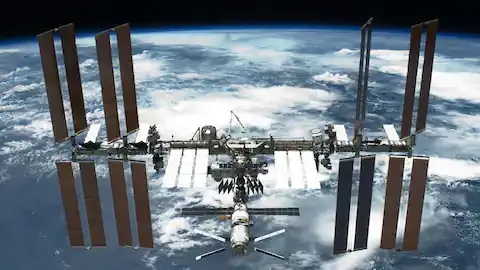
The International Space Station (ISS), humanity’s most ambitious cooperative laboratory in orbit, is set to retire by 2030, marking the end of an unprecedented era in space collaboration and scientific advancement. With its decommissioning approaching, global space agencies and private enterprises are preparing for a new phase in low-Earth orbit operations. The transition will see commercial space stations, emerging national platforms, and advanced orbital servicing technologies take center stage. As government-driven innovation evolves into public-private partnerships, the next chapter of orbital research and industry promises greater commercialization, technological autonomy, and transformative breakthroughs in space science and exploration.
A Historic Chapter Nears Closure
Launched in 1998 and continuously inhabited since 2000, the ISS has served as a symbol of international unity in space exploration. Developed through a partnership between the United States, Russia, Europe, Japan, and Canada, it has hosted thousands of experiments, supported astronaut training, and advanced human understanding of microgravity, biology, and engineering beyond Earth.
Now, aging hardware, rising maintenance costs, and strategic program shifts have made retirement inevitable. The controlled deorbit in 2030 will bring a calculated end to a structure that has helped shape two decades of orbital science.
Why the ISS Must Retire
Sustaining a station more than 400 km above Earth involves escalating technical and financial burdens. Structural fatigue, outdated systems, and the need for constant repairs have been mounting concerns. Operational costs are estimated at several billion dollars annually—resources that partner agencies increasingly prefer to allocate toward deep-space missions, including lunar habitation under the Artemis program and future Mars-focused initiatives.
The retirement does not signal retreat; rather, it represents a strategic reallocation toward next-generation capabilities.
Commercial Stations Set to Take the Lead
With the ISS stepping aside, private space enterprises are preparing to fill the gap. Several companies are developing modular orbital labs intended for scientific research, microgravity manufacturing, tourism, and astronaut training. These commercial platforms are expected to operate under lease-and-service models that lower government overhead and broaden access for academia and industry.
This shift reflects a broader transformation in space economics—where infrastructure is increasingly operated by private entities while national agencies focus on frontier exploration and long-horizon missions.
Global Participation Expands
Emerging space powers are also entering the orbital landscape. Nations such as China, India, and multiple European states are enhancing their human-spaceflight capabilities and exploring independent or cooperative platforms. China’s Tiangong station already operates in low-Earth orbit, offering diplomatic access and scientific collaboration to selected partners.
Such developments suggest a multipolar space ecosystem, where innovation and governance extend across diverse stakeholders rather than a singular multinational effort like the ISS.
The Next Frontier: Beyond Low-Earth Orbit
As commercial stations address near-Earth needs, global agencies are setting their sights farther into space. Ambitious lunar surface and orbital architectures, cislunar supply routes, and early-stage Mars systems are in development. This dual-track approach ensures continued scientific progress while accelerating humanity’s expansion into deeper space.
For researchers, astronauts, and businesses, the ISS retirement marks more than an ending—it signals the dawn of a decentralized, innovation-driven orbital economy.
Comments