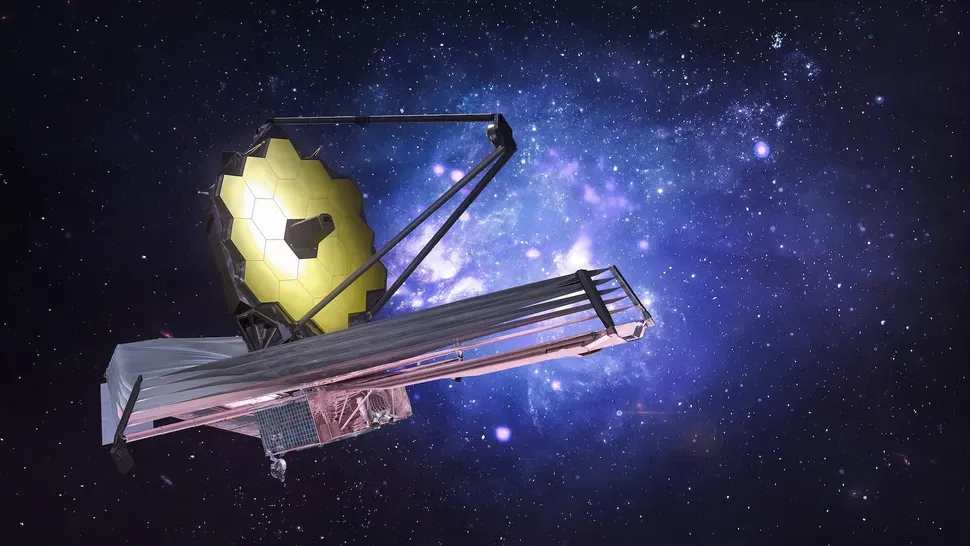
The James Webb Space Telescope (JWST), humanity’s most advanced space observatory, has ushered in a new era of cosmic exploration. Designed to probe the universe’s earliest galaxies, study star formation, and analyze exoplanet atmospheres, JWST surpasses its predecessors in infrared sensitivity and resolution. Since its launch, it has delivered unprecedented high-definition images, revealing structures and phenomena previously obscured from view. This milestone not only deepens our understanding of the universe’s origins but also reshapes theoretical models of galaxy evolution, stellar life cycles, and planetary formation, marking a pivotal moment in both observational astronomy and astrophysical research.
Unprecedented Capabilities
JWST’s design allows astronomers to observe the cosmos in infrared wavelengths, penetrating cosmic dust clouds that have long concealed nascent stars and galaxies. Key features include:
- 6.5-meter primary mirror, capturing faint light from the universe’s earliest epochs.
- Advanced spectrographs, enabling detailed chemical and atmospheric analysis of distant exoplanets.
- Enhanced sensitivity, allowing detection of galaxies formed within 200 million years after the Big Bang.
These capabilities give scientists an unparalleled tool to explore the universe’s infancy and map its evolution over 13.8 billion years.
Transformative Discoveries
Early JWST observations have already revealed groundbreaking insights:
- Distant Galaxies: Identification of galaxies far earlier than previously documented challenges existing cosmological models.
- Star-Forming Regions: High-resolution imaging illuminates stellar nurseries, offering insight into the mechanics of star formation.
- Exoplanet Atmospheres: Spectral analysis of distant worlds detects water, clouds, and chemical signatures, expanding the search for potentially habitable planets.
Each discovery strengthens humanity’s ability to answer foundational questions about cosmic origins and the prevalence of life-supporting environments.
Implications for Astrophysics and Cosmology
JWST’s data is poised to reshape multiple scientific domains:
- Galaxy Evolution: Provides empirical evidence to refine simulations of early galaxy formation.
- Stellar Life Cycles: Enhances understanding of star birth, evolution, and supernova precursors.
- Exoplanetary Science: Informs planetary system formation theories and habitability assessments.
Moreover, its observations fuel cross-disciplinary research in physics, chemistry, and planetary science, bridging gaps between theoretical predictions and empirical data.
Challenges and Future Prospects
While JWST has already exceeded expectations, challenges remain:
- Data Interpretation: The sheer volume and complexity of data require sophisticated computational models and AI-driven analysis.
- Operational Longevity: Maintaining the telescope’s cryogenic instruments is critical for sustained infrared observations.
- Collaborative Research: Global partnerships are essential to maximize the scientific yield and ensure open access to findings.
Looking ahead, JWST promises decades of discoveries, potentially identifying the first galaxies, detecting new planetary atmospheres, and uncovering unforeseen cosmic phenomena.
Conclusion
The James Webb Space Telescope represents a paradigm shift in humanity’s exploration of the cosmos. By delivering extraordinary clarity and depth in infrared astronomy, it challenges pre-existing scientific frameworks, inspires new theoretical models, and expands the horizon of what is knowable about the universe. As it continues to capture unprecedented images and data, JWST cements its role as an indispensable tool in unraveling the universe’s deepest mysteries.
Comments