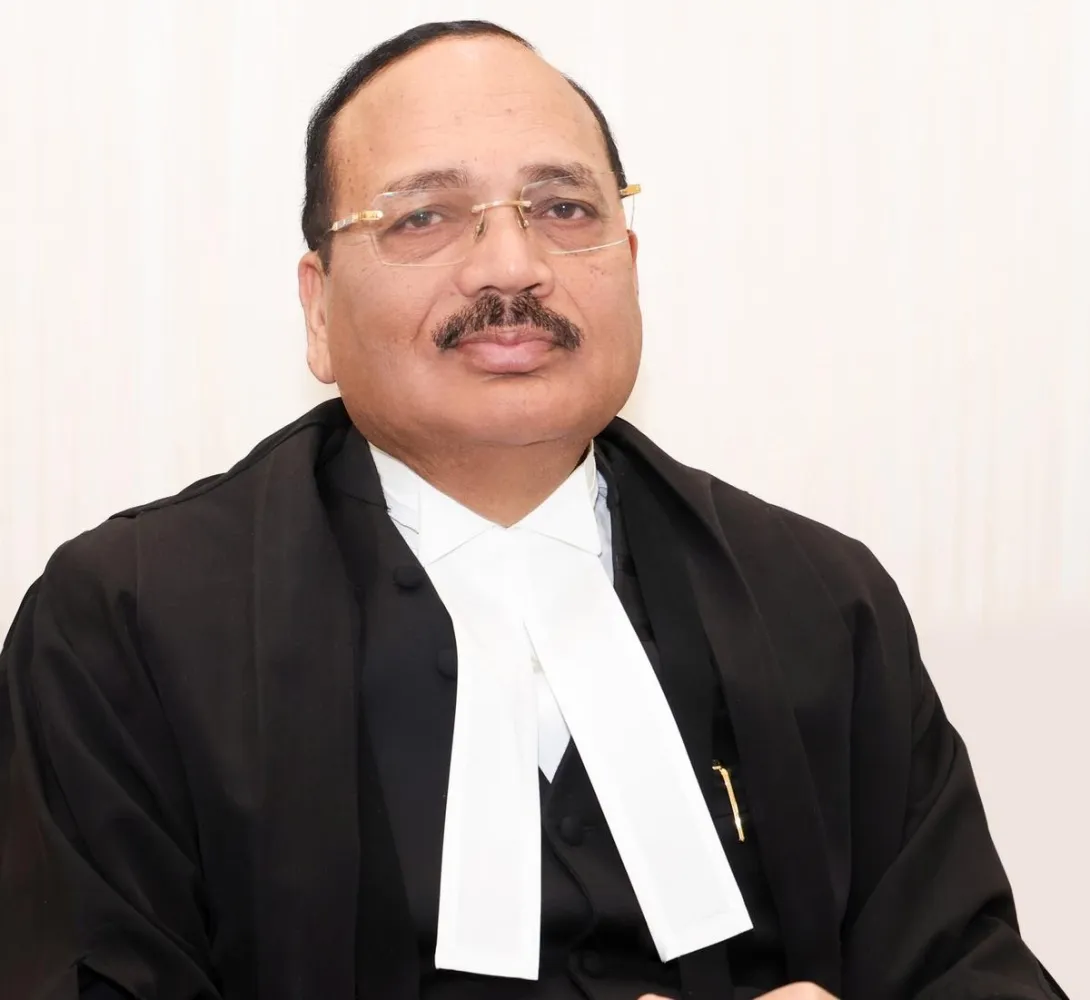
Justice Surya Kant has been appointed as the 53rd Chief Justice of India (CJI), marking a new chapter in the country’s judiciary. Known for his integrity, judicial acumen, and forward-thinking approach, Justice Kant succeeds Justice D.Y. Chandrachud, who retired after an impactful tenure. With decades of experience across constitutional, criminal, and administrative law, Justice Kant’s elevation is seen as a continuation of reform-oriented leadership at the Supreme Court. His appointment comes at a crucial time when the judiciary faces pressing questions about judicial transparency, backlog reduction, and the evolving balance between technology and justice delivery.
A Distinguished Career in the Judiciary
Justice Surya Kant’s judicial journey is a testament to consistency, legal scholarship, and unwavering commitment to justice. Born on February 10, 1962, in Hisar, Haryana, he completed his law degree from Maharshi Dayanand University before beginning his legal practice in the Punjab and Haryana High Court. His sharp legal intellect and ethical clarity quickly earned him recognition, leading to his appointment as Advocate General of Haryana in 2000.
He was elevated as a judge of the Punjab and Haryana High Court in 2001, later becoming the Chief Justice of the Himachal Pradesh High Court in 2018. In May 2019, he was appointed as a judge of the Supreme Court of India, where his judgments often reflected a balance between constitutional morality and pragmatic governance.
Legal Philosophy and Key Contributions
Justice Kant’s tenure at the Supreme Court has been marked by landmark decisions emphasizing equity, human rights, and environmental justice. He has been a strong advocate for judicial efficiency and the adoption of technology in legal processes. His opinions often highlighted the need for a people-centric judiciary—one that simplifies legal complexities for the common citizen while maintaining institutional integrity.
His judgments in cases concerning administrative accountability, social welfare, and environmental protection have been widely regarded as progressive and forward-looking. Justice Kant’s ability to interpret the law with compassion and precision has made him one of the most respected voices in the Indian judiciary.
Challenges and Expectations Ahead
As the 53rd Chief Justice of India, Justice Kant inherits a docket of challenges that define the judiciary’s contemporary landscape. The Supreme Court is currently dealing with a massive backlog of cases, technological transitions in e-filing and virtual hearings, and the ongoing debate on judicial appointments.
One of his immediate responsibilities will be to streamline judicial processes through digitization and ensure timely disposal of cases without compromising quality. Additionally, expectations are high that Justice Kant will strengthen institutional transparency and uphold the judiciary’s independence amidst growing public scrutiny.
Leadership Vision for the Judiciary
Justice Kant’s leadership is expected to focus on inclusivity and modernization. Known for his empathetic yet firm approach, he has often spoken about improving access to justice for marginalized communities and enhancing the accountability of judicial institutions. His prior work indicates a reform-driven mindset, with emphasis on efficiency, ethical conduct, and modern administrative practices.
Under his stewardship, legal experts anticipate a renewed push for alternative dispute resolution mechanisms, judicial infrastructure expansion, and training programs for judges at all levels. His tenure could also see greater collaboration between technology and law to reduce pendency and improve judicial outreach.
Conclusion
Justice Surya Kant’s elevation as the 53rd Chief Justice of India represents a significant moment for the judiciary—a blend of experience, reform, and vision. His appointment signals continuity in the Supreme Court’s commitment to judicial independence, institutional reform, and public trust. As he assumes office, the legal fraternity and the nation look toward him to guide the judiciary through complex transitions with fairness, foresight, and a renewed commitment to justice for all.
Comments