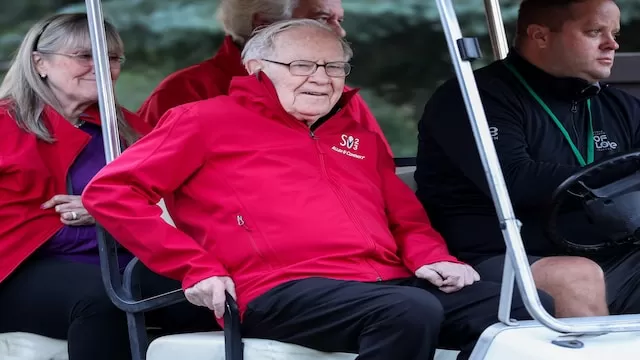
At 94 years old, Warren Buffett’s retirement marks the end of an extraordinary career that reshaped the landscape of global finance. Known as the "Oracle of Omaha," Buffett's rise to prominence as the chairman and CEO of Berkshire Hathaway was built on a foundation of value investing, long-term strategies, and a deep understanding of intrinsic value. This article explores Buffett's journey from a young entrepreneur in Omaha to one of the wealthiest individuals in the world, offering insights into his investing philosophy, legendary business acumen, and remarkable legacy.
A Humble Beginning: Buffett's Early Life and Introduction to Finance
Warren Buffett was born on August 30, 1930, in Omaha, Nebraska, into a family where the influence of finance was keenly felt. His father, Howard Buffett, was both a stockbroker and a U.S. Congressman, while his mother, Leila, was a homemaker. Buffett’s early interest in numbers and business was evident from a young age. As a child, he sold chewing gum, Coca-Cola, and magazines, cultivating an entrepreneurial spirit that would later propel him to success. By age 11, Buffett made his first stock purchase—a small investment in Cities Service Preferred—which marked the beginning of his lifelong commitment to investing.
Buffett’s formal education helped refine his investing philosophy. After earning a Master of Science in Economics from Columbia University in 1951, he honed his skills under the mentorship of Benjamin Graham, a renowned investor and author of The Intelligent Investor. This mentorship would prove pivotal, as Buffett adopted Graham’s principles of value investing, which focus on buying undervalued assets with long-term growth potential.
The Birth of an Empire: Berkshire Hathaway and Buffett’s Rise to Prominence
In 1962, Buffett began acquiring shares of a struggling textile manufacturer, Berkshire Hathaway. While the company’s textile business was in decline, Buffett saw potential in its undervalued stock. Over the following years, he transformed Berkshire Hathaway into a diversified holding company, making investments across various industries, including insurance, energy, and consumer goods.
Under Buffett’s leadership, Berkshire Hathaway became one of the most valuable companies in the world. The company’s stock price appreciated at a compounded annual growth rate of 19.9%, far surpassing the performance of the broader S&P 500 index. Buffett’s ability to identify undervalued companies, combined with his disciplined approach to long-term investing, proved to be a winning strategy. He became a household name, admired not only for his financial success but also for his unwavering commitment to ethical business practices.
The Philosophy of Value Investing: A Strategy that Defied Conventional Wisdom
Warren Buffett's investing strategy was rooted in the principles of value investing, which emphasizes purchasing companies for less than their intrinsic value. Unlike speculative investors who chase short-term market trends, Buffett’s approach focused on long-term growth, grounded in thorough research and a deep understanding of the companies he invested in. His mantra was simple: invest in high-quality businesses with a sustainable competitive advantage, and hold them for the long term.
Buffett’s remarkable investments in companies like Coca-Cola, American Express, and later Apple, showcased his ability to identify companies with enduring value. These landmark investments not only brought him immense financial success but also solidified his reputation as one of the greatest investors of all time. His strategy, often referred to as "buying great companies at a fair price," became a blueprint for individual investors and institutional managers alike.
Personal Life: Humble Yet Powerful
Despite amassing billions of dollars, Buffett remained grounded and famously frugal. He continued to live in a modest home in Omaha, which he had purchased in 1958 for $31,500—a stark contrast to the lavish lifestyles often associated with the super-wealthy. His annual salary from Berkshire Hathaway was fixed at just $100,000, demonstrating his lack of interest in unnecessary luxuries.
Buffett’s philosophy on wealth has always been centered around its responsible use. While he built a fortune, he believed that the true value of wealth lies in giving it away. In one of the most generous acts in modern philanthropy, Buffett pledged to donate 99% of his fortune to charitable causes. Much of his charitable contributions are funneled through the Bill & Melinda Gates Foundation, where Buffett has played a key role in promoting global health and education.
The Legacy of Warren Buffett: A Lasting Influence on Global Finance
Warren Buffett’s legacy extends beyond his financial success. His investment philosophy has reshaped the way both individual investors and large institutional investors approach the stock market. His emphasis on ethical business practices, long-term thinking, and a commitment to value investing has set a standard for future generations of investors.
Even as Buffett steps down from active management of Berkshire Hathaway, his influence is likely to endure for decades. The principles he championed continue to guide the investment strategies of countless individuals and firms, and his remarkable career will remain a touchstone for aspiring investors worldwide.
In a world where financial markets are often driven by short-term gains and speculation, Buffett’s approach reminds us of the power of patience, discipline, and a focus on intrinsic value. As the "Oracle of Omaha" officially retires, his legacy as one of the most respected and influential investors of all time remains secure.
The Future of Berkshire Hathaway
As for Berkshire Hathaway, the company will inevitably face challenges in the post-Buffett era. However, with Buffett’s trusted lieutenant Charlie Munger by his side for many years, the company is poised to continue its success. Investors will be closely watching the leadership transition to see if Berkshire Hathaway can maintain the same level of performance and success without the guiding hand of its legendary founder.
In conclusion, Warren Buffett's retirement may mark the end of an era, but his influence on the world of finance will continue to be felt for generations to come. His ability to transform undervalued companies into global giants, his commitment to long-term growth, and his dedication to giving back set a standard for excellence in business and philanthropy alike.
Comments