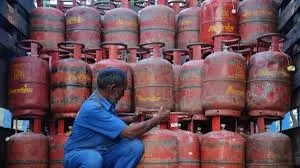
On Monday, Union Oil Minister Hardeep Singh Puri announced a Rs 50 increase in the price of LPG cylinders. The price hike will affect both general consumers and those under the Ujjwala Scheme. As a result, the price of a 14.2-kg LPG cylinder will rise from Rs 803 to Rs 853 for general users, while Ujjwala beneficiaries will see an increase from Rs 503 to Rs 553. This price adjustment, stemming from changes in global energy prices and market forces, has raised concerns regarding its impact on inflation, consumer spending, and the broader economy.
Details of the Price Increase
In a move that is likely to stir concerns among households, the Union Oil Minister confirmed the Rs 50 hike in LPG prices, effective immediately. The revised pricing will impact both the Ujjwala beneficiaries and the general population who rely on liquefied petroleum gas (LPG) for cooking.
- General Users: The cost of a 14.2-kg LPG cylinder will rise from Rs 803 to Rs 853.
- Ujjwala Scheme Users: Under the Ujjwala program, which aims to provide LPG to households below the poverty line, the price will increase from Rs 503 to Rs 553 for the same 14.2-kg cylinder.
This price adjustment is expected to affect millions of households that depend on LPG as a primary source of cooking fuel.
Factors Behind the Price Hike
The price hike in LPG cylinders has been attributed to several key factors, primarily driven by fluctuations in global energy prices. The global rise in crude oil and gas prices has caused a ripple effect in many energy-dependent markets, including India. The government has pointed out that this increase reflects international price movements and the country’s growing dependence on global energy supply chains.
Despite domestic production, the price of LPG is still influenced by global markets, particularly in the face of economic pressures. For consumers, the rise in prices can be burdensome, especially for those already coping with inflationary pressures on other essential goods.
Impact on Consumers and Inflation
This price hike adds to the already inflationary pressure faced by consumers in India. For the general public, an increase of Rs 50 per cylinder may seem modest, but when considering the scale at which LPG is consumed across the country, the financial burden becomes significant.
For Ujjwala scheme beneficiaries, who already rely on government subsidies for access to LPG, the increase might push many families to revert to traditional cooking methods, such as wood or coal, which are less efficient and more environmentally harmful. This price surge could, in turn, affect the government's long-term goals of cleaner energy adoption.
In the broader economic context, the LPG price hike could also contribute to overall inflation, as it directly impacts household expenditures. Increased fuel costs can trigger a chain reaction, raising the prices of transportation, food, and other essential goods, thereby compounding inflationary concerns.
Government's Role in Mitigating the Impact
The Ujjwala scheme, launched in 2016 to provide free LPG connections to economically disadvantaged households, was initially a game-changer for many families. However, as prices rise, questions are being raised about the sustainability of this initiative.
While the government has committed to maintaining subsidies to ease the financial burden on the most vulnerable households, this price increase signals the challenges policymakers face in balancing global energy pressures with domestic economic needs. To counteract the price hike, there may be calls for further subsidies or policy interventions aimed at shielding low-income households from sharp increases in energy costs.
Impact on the Stock Market and Industry Sentiment
The price hike of LPG cylinders can also influence market sentiment within the energy sector. Companies involved in oil distribution and refining, including Indian Oil Corporation (IOC), Bharat Petroleum (BPCL), and Hindustan Petroleum (HPCL), may experience short-term fluctuations in stock prices as investors react to the price adjustments.
The stock market often responds to these price changes, with analysts closely watching how higher energy costs affect broader consumer behavior and corporate earnings in the near term. However, some analysts argue that the energy sector's dependence on global markets means these price hikes may have a neutral to slightly positive effect on stocks, as companies often pass on the increased costs to consumers.
Conclusion: Navigating Rising Energy Costs
The Rs 50 hike in LPG prices serves as a reminder of the volatile global energy market and its far-reaching impact on domestic consumers. While the increase will likely place additional pressure on household budgets, it also highlights the broader challenge India faces in managing energy costs while promoting clean energy solutions.
For the government, balancing subsidies, consumer protection, and energy security will remain a tightrope walk, particularly as global oil and gas prices continue to fluctuate. For now, consumers will need to adjust to these price changes, while policymakers and industry stakeholders watch the unfolding developments closely.
Comments