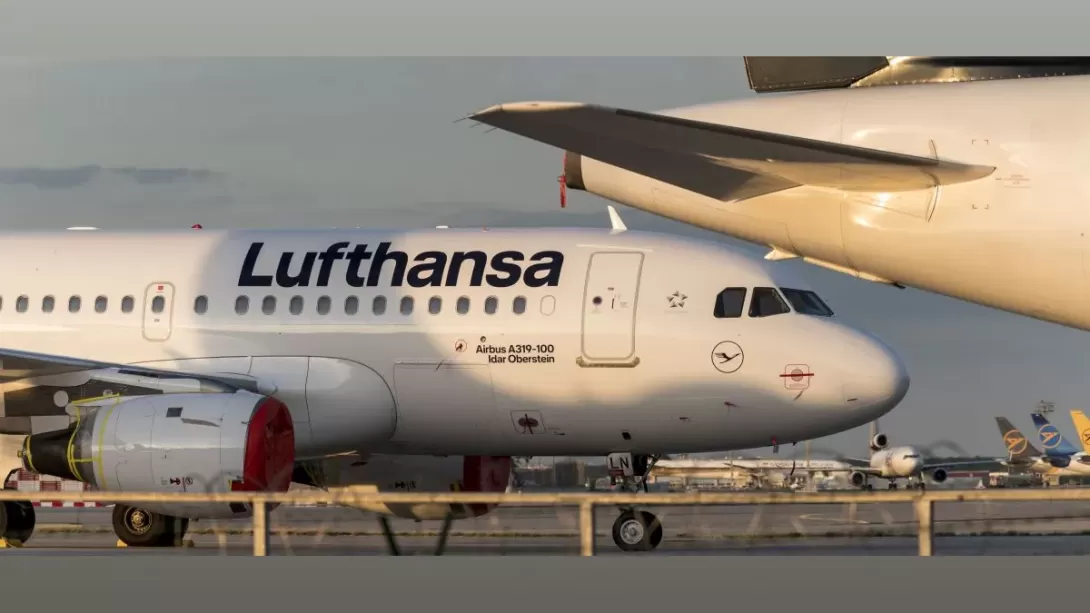
A Lufthansa flight en route from Frankfurt to Hyderabad was forced to return to its origin airport on Sunday after a bomb threat surfaced on social media, prompting immediate security protocols. The flight, designated LH752 and operated by a Boeing 787-9 Dreamliner, had already taken off when the airline received the alert. Authorities, exercising maximum caution, ordered the aircraft’s return to Frankfurt. Passengers were accommodated overnight and scheduled to resume their journey to India the following day. No explosive devices were found, but the incident underscores the persistent challenges airlines face in balancing safety, efficiency, and evolving security threats.
Mid-Air Disruption Triggered by Bomb Threat
In an incident that heightened security concerns across the aviation industry, Lufthansa's flight LH752—bound for Hyderabad from Frankfurt—was compelled to abort its international journey and return to Germany on June 9 following a bomb threat. The warning, reportedly posted on social media, prompted German aviation and security authorities to initiate emergency procedures and instruct the aircraft to return to its departure airport "out of an abundance of caution."
Flight Details and Timeline
Flight LH752, operated by a Boeing 787-9 Dreamliner, was originally scheduled for departure at 13:05 hours (local time) from Frankfurt. However, according to flight tracking data from Flightradar24, the aircraft departed later than planned, taking off at 14:29 hours. The expected arrival in Hyderabad was 01:20 IST the next day.
The flight was already airborne when the bomb threat was identified and communicated to the airline. Without delay, the decision was made to reroute the aircraft back to Frankfurt. The aircraft landed safely, and all passengers were disembarked without incident.
Passenger Accommodation and Airline Response
Lufthansa acted swiftly to minimize disruption for the affected passengers. In a formal statement, a Lufthansa spokesperson confirmed that all travelers on board were provided overnight accommodation in Frankfurt. The airline has rebooked the passengers and ensured they will continue their journey to Hyderabad on Monday, the day following the aborted flight.
While no evidence of an explosive device was found onboard, the airline emphasized its commitment to prioritizing safety. "The decision to return was made purely as a precautionary measure in collaboration with aviation authorities," the spokesperson said.
Security Measures and Aviation Implications
The episode highlights the heightened sensitivity of airlines to digital threats in the post-pandemic aviation environment, where cybersecurity concerns increasingly overlap with traditional safety protocols. Although the threat in this case originated on social media, it triggered a full-scale operational response, including flight diversion, passenger disembarkation, and a thorough aircraft inspection.
Airlines worldwide have had to adapt quickly to the reality of social media as both a communication tool and a vector for anonymous threats, complicating traditional risk assessment procedures.
Industry Context and Safety Precedents
Lufthansa, one of Europe’s most established carriers, operates regular flights between major European cities and key destinations in India. While bomb threats are rare, they are treated with the utmost seriousness, in line with global aviation safety regulations governed by entities such as the International Civil Aviation Organization (ICAO) and European Union Aviation Safety Agency (EASA).
The airline has not disclosed further details about the origin of the threat or the identity of the person(s) responsible. Investigations by German security authorities are reportedly underway.
Conclusion
The diversion of Lufthansa flight LH752 reinforces the complex risk environment that global airlines navigate daily. While the threat ultimately proved unfounded, the incident affirms the importance of rapid-response systems, inter-agency cooperation, and passenger safety protocols. As airlines increasingly grapple with real-time digital threats, this episode serves as a reminder of the ever-evolving nature of aviation security in the modern era.
Comments