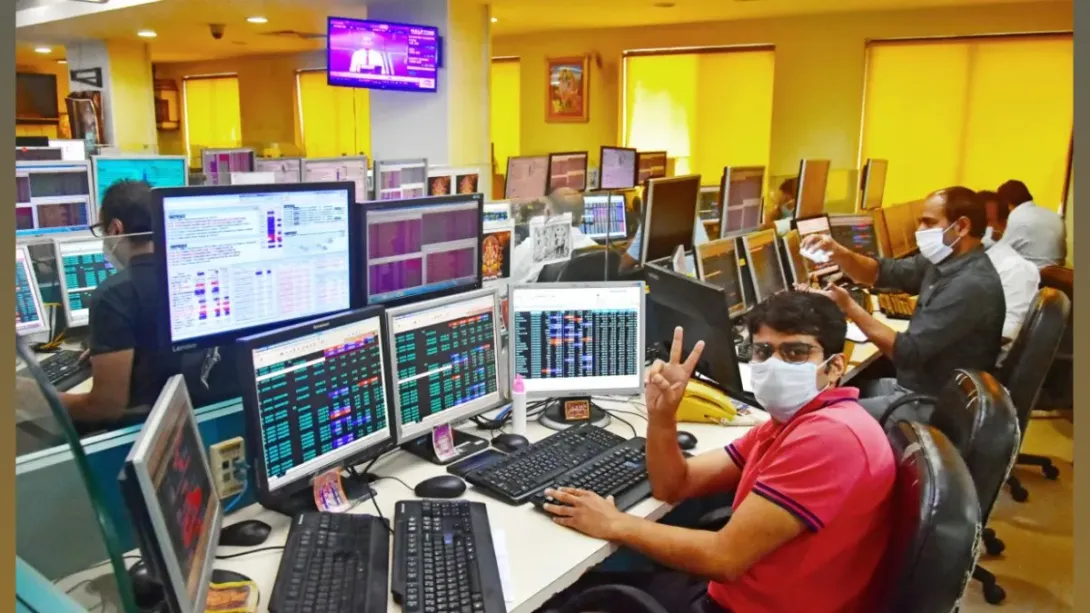
India’s equity markets retreated on Wednesday, ending a strong six-day rally as investors booked profits amid rising global uncertainty. After a period of sustained optimism driven by robust domestic inflows and resilient corporate earnings, key indices faced downward pressure triggered by cautious sentiment ahead of major economic announcements. Concerns over global inflation trends, foreign fund withdrawals, and volatility in commodity prices added to the subdued mood. Analysts noted that the pullback was expected after an extended rally, suggesting a healthy correction rather than a shift in long-term market direction. Overall, the trading session reflected a return to measured risk appetite.
Markets Cool After Extended Rally
Indian equity benchmarks reversed course after six consecutive sessions of gains, with traders opting to lock in profits ahead of upcoming macroeconomic data releases. The market’s earlier momentum, supported by strong domestic participation, met resistance as global cues turned mixed.
Both institutional and retail investors displayed caution, leading to a broad-based decline across sectors. Market strategists noted that such pullbacks typically follow extended rallies, acting as natural stabilizers and preventing overheated valuations.
Profit-Booking and Global Cues Pressure Indices
The downturn was largely driven by profit-booking, as investors weighed geopolitical risks and uncertainties in global inflation patterns. International markets signaled weakness due to concerns surrounding monetary policy decisions in key economies, prompting Indian traders to reassess near-term exposure.
Volatility in crude oil prices added another layer of complexity. Rising energy costs often translate into inflationary pressure for emerging markets, affecting corporate margins and investor sentiment. This contributed to modest selling in sectors sensitive to input costs.
Sectoral Performance Reflects Broader Sentiment
Most major sectors experienced declines, particularly those that had led the recent rally. Banking, capital goods, and consumer sectors faced notable pressure, reflecting a wider pullback rather than sector-specific concerns.
However, analysts pointed out that fundamentals remain intact. Several industries continue to benefit from resilient demand trends, government capital expenditure, and broader economic stability. The correction, they argued, provides opportunities for long-term investors to accumulate quality stocks at relatively attractive valuations.
Foreign Flows Turn Cautious
Foreign portfolio investors showed signs of restraint, shifting positions amid global risk aversion. The recent moderation in foreign inflows contrasted with the strong domestic buying that had supported earlier market gains.
Analysts said FPI trends may remain uneven in the short term, influenced by the U.S. Federal Reserve’s policy path, global growth forecasts, and currency movements. Meanwhile, steady domestic institutional investment continues to serve as a buffer against sharp declines.
Outlook: A Temporary Pause, Not a Trend Reversal
Despite Wednesday’s decline, market experts emphasized that the underlying economic backdrop remains constructive. Strong corporate earnings, robust tax collections, and improving manufacturing indicators continue to support the long-term outlook for equities.
Volatility is likely to persist in the near term as global markets assimilate fresh economic data. Yet analysts believe the correction represents a recalibration rather than the start of a prolonged downturn. As one strategist observed, “After six days of uninterrupted gains, a breather is both natural and healthy for the market’s trajectory.”
Comments