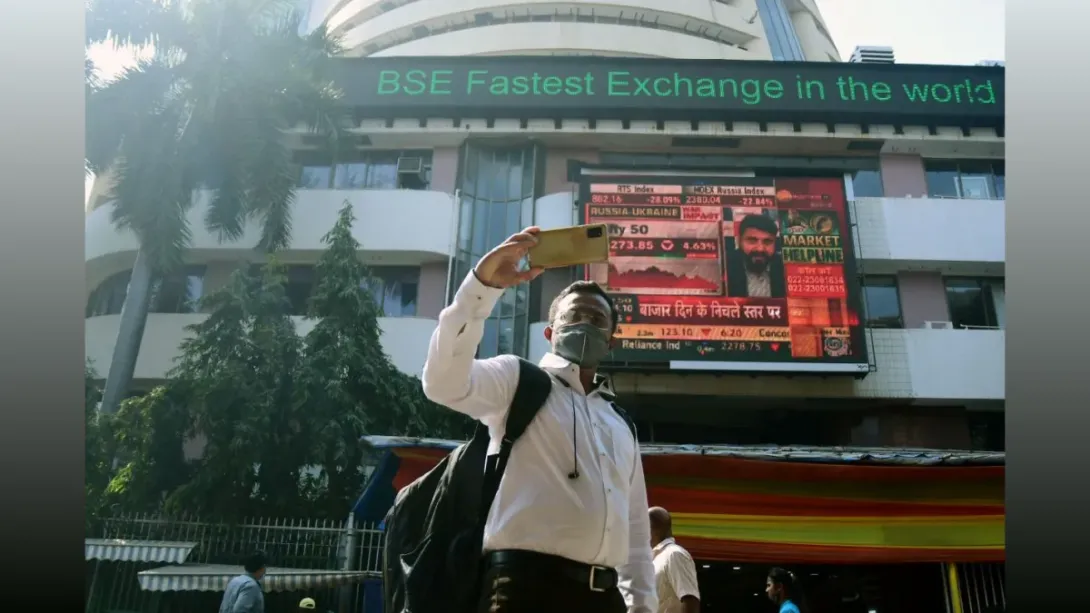
Indian equity markets closed lower as global financial weakness and sustained foreign institutional investor (FII) outflows weighed heavily on investor sentiment. Benchmark indices retreated amid concerns over slowing global growth, elevated interest rates in major economies, and continued uncertainty surrounding monetary policy trajectories. Persistent selling by overseas investors amplified volatility, particularly in rate-sensitive and export-oriented sectors. Market participants remained cautious, opting to reduce risk exposure in the absence of strong domestic triggers. The decline reflects broader global risk aversion rather than company-specific fundamentals, highlighting the increasing interconnectedness of Indian markets with international capital flows.
Global Cues Set a Weak Tone
Domestic equities mirrored negative trends across international markets, where concerns over stubborn inflation and prolonged tight monetary conditions dampened risk appetite. Weak cues from Wall Street and Asian peers created a cautious opening, which persisted through the trading session.
Rising bond yields in developed economies and renewed fears of a global economic slowdown prompted investors to rotate away from equities toward safer assets. This shift exerted downward pressure on emerging market indices, including India’s.
FII Outflows Intensify Market Pressure
A key factor behind the market’s decline was continued selling by foreign institutional investors. FIIs have been steadily reducing exposure to Indian equities, driven by higher returns in U.S. debt markets, currency volatility, and reassessment of emerging market risk.
Market data showed that overseas investors were net sellers during the session, adding to liquidity pressures. Analysts note that while domestic institutional investors have provided partial support, they have been unable to fully offset the scale of foreign withdrawals.
Sectoral Performance Reflects Risk Aversion
The sell-off was broad-based, with banking, information technology, and metal stocks bearing the brunt of the decline. Rate-sensitive sectors remained under pressure as expectations of sustained high global interest rates clouded earnings outlooks.
Export-oriented companies, particularly in the IT space, faced additional headwinds from a stronger dollar and concerns about slowing demand in key overseas markets. Defensive sectors offered limited refuge, underscoring the cautious mood.
Domestic Fundamentals Remain Intact
Despite the day’s weakness, market strategists emphasized that India’s long-term economic fundamentals remain resilient. Stable macroeconomic indicators, healthy corporate balance sheets, and steady domestic consumption continue to provide structural support.
However, in the near term, market direction is likely to be influenced more by global developments than domestic data. Investors are expected to remain selective, focusing on balance sheet strength and earnings visibility.
Outlook: Volatility Likely to Persist
With global central banks maintaining a hawkish stance and geopolitical risks still in play, volatility is expected to remain elevated. Experts advise investors to adopt a cautious approach, balancing short-term uncertainty with long-term opportunities.
Until clarity emerges on global interest rate trajectories and foreign capital flows stabilize, Indian equity markets may continue to face intermittent pressure—reflecting a cautious recalibration rather than a fundamental shift in growth prospects.
Comments