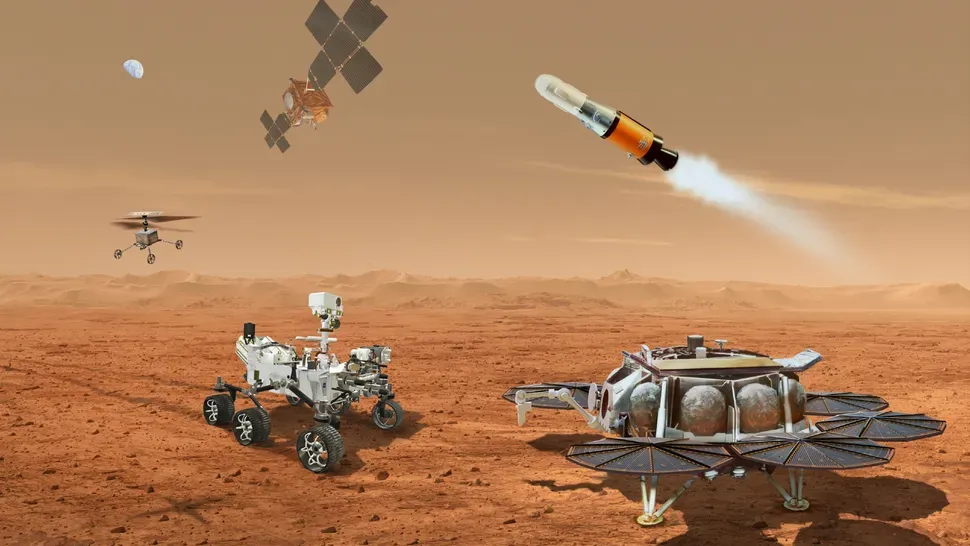
Recent Mars missions have delivered unprecedented insights into the Red Planet’s geology, climate history, and potential habitability. Space agencies, leveraging orbiters, landers, and rovers, have analyzed soil composition, mineral deposits, and atmospheric conditions, uncovering evidence of past water activity and complex surface processes. These findings enhance understanding of Mars’ evolution and inform strategies for future human exploration. Analysts note that the integration of AI-driven data analysis, high-resolution imaging, and international collaboration has accelerated discoveries, positioning Mars as a focal point for scientific research, planetary defense studies, and the development of sustainable technologies for interplanetary habitation.
Geological Insights
Mars’ terrain continues to reveal a complex history shaped by volcanic activity, erosion, and ancient river systems. Recent rover analyses detected layered sedimentary rocks and mineral signatures consistent with liquid water presence in the past, reinforcing hypotheses about a wetter, potentially habitable environment.
These discoveries offer critical clues for reconstructing Mars’ climatic evolution and for identifying regions of scientific interest for future missions.
Atmospheric and Climate Studies
Orbital instruments have measured variations in Martian atmospheric composition, including traces of methane and seasonal fluctuations in carbon dioxide levels. Such data provides insights into active geological and potentially biological processes.
Understanding the atmosphere is essential for planning human missions, predicting dust storm patterns, and developing life-support systems for long-duration stays.
Technological Achievements
Advanced rovers equipped with spectrometers, drills, and AI-powered navigation systems have expanded exploration capabilities. These technologies allow autonomous sample collection, in-situ analysis, and real-time transmission of high-fidelity data to Earth.
Integration of machine learning has improved detection of mineral compositions and geological anomalies, enabling scientists to prioritize research objectives efficiently.
International Collaboration
Mars research increasingly involves multinational efforts, with NASA, ESA, ISRO, CNSA, and other agencies contributing orbiters, landers, and research expertise. This cooperative approach maximizes resource utilization, accelerates discoveries, and fosters shared knowledge across the scientific community.
Analysts suggest that global collaboration is key to achieving cost-effective exploration and developing sustainable strategies for future human missions.
Implications for Human Exploration
Understanding Mars’ geology, atmosphere, and radiation environment is critical for designing habitats, life-support systems, and safe landing sites. Current findings inform risk assessments and mission planning for potential crewed missions in the coming decades.
Experts emphasize that Mars serves as a laboratory for testing technologies applicable to space colonization, planetary resource utilization, and long-duration human survival in extraterrestrial environments.
Outlook: Mars as a Frontier
The Red Planet remains a central focus for scientific discovery, technological innovation, and exploration strategy. Continued missions are expected to refine knowledge of Mars’ past habitability, its potential resources, and the feasibility of human settlement.
As international missions advance, Mars exploration not only expands humanity’s scientific horizons but also drives innovation in robotics, AI, and space sustainability, reinforcing the planet’s status as the next frontier in interplanetary research.
Comments