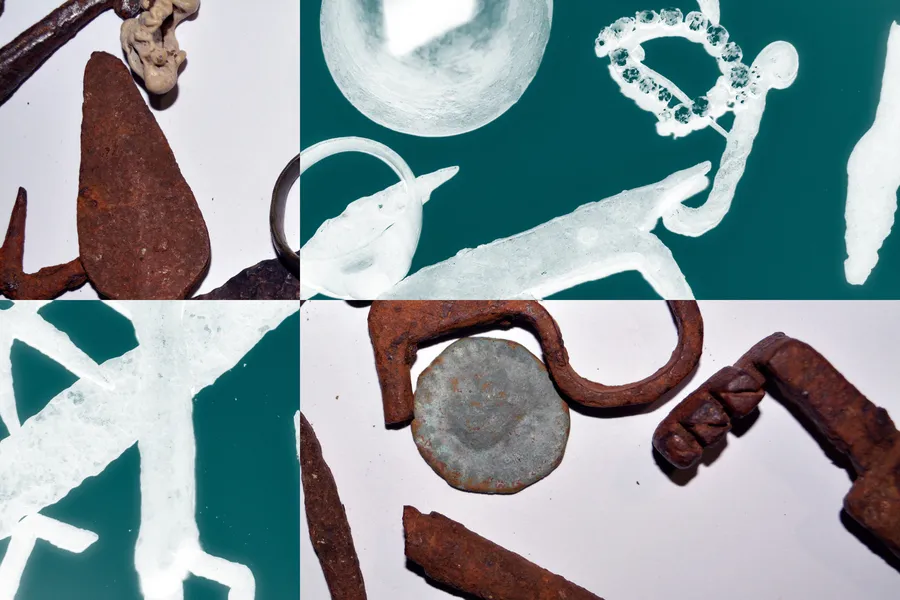
MIT researchers have applied advanced CT-scan technology to study ancient metal artifacts, uncovering previously inaccessible details about early manufacturing techniques. By examining internal structures without damaging the objects, scientists have decoded how ancient societies smelted, cast, and refined metals long before modern industrial systems existed. The findings offer fresh insights into the evolution of metallurgy, revealing the ingenuity of early craftspeople and the sophisticated production strategies they employed. This breakthrough not only enhances archaeological understanding but also provides valuable data for conservation, material science, and the history of technological innovation.
Cutting-Edge Technology Meets Ancient Craft
The research team employed high-resolution CT scanning—typically used in medical diagnostics—to examine metal objects created centuries ago. This non-invasive approach allowed scientists to visualize the internal composition, micro-cracks, porosity patterns, and layering techniques that traditional methods often overlook.
By capturing three-dimensional images at microscopic scales, the team pieced together evidence of how ancient metalworkers manipulated temperature, moulds, and alloys to achieve specific shapes and strengths. Such insights were previously unattainable without risking damage to the artifacts.
Revealing the Techniques Behind Early Metal Production
The study shows that early metalworkers relied on deliberate, technically informed choices—even without access to modern scientific tools. CT imaging revealed variations in density and internal flow marks inside cast objects, indicating how molten metal was poured, cooled, and hardened.
Researchers also identified distinct metallurgical signatures corresponding to different workshops or communities, providing clues about trade networks and regional production styles. These findings help archaeologists understand not just what ancient societies made, but how they mastered the craft.
Implications for Archaeology and Material Science
The technique has broad implications for the preservation and study of historical materials. By enabling detailed structural analysis without physical intervention, museums and labs can protect fragile artifacts while still accessing vital scientific information.
Material scientists, meanwhile, are examining how early metallurgical techniques can inform modern production practices. Ancient methods—though primitive in appearance—often relied on a deep, intuitive understanding of heat dynamics and resource management, offering lessons that remain relevant in today’s sustainability-focused manufacturing landscape.
Bridging the Past and the Future
This research highlights how modern engineering tools can enrich historical inquiry. CT scans provide a bridge between contemporary scientific capability and the achievements of early societies, allowing researchers to reconstruct practices lost to time.
The work underscores the interdisciplinary nature of technological history, blending archaeology, engineering, chemistry, and digital imaging into a single investigative framework. The more scientists learn about early metal production, the clearer the picture becomes of how innovation evolved, spread, and shaped human civilization.
A New Era for Studying Ancient Technologies
With CT-based analysis proving its value, researchers anticipate wider adoption across archaeological sites and academic institutions. The approach may soon be used to study tools, weapons, jewellery, and industrial waste from numerous cultures, each offering a piece of the global story of technological advancement.
As imaging resolution improves and computational models evolve, scientists will be able to simulate ancient production methods with unprecedented accuracy, reshaping long-held assumptions and illuminating the craftsmanship of early innovators.
Comments