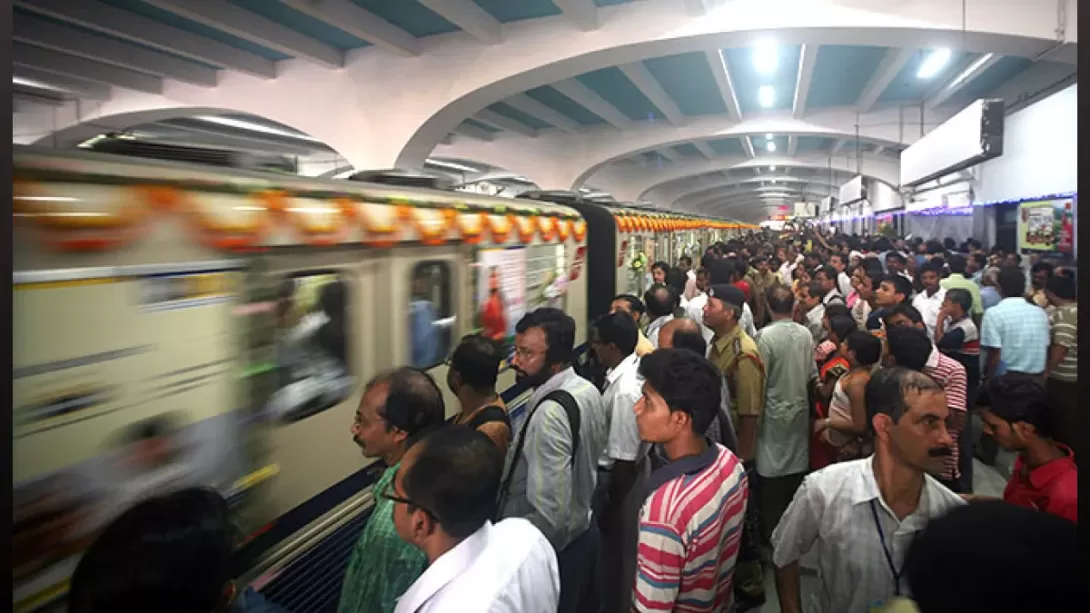
The Indian railway sector is forecasted to experience a moderate revenue growth of 5% in FY'26, largely driven by strong performance from wagon manufacturers. While the overall sector's operating margins remain stable at around 12%, the growth rate is expected to slow, particularly among construction entities. A recent analysis by ICRA indicates that while government investments in railway infrastructure have increased, the pace of funding momentum may face a slowdown. The future of the sector will depend on both governmental support and the performance of key segments like rolling stock and logistics.
India’s Railway Sector: Slowdown in Growth Despite Continued Investments
The Indian railway sector, which has been a critical component of the nation's infrastructure for decades, is poised for a moderate 5% revenue growth in FY'26. This projected increase comes amidst strong contributions from wagon manufacturers, though other sectors like construction are expected to see slower expansion. The continued focus on railway infrastructure by the government has supported the sector's growth, but analysts caution that the momentum may begin to taper in the near to medium term.
According to a recent analysis by ICRA, the credit rating agency, the sector's weighted average operating margins are expected to remain healthy at around 12% in FY'26. This stability is supported by operating leverage benefits, where fixed costs are spread over larger production, and stable input prices, ensuring that profitability remains largely unaffected. Despite this, the growth rate is expected to decelerate compared to previous years, influenced by broader trends in government funding and infrastructure developments.
Government Investments and Challenges Ahead
A critical aspect of the sector’s projected performance is the significant capital outlay that the government has committed to railway infrastructure development. Over the past five years, the capital outlay for Indian Railways has surged by 130%, reaching Rs 2.52 lakh crore in the 2025-26 budget estimates. This boost in government spending has been crucial in funding the expansion of the railway network, including the modernization of rolling stock and electrification of tracks.
However, while infrastructure spending has seen a dramatic increase, budgetary support has only grown by a modest 2% between FY2024 and FY2026. This limited rise in funding could signal a potential slowdown in the government’s support, especially when compared to the explosive growth seen in the previous years. Suprio Banerjee, Vice President and Co-Group Head at ICRA, noted that entities in the railway sector have largely benefitted from the government's initiative to improve connectivity and reduce logistics costs. However, this fiscal restraint suggests that future growth might not be as robust as it has been in the past.
Wagon Manufacturers and EPC Firms: Key Growth Drivers
The engineering, procurement, and construction (EPC) firms, along with wagon manufacturers, are expected to remain the primary growth drivers in the railway sector. These companies have seen an impressive growth trajectory over the past few years, with the order book-to-income ratio for EPC and wagon manufacturers surging to 2.77 times in FY2024 from 1.33 times in FY'15. This marks a significant increase in revenue visibility, ensuring that these segments will continue to play a central role in driving the sector's performance.
Despite the strong order books, ICRA predicts that overall revenue growth for the railway sector will slow down in FY2025 and FY2026. This is in part due to the deceleration in government funding, but also reflects the inherent volatility in large infrastructure projects and the broader economic conditions that may affect demand for railway services and products.
Service-Oriented Segments to Bolster Margins
While the outlook for the construction and manufacturing segments may be somewhat tempered, service-oriented segments, such as ticketing and logistics, are expected to play a larger role in supporting profitability. These segments, which are less capital-intensive and more scalable, have a more predictable revenue stream and could see margins bolstered by their increasing importance in the overall railway ecosystem.
In particular, the logistics segment has been gaining traction, as the Indian government focuses on improving the efficiency of the railway network to support the movement of goods. With India’s growing economy and emphasis on improving supply chains, logistics services within the railway sector could see a surge in demand, contributing to overall margin expansion.
Looking Ahead: Key Takeaways
The Indian railway sector is at a crossroads. While government support has been pivotal in its growth over the past few years, there are concerns that the pace of funding may slow down, leading to a more moderate growth trajectory in the near future. However, segments such as wagon manufacturing and EPC will continue to drive growth, aided by their strong order books. The sector’s future success will depend on its ability to adapt to changing economic conditions and to harness the potential of service-oriented businesses like logistics and ticketing to maintain strong margins.
As India’s railway network evolves, the role of government investments and the ability to sustain growth in the face of changing budgetary support will be crucial in determining the trajectory of the sector's performance in FY'26 and beyond.
Comments