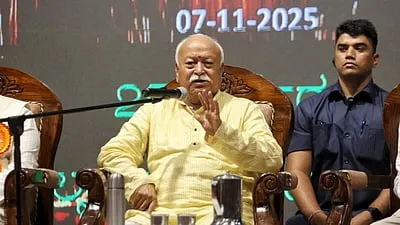
In a recent statement, Rashtriya Swayamsevak Sangh (RSS) chief Mohan Bhagwat clarified that the organization’s membership is exclusively open to Hindus, explicitly excluding Brahmins, Muslims, Christians, and other non-Hindu groups. Bhagwat emphasized that the policy aligns with the RSS’s core ideological framework and its focus on promoting Hindu cultural and social values. Analysts note that such pronouncements reinforce the organization’s identity-driven approach and may influence political and social discourse in India. The declaration has sparked debate regarding inclusivity, secularism, and the role of faith-based organizations in shaping societal norms, highlighting the intersection of religion, politics, and public perception.
RSS Membership Exclusivity
Mohan Bhagwat reaffirmed that RSS membership is restricted solely to Hindus. The organization’s structure is grounded in promoting Hindu values, cultural preservation, and community engagement, and its membership policy reflects this ideological orientation. Bhagwat’s statement underscores the organization’s commitment to maintaining a religiously homogeneous cadre.
Ideological Context
The RSS has historically positioned itself as a cultural and social organization dedicated to the promotion of Hindu identity. Bhagwat’s remarks highlight the group’s emphasis on ideological purity and the cultivation of a shared cultural ethos among its members. Analysts observe that such positions solidify the organization’s internal cohesion and strategic focus.
Public and Political Response
The statement has generated significant discussion across political and social spheres. Critics argue that restricting membership based on religion may deepen societal divisions and undermine principles of inclusivity, while supporters contend that it preserves the organization’s foundational mission. Media and public debate continues to analyze the broader implications of the RSS’s exclusivity policy.
Broader Implications
By openly stating the Hindu-only membership policy, the RSS reinforces its distinct organizational identity, influencing discourse on religion, politics, and social organization in India. Such declarations may affect the group’s public perception, engagement with secular institutions, and relationships with other faith-based and political entities.
Conclusion
Mohan Bhagwat’s reaffirmation of Hindu-only membership in the RSS underscores the organization’s ideological priorities and its commitment to preserving a homogeneous cultural framework. The remarks provoke ongoing dialogue about the role of religion in social organizations, inclusivity, and the interplay between cultural identity and public policy in contemporary India.
Comments