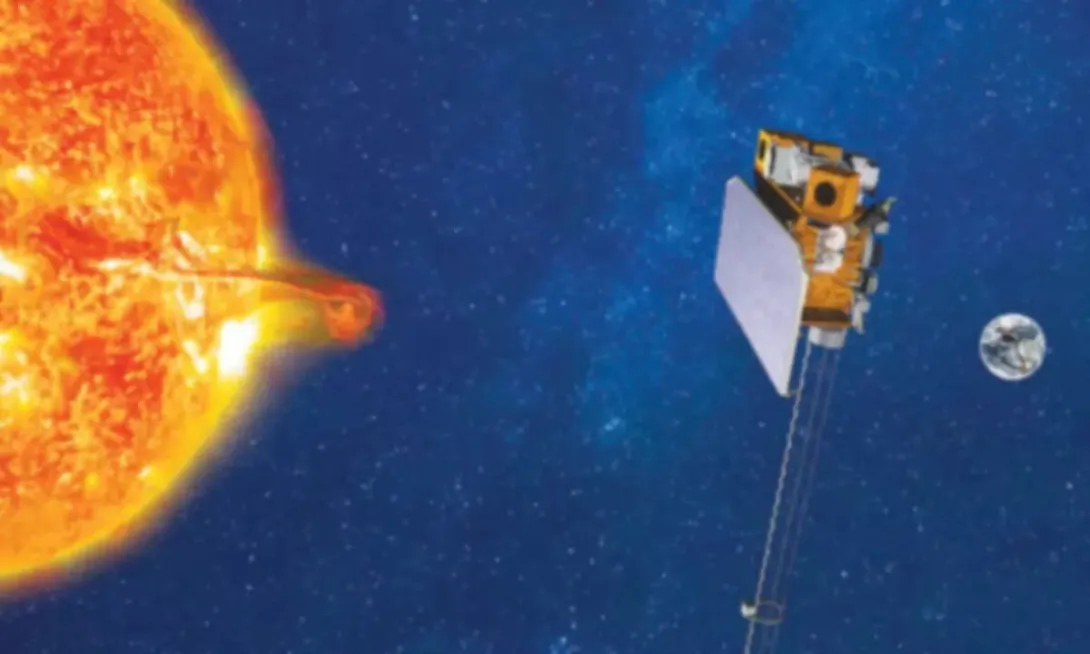
In a strategic advancement aimed at improving space weather forecasting, NASA has successfully launched two new satellites designed to monitor solar activity and better predict the impact of solar storms on Earth. These cutting-edge spacecraft, equipped with advanced instrumentation, will provide real-time data on solar wind and magnetic field fluctuations—factors that play a critical role in geomagnetic disturbances. With rising concerns over the vulnerability of satellites, power grids, and communication systems to solar activity, this mission represents a pivotal step toward strengthening planetary defense and ensuring operational resilience for both government and commercial technologies.
Strengthening Solar Storm Surveillance
Solar storms—sudden bursts of radiation and charged particles from the sun—have long posed a significant threat to technological infrastructure on Earth. From GPS navigation errors to large-scale power outages and disrupted aviation systems, the consequences of geomagnetic disturbances can be both widespread and severe.
To address this growing concern, NASA has launched two new spacecraft dedicated to monitoring solar wind and magnetic fluctuations. These satellites will orbit at strategic vantage points, gathering critical data to help scientists anticipate and mitigate the fallout of space weather events more effectively than ever before.
Advanced Satellite Capabilities
Equipped with state-of-the-art sensors and plasma analyzers, the new satellites are engineered to detect variations in solar wind velocity, density, and magnetic orientation. This data will be transmitted in near-real time to forecasting centers, enabling faster and more accurate predictions of geomagnetic storms.
Unlike earlier space weather missions limited by intermittent data gaps and delayed transmission, these new additions to NASA’s fleet are designed for continuous, uninterrupted monitoring. Their positioning will also offer a more comprehensive three-dimensional view of solar emissions, enriching scientific understanding and forecasting accuracy.
Implications for Earth-Based Infrastructure
The importance of real-time space weather intelligence has grown exponentially in recent years, driven by the increasing reliance on satellite technology for global communication, financial transactions, navigation, and defense. A strong solar flare or coronal mass ejection can disrupt satellites in orbit, damage electrical infrastructure, and even compromise aircraft safety at high altitudes.
The deployment of these satellites is, therefore, not merely a scientific pursuit—it’s a preemptive measure aimed at protecting global infrastructure and economic systems. Utility providers, telecommunication companies, and aviation authorities stand to benefit immensely from improved early warning systems and risk mitigation protocols.
A Timely Response to the Solar Cycle
NASA's satellite launch comes at a critical juncture in the current 11-year solar cycle, which is projected to peak in solar activity between 2025 and 2026. During these peak periods, the sun produces more frequent and intense flares, significantly increasing the risk of geomagnetic storms.
Past incidents, such as the 1989 Quebec blackout and disruptions to satellite systems during the 2003 “Halloween Storms,” underscore the potential damage of such events. With solar activity expected to intensify, the newly launched satellites are arriving just in time to bolster global preparedness.
Enhancing International Collaboration
While the satellites are U.S.-led, the data they generate will be shared with international space and meteorological agencies, encouraging collaborative efforts in building a unified space weather warning system. This globalized approach to monitoring ensures broader protection for aviation, shipping, military operations, and even human spaceflight missions aboard the International Space Station.
Moreover, the mission reaffirms the growing consensus among governments and scientific institutions: that space weather is no longer a niche concern but a critical area of study requiring cross-border cooperation and continuous technological investment.
Conclusion
NASA’s deployment of these two satellites represents a major leap forward in understanding and managing the risks posed by solar storms. By enhancing the global ability to monitor space weather in real time, the initiative strengthens both scientific inquiry and civil resilience. As the sun enters a more volatile phase, this mission underscores the urgent need for proactive investment in planetary defense infrastructure—a reminder that the threats from space are not science fiction, but an evolving reality that demands our attention.
Comments