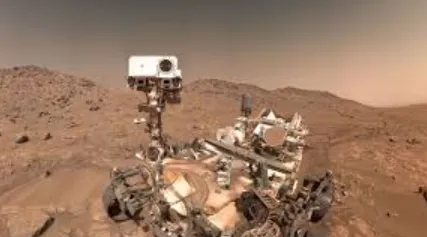
NASA has begun deploying an advanced artificial intelligence system developed by Anthropic to assist with route planning for its Mars rovers, marking a notable shift in how space exploration missions are optimized. The AI model, known for its reasoning and decision-support capabilities, is being used to analyze terrain data, anticipate hazards, and propose efficient traversal paths on the Martian surface. The initiative underscores NASA’s growing reliance on next-generation AI to improve autonomy, reduce operational risk, and maximize scientific output. It also reflects a broader convergence of frontier technology and space science, where intelligent systems increasingly augment human expertise.
AI Enters the Mission-Critical Loop
NASA’s adoption of Anthropic’s Claude AI represents a strategic move toward embedding sophisticated decision-support tools into mission planning. Traditionally, rover navigation has relied heavily on Earth-based teams manually evaluating imagery and telemetry before issuing commands. By integrating AI into this workflow, NASA aims to accelerate route assessment while maintaining rigorous safety standards.
The system evaluates complex variables—such as slope gradients, rock distribution, and energy consumption—to recommend paths that balance scientific value with operational prudence.
Improving Autonomy on a Distant Planet
Communication delays between Earth and Mars can stretch from several minutes to nearly half an hour, making real-time control impossible. AI-assisted planning mitigates this constraint by enabling more autonomous, pre-validated decision-making. Claude’s analytical capabilities help mission teams simulate multiple scenarios quickly, allowing rovers to traverse longer distances with fewer interruptions.
This enhanced autonomy is expected to improve mission efficiency and extend the productive lifespan of costly robotic assets.
Strategic Implications for Space Exploration
From a policy and budgetary perspective, AI-driven optimization carries significant implications. Each Mars mission represents an investment running into billions of rupees when adjusted for development, launch, and operational costs. Incremental gains in efficiency can therefore translate into substantial value preservation and higher scientific returns.
The collaboration also signals a growing openness within public space agencies to leverage private-sector AI innovation for mission-critical applications.
A Glimpse of the Future
NASA’s use of advanced AI for rover navigation may foreshadow broader adoption across space exploration, from lunar missions to deep-space probes. As AI systems mature, their role is likely to expand from advisory tools to semi-autonomous partners in exploration. For now, the integration of Claude AI into Mars rover planning stands as a measured yet meaningful step toward a more intelligent, resilient model of planetary science.
Comments