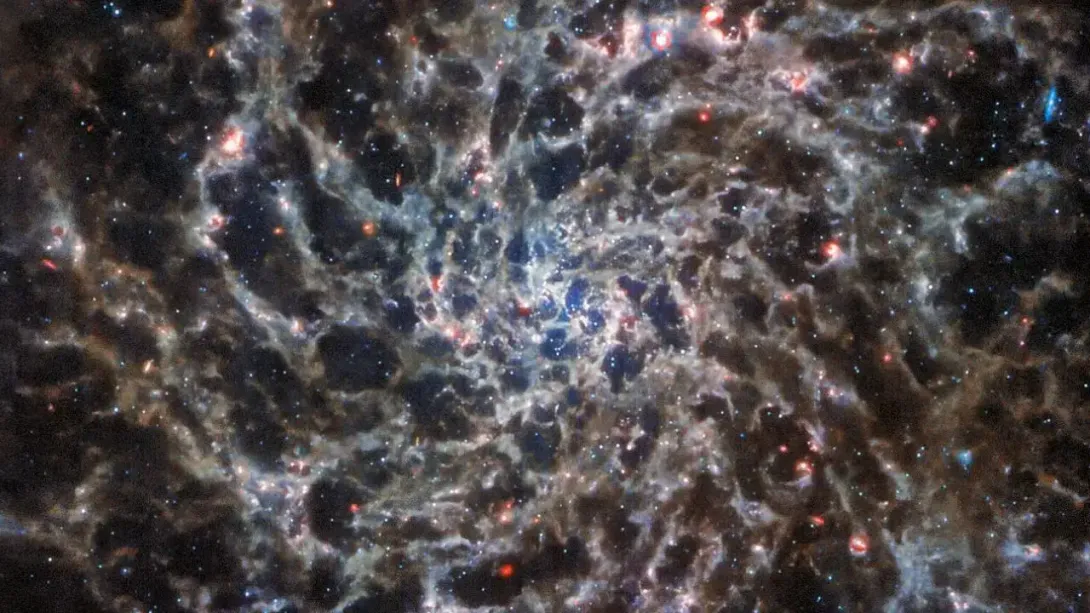
NASA has released new high-resolution images revealing a dramatic collision between distant galaxies, offering fresh insight into one of the universe’s most powerful and transformative processes. Captured using advanced space-based observatories, the images show immense gravitational forces reshaping galactic structures, triggering bursts of star formation and altering cosmic trajectories. Scientists say such interactions, while violent on astronomical scales, play a crucial role in galactic evolution. The findings deepen understanding of how galaxies grow, merge and change over billions of years, underscoring the value of continued investment in space exploration and observational science.
A Rare Glimpse Into Galactic Interaction
The newly released images depict two galaxies in the midst of a gravitational encounter, their shapes distorted as they pull matter from one another. Long tidal tails of gas and stars stretch across space, highlighting the immense forces at work. NASA scientists described the visuals as among the clearest examples yet of how galactic collisions unfold over time.
Technology Behind the Discovery
The images were captured using next-generation space telescopes equipped with enhanced infrared and optical capabilities. These instruments allow astronomers to peer through cosmic dust and observe regions previously hidden from view. Improved resolution and sensitivity have made it possible to study the internal dynamics of colliding galaxies in unprecedented detail.
Why Cosmic Collisions Matter
Although galaxy collisions may appear destructive, researchers emphasize their creative role in the universe. Such events often ignite rapid star formation and can eventually lead to the formation of larger, more complex galaxies. Our own Milky Way is expected to collide with the Andromeda galaxy billions of years from now, making these observations especially relevant.
Scientific and Educational Impact
Beyond their scientific value, the images are expected to spark public interest in astronomy and space science. NASA officials noted that visually compelling discoveries help bridge the gap between complex research and public understanding, reinforcing support for space missions.
Comments