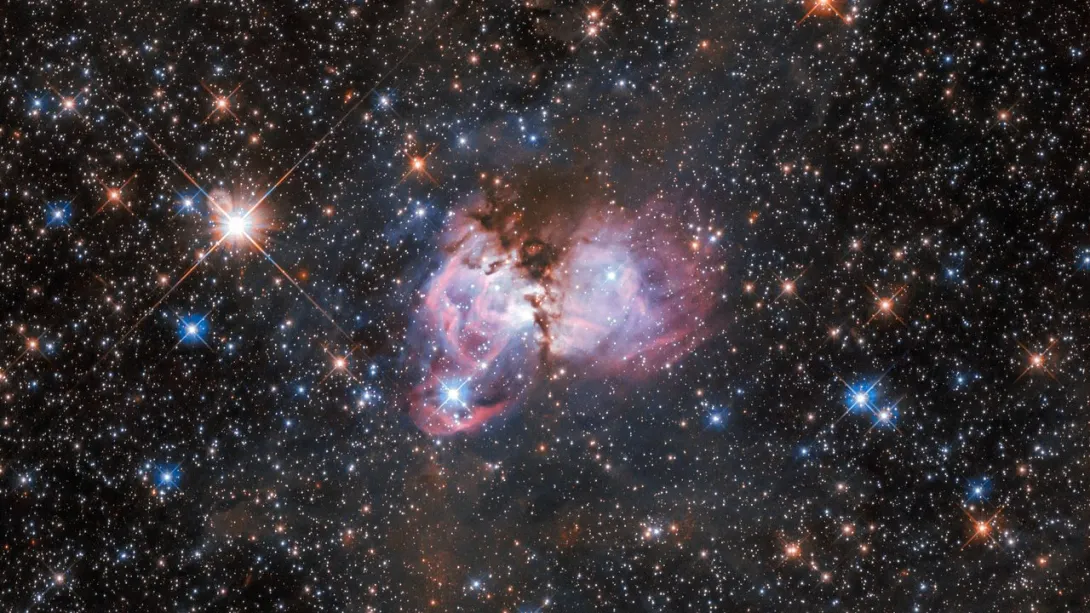
The Hubble Space Telescope has unveiled striking new images of the Tarantula Nebula, one of the most active and luminous star-forming regions in the local universe. Located approximately 161,000 light-years away in the Large Magellanic Cloud, this sprawling cosmic structure is a laboratory for understanding the birth and evolution of stars. The latest imagery reveals intricate details of interstellar gas, dust formations, and massive young stars shaping their environment. These observations not only provide scientists with deeper insights into stellar life cycles but also deliver visually stunning portrayals of a region that continues to captivate astronomers and the public alike.
A Window into Stellar Creation
The Tarantula Nebula—officially designated as 30 Doradus—is famed for its intense star-forming activity. Astronomers often refer to it as a “stellar nursery” because of its extraordinary density of young, massive stars. The new Hubble images capture a tapestry of glowing gas clouds illuminated by ultraviolet light from these stars, alongside complex dust structures shaped by powerful stellar winds and supernova remnants. Studying these details helps scientists trace how massive stars influence their surroundings, from triggering the birth of new stars to dispersing the raw materials needed for future cosmic growth.
Scientific Significance Beyond Beauty
While the Tarantula Nebula’s visual appeal is undeniable, its scientific importance lies in the parallels it offers to star formation in the early universe. With conditions resembling those of galaxies billions of years ago, this region serves as a natural laboratory for testing astrophysical theories. Data from Hubble’s imaging instruments enable researchers to measure the composition, temperature, and motion of interstellar matter, enhancing our understanding of how galaxies evolve over time. Such findings also contribute to refining models used to interpret observations of far more distant and ancient cosmic structures.
The Power of Hubble’s Perspective
The Hubble Space Telescope, a joint effort by NASA and the European Space Agency, has been in orbit for more than three decades, continually delivering groundbreaking insights into the universe. The clarity and resolution of its instruments allow astronomers to peer into regions that ground-based telescopes cannot fully resolve due to atmospheric interference. In this latest observation, Hubble’s advanced imaging technology has revealed fine structural details of the Tarantula Nebula’s vast expanse—details that are critical for understanding the interplay between gravity, radiation, and interstellar matter in star-forming regions.
Inspiring Future Exploration
Beyond its value to the scientific community, the newly released images of the Tarantula Nebula spark widespread public fascination, underscoring the enduring power of space exploration to inspire curiosity and wonder. As next-generation telescopes like the James Webb Space Telescope build upon Hubble’s legacy, astronomers anticipate uncovering even more about the nebula’s origins, its role in galactic ecosystems, and its connections to the universe’s earliest epochs. These observations serve as a reminder that our quest to understand the cosmos is as much about discovery as it is about perspective—our place in an ever-expanding universe.
Comments